
Fields · Wildlife and birds
Falconry-based bird abatement
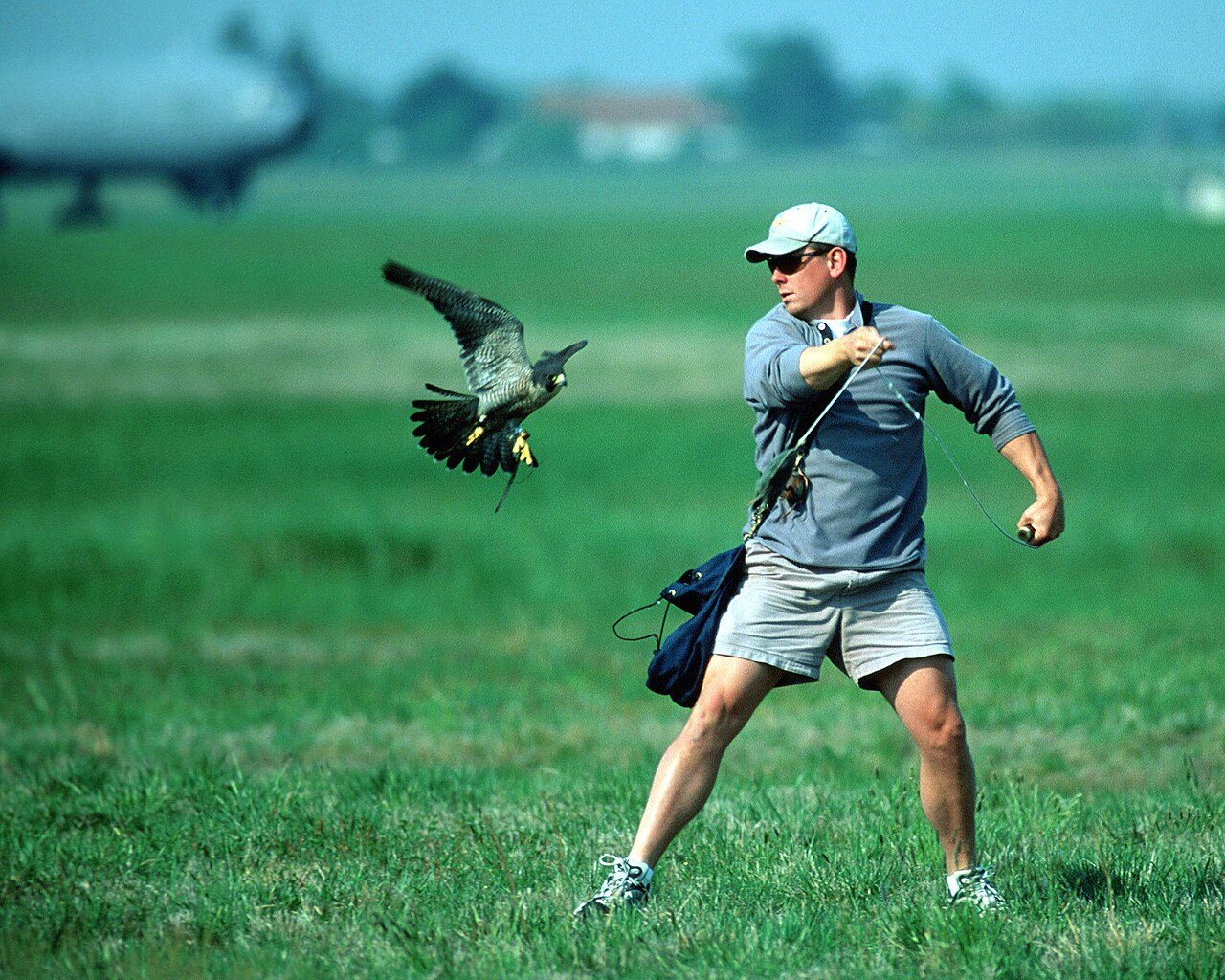
What is falconry-based bird abatement work?
Using trained raptors to move nuisance bird populations off landfills, vineyards, resorts, airports and distribution centres.
Key factFederal falconry regulation plus a state falconry permit plus, in most cases, a separate abatement endorsement. Nothing to do with a pesticide licence. The apprenticeship period is measured in years, not weeks — this is the longest runway of any discipline here.
Thinking about falconry-based bird abatement? Ask the people doing it every day in the LTK Discord.
Ask on Discord(opens Discord in a new tab)What the job is really like
Falconry-based bird abatement means using trained birds of prey to scare pest birds away from places where they cause damage or danger: landfills, farms and vineyards, food plants, resorts, airports and large buildings. The pest birds learn that the site is dangerous and leave. It is one of the most regulated jobs in pest management, and the rules have nothing to do with pesticide licences. You need a state falconry permit, which takes years of apprenticeship to reach the right level. To be paid, you need a federal Special Purpose Abatement permit from the US Fish and Wildlife Service, which is only open to Master Falconers. Under federal rules that means at least seven years of falconry before you can hold the permit yourself. The work suits people who already love falconry, or are willing to commit to it as a way of life, and who accept that their birds need care every day of the year, not only on working days.
The day starts with the birds. Before any client work, each raptor is checked, weighed and fed according to its flying plan. Falconry birds have to be kept in humane and healthful conditions in an approved mews or weathering area that protects them from weather, predators and domestic animals. That care runs every day of the year, including weekends, holidays and days without work.
On a contract site, abatement work is usually repeated visits rather than one job. The aim is to make pest birds treat the site as dangerous, so the falconer flies the birds over problem areas such as the working face of a landfill, a crop block, a loading dock or a roof. The extension literature on pigeon control describes falconry as a way to haze birds rather than kill them, and notes that it needs repeated site visits and is relatively expensive.
Much of the skill is reading the site and the pest birds. You note which species are present and how many, where they roost and feed, and how they respond to each flight. You also decide which of your birds suits the target species and the setting. Weather matters, because wind, rain and heat affect whether and how you can fly.
There is a legal check behind every flight. The abatement permit lets you flush and haze birds with your raptors. It does not let you kill or injure migratory birds. If a raptor kills a protected species by accident, it must be reported to the Regional Migratory Bird Permit Office within two business days. Where lethal control of migratory birds is wanted, it needs its own federal authority, usually a depredation permit held by the landowner with the falconer named as a subpermittee.
Paperwork and admin take real time: keeping permits current, updating subpermittee letters for anyone who flies your birds, reporting acquisitions and disposals of raptors on Form 3-186A, keeping site logs for clients, and quoting new contracts. Airports are their own world. FAA rules require certificated airports to have a wildlife hazard assessment done by a qualified wildlife damage management biologist after certain strike events, and any falconry work there fits into that airport's wildlife plan.
Daily duties
- Care for, feed, weigh and house raptors every day in facilities that meet federal and state standards.
- Train and condition birds for the flying they do on abatement sites.
- Survey client sites to identify pest bird species, numbers, roosts, feeding areas and movement.
- Plan and run repeated hazing flights over problem areas.
- Match the right raptor to the target species and site.
- Check the legal status of every target species and stay within the permit's limits.
- Coordinate with landowners on depredation permits where lethal control is authorized.
- Keep site logs and report results to clients.
- Report raptor acquisitions, transfers and losses on Form 3-186A or the state equivalent.
- Report any accidental take of a migratory bird species within two business days.
- Supervise and document subpermittees who fly abatement birds under your permit.
- Combine falconry with other deterrents and exclusion recommendations where the client needs a full plan.
- Maintain telemetry, transport boxes, perches and other falconry equipment.
- Transport birds safely between home facilities and client sites.
Work environment
- Schedule
- Early starts are common because bird activity on many sites peaks around dawn and dusk, though no source was found that sets typical hours. The fixed part of the schedule is animal care, which happens every day whether or not you work. Contracts often need repeated visits over weeks or months.
- Seasons
- Pest bird pressure varies with crop seasons, migration and roosting patterns, so demand changes through the year. Your own birds also have seasons, such as molt, that affect how they can be flown. No source was found that measures this for abatement work specifically.
- Physical
- Long hours outdoors in all weather, standing and walking over sites such as landfills, fields and industrial yards, plus daily handling and care of birds. Much of the work is outdoors in open ground rather than at height.
- Hazards
- Talons and beaks can injure the handler. Working sites carry their own hazards: heavy equipment at landfills, aircraft movement areas at airports and traffic at industrial sites. Pest bird roosts can mean contact with droppings. CDC lists disturbing accumulations of bird droppings as a high-risk activity for histoplasmosis. Your birds face hazards too, including power lines, vehicles and predators.
- Vehicle and travel
- You travel to client sites with your birds, so the vehicle has to carry them safely. Federal rules let falconers transport lawfully held raptors between states, but any state may regulate that further. Ask any employer how travel time, mileage and overnight jobs are handled.
How people get in
Through falconry itself, not through pest control. You apprentice under a licensed falconer first and the commercial abatement work comes after. People almost never arrive at this from a pest route, which is exactly why it is worth documenting.
Training and licensing
Getting hired
Federal falconry rules set the entry point. An Apprentice Falconer must be at least 12 years old. Applicants under 18 need a parent or guardian to sign the application. You need a sponsor: a General or Master Falconer who is at least 18 and has at least two years at General level, who agrees to help you learn husbandry, wildlife law and choice of bird. You must answer at least 80% of the questions correctly on a state-administered exam covering raptor care and handling and the relevant laws. Your raptor facilities must pass a state inspection before you can be issued a permit. Many states have their own extra requirements, so start with your state wildlife agency.
Learning on the job
Falconry training is an apprenticeship measured in years. An Apprentice may hold only one raptor and must practise for at least two years, including at least four months a year of keeping, training, flying and hunting the bird, before moving up to General Falconer. Federal rules say no falconry school or course can shorten that two-year period. A General Falconer must be at least 16 and may hold up to three raptors. A Master Falconer must have at least five years at General level. Before you hold your own abatement permit, you can only do abatement as a General Falconer named as a subpermittee of a permit holder, flying their abatement birds, which is the usual way to learn the commercial side.
Licensing
Three layers apply. 1. State falconry permit. States issue falconry permits under federal standards in 50 CFR 21.82, and states can add their own rules. Contact your state wildlife agency for the exam, facility inspection and fees. 2. Federal Special Purpose Abatement permit (FWS Form 3-200-79). You need this to be paid for abatement services (50 CFR 21.82(e)(11)). Applicants must hold a current state falconry permit at Master level. Abatement raptors must be captive-bred and wear a seamless numbered FWS band. The application fee is $100 and non-refundable. The permit is issued under the special purpose permit rule, now 50 CFR 21.95. Note: 50 CFR 21.85 is the raptor propagation rule, not abatement. 3. Bird protection law. The abatement permit does not authorize killing or injuring migratory birds. Lethal take of species protected under the Migratory Bird Treaty Act needs a depredation permit (50 CFR 21.100) or must fall under a depredation order. No permit is needed merely to scare or herd depredating migratory birds other than eagles and threatened or endangered species. Starlings, feral pigeons and house sparrows are not protected by the Act, but state rules still apply. Inside buildings, 50 CFR 21.14 says you may not release a raptor into a building to frighten or capture another bird unless you hold a permit that allows abatement with a raptor. The state-by-state section on this page summarizes them in more detail. This is not legal advice.
Certifications worth knowing
Apprentice, General and Master Falconer permits
Your state wildlife agency, under federal standards in 50 CFR 21.82
The tiered falconry permit. Apprentice: age 12+, sponsor, 80% exam, inspected facilities, one raptor, minimum two years. General: age 16+, up to three raptors. Master: five years at General level.
Federal Special Purpose Abatement permit (Form 3-200-79)
US Fish and Wildlife Service, Migratory Bird Program
Required to be paid for abatement with raptors. Master Falconer level required, captive-bred banded raptors only, $100 non-refundable fee.
Subpermittee status under an abatement permit
Named by an abatement permit holder under FWS rules
How General Falconers legally do abatement work: flying the permit holder's abatement birds, carrying the documents FWS requires.
- In plain words
- Federal falconry regulation plus a state falconry permit plus, in most cases, a separate abatement endorsement. Nothing to do with a pesticide licence. The apprenticeship period is measured in years, not weeks — this is the longest runway of any discipline here.
- Government pay data
- Not tracked as its own job by the Bureau of Labor Statistics
Skills and tools
- Raptor husbandry: feeding, weight management, health checks and housing
- Training and conditioning birds for repeated, reliable flights
- Reading pest bird behaviour and how it changes over a contract
- Bird identification, because legal status depends on species
- Detailed knowledge of federal and state bird law
- Record keeping and permit administration
- Explaining to clients what hazing can and cannot do
- Patience and consistency over long contracts
- Captive-bred raptors banded with seamless numbered FWS bands
- Approved mews and weathering area at home
- Scale for daily weighing
- Gloves, jesses, leashes, swivels and hoods
- Radio telemetry equipment
- Transport boxes or giant hoods for vehicle travel
- Perches for use on site
- Lures and food supplies
- Binoculars and a field notebook or app for site logs
- Copies of permits, subpermittee letters and Form 3-186A records
- Vehicle set up to carry birds safely
Career path
- 01Apprentice Falconer (at least 2 years)One raptor, a sponsor, and at least four months a year of keeping, training, flying and hunting. No commercial abatement at this level under the federal rule.
- 02General Falconer (at least 5 years before Master)Up to three raptors. You can do abatement only as a named subpermittee of an abatement permit holder, flying that person's abatement birds. This is where most people learn the commercial work.
- 03Master FalconerMay do abatement with falconry birds and is eligible to apply for a federal Special Purpose Abatement permit.
- 04Abatement permit holderHolds the federal permit, can be paid for abatement, and can name subpermittees. Permits are issued to individuals, not businesses, though a business name can be listed.
- 05Abatement business owner or programme leadRunning contracts, managing subpermittees and combining falconry with other deterrents and exclusion work. Some people move into wider bird management or wildlife control.
Pay and benefits
The Bureau of Labor Statistics doesn’t track this field as its own job, so these are the national numbers for pest control workers — the closest published benchmark, not this field’s own pay.
- $45,250Median annual pay · $21.75/hr source (BLS, opens in a new tab)
- $34,680–$61,890Lowest 10% to highest 10% of earners source (BLS, opens in a new tab)
- +6%Projected job growth 2025–2035 (all jobs: 3%) source (BLS, opens in a new tab)
- 13,700Openings projected each year, on average source (BLS, opens in a new tab)
$44,930 median inside exterminating and pest control services
$50,980 median across all US occupations
What these numbers leave out
- Self-employed workers — so owner-operators are absent entirely
- Overtime premium pay, shift differentials and non-production bonuses (commissions and production bonuses are included)
- Seasonal variation (annual figures assume 2,080 hours)
Real route pay depends on commission, truck and tool allowances and overtime. Compare notes in the Discord.
BLS does not track falconry-based abatement as an occupation, and no government or university source was found with pay figures for it. The pest control workers figures (median $45,250 in May 2025) are not a good match, because most abatement falconers are self-employed and BLS wage figures leave out the self-employed. Income depends on contracts, site count and how many birds and subpermittees you can run. Anyone offering a job should be asked how pay is set (hourly, per site or per contract), who pays for the birds' food and care, and whether travel time is paid.
Benefits
No benefits data exists for this field. Because the permit is issued to individuals and many falconers work for themselves, expect to arrange your own health cover and retirement savings. Employees of an abatement company should ask about medical cover, paid leave, retirement, vehicle use and who pays for bird care while they work. For context only, the BLS National Compensation Survey found that in March 2026, 47% of private industry workers in service occupations had access to employer medical care benefits and 56% to paid holidays.
State-by-state licensing
Wildlife and bird work is regulated mainly by each state’s wildlife agency, and bird work also falls under federal law. But the line with pest control licensing moves by state: in Texas, Florida and California the structural pest control law reaches parts of this work even without pesticides. Each state card below says where the line falls.
Checked against each agency, statute or federal regulation on September 25, 2026. Rules change — confirm with the agency before you take a job.
The MBTA protects every species listed at 50 CFR 10.13, including their parts, nests and eggs, whether the bird is wild or captive-raised. Species not on the list are not protected. FWS names European starling, rock (feral) pigeon, house sparrow and mute swan as non-native species the MBTA does not protect.
Depredation permit (50 CFR 21.100): you need one to take, possess or transport MBTA birds for depredation control, except under the depredation orders in 21.150, 21.153 and 21.156. No permit is needed merely to scare or herd depredating birds, unless they are eagles or threatened/endangered species. Permits are applied for through the regional Migratory Bird Permit Office. They allow killing only if the permit says so, and only by people named on it. They last no more than one year.
Depredation order 21.150: blackbirds, cowbirds, crows, grackles and magpies may be controlled without a permit when causing serious crop or livestock-feed damage, a health hazard or structural property damage. You must try non-lethal methods each calendar year first, and use non-toxic shot or bullets (air guns excepted).
Nests (FWS memo MBPM-2-02, Jan 15, 2025): an 'inactive' nest has no viable eggs or nestlings, including one still being built. It may be destroyed without a permit as long as nobody keeps the nest or its contents. Destroying an 'in-use' nest (formerly called 'active') needs MBTA authorization. Relocating any nest, even an inactive one, needs authorization. It is your responsibility to confirm a nest is inactive, and FWS recommends working outside nesting season. Eagle nests and ESA-listed species are protected even when inactive.
Birds inside buildings (50 CFR 21.14): anyone may humanely remove a migratory bird from the INTERIOR of a human-occupied building without a permit when it is disrupting normal use. No glue traps. Release immediately. Patch or exclude to prevent re-entry. Interior nests, eggs and nestlings may be removed. Adults may not be killed without a permit. This does not cover exteriors (siding, eaves) or unoccupied structures such as bridges. Eagles and ESA species need separate authority.
Not protected under the Act: European starling, Rock pigeon (feral pigeon / rock dove), House sparrow, Mute swan, Eurasian collared-dove (not on the federal list).
- 50 CFR 10.13 List of Migratory Birds (eCFR)
- 50 CFR 21.100 Depredation permits (eCFR)
- 50 CFR 21.150 Depredation order for blackbirds, cowbirds, crows, grackles, and magpies (eCFR)
- 50 CFR 21.14 Authorization—birds in buildings (eCFR)
- FWS: Frequently Asked Questions About a Federal Depredation Permit (non-native species not protected)
- FWS Migratory Bird Permit Memorandum MBPM-2-02 (Jan. 15, 2025) — nests
- FWS: Authorized Activities – No Permit Required
The Federal Special Purpose – Abatement permit (FWS Form 3-200-79) is issued under the special purpose permit rule, 50 CFR 21.95 (terms up to 3 years). The falconry rule, 50 CFR 21.82(e)(11), says a Master Falconer may do abatement with falconry birds. A General Falconer may do it only as a subpermittee of an abatement permit holder. Payment for abatement services requires a Special Purpose Abatement permit. FWS issues the permit, while falconry permits come from state wildlife agencies. Applicants need a current State falconry permit at Master level. Permits go only to individuals, not businesses, though a DBA may be listed. The application fee is $100 and non-refundable.
What it allows: buying, selling, possessing and using captive-bred raptors to flush, haze or take birds (or other wildlife where allowed) to reduce depredation, including threats to human health and safety. Abatement raptors must be captive-bred and wear a seamless numbered FWS band. Only the permittee's own raptors may be used. Golden and bald eagles may not be used.
The abatement permit itself does NOT authorize killing or injuring birds. Any take of MBTA birds needs a depredation permit, which the landowner obtains and names the falconer as subpermittee, or must fall under a depredation order.
General Falconers may fly the permittee's abatement birds as named subpermittees, carrying a copy of the permit, a dated letter and the 3-186A form. They may not use falconry birds under the abatement permit. Acquisitions and dispositions are reported on Form 3-186A. Accidental take of an MBTA species must be emailed to the Regional Migratory Bird Permit Office within 2 business days. For renewal, apply at least 30 days before expiry.
No federal permit is needed to haze MBTA birds (other than eagles or T&E species) if you are not paid, and none is needed to kill non-MBTA species such as starlings, pigeons and house sparrows. State rules still apply. Texas, for example, exempts permitted falconers using raptors for bird control from structural pest control licensing (Occupations Code 1951.057).
Your state not here yet? Ask in the Discord — someone there already holds the permit.
The good and the hard
- You work with trained birds of prey, which for the right person is a calling, not just a job.
- Hazing is a way to move pest birds without poison.
- Few people can legally do this work, because the path to it is long.
- The work is outdoors in open country and varied sites.
- Long contracts give you time to see results build.
- Under federal minimums it is at least seven years from apprentice permit to Master level and an abatement permit of your own.
- Bird care never stops: every day, every holiday, whether you are paid or not.
- Results take repeated visits, and not every client is patient.
- The legal layers are complex, and a mistake with a protected species has to be reported.
- Weather and your birds' condition decide when you can work, not just the calendar.
- No reliable public pay data exists, so income is hard to judge before you commit.
Where it fits in a career
People usually arrive from
People often move on to
Questions people ask
+Can I do this with a pest control licence?
No. Falconry abatement is governed by federal and state wildlife law. A pesticide licence plays no part in it. Some states exempt permitted falconers from the structural pest control law. Texas does for using a raptor to control or relocate birds.
+How long before I can get paid for abatement?
To be paid you need a Special Purpose Abatement permit, which needs Master Falconer status. Under federal minimums that is at least two years as an Apprentice plus five years as a General Falconer. As a General Falconer you can work as a named subpermittee under someone else's abatement permit.
+How do I start falconry?
Contact your state wildlife agency. You need a sponsor, must pass the state exam with at least 80%, and must have facilities that pass inspection before you are issued an Apprentice permit. You can start at age 12, with a parent or guardian signing if you are under 18.
+Can I use any bird I own for abatement?
Under the abatement permit, only your own captive-bred raptors with seamless numbered FWS bands, and not bald or golden eagles. General Falconers working as subpermittees fly the permit holder's abatement birds, not their own falconry birds.
+Does the abatement permit let my birds kill pest birds?
Not migratory birds. The abatement permit covers flushing and hazing. Lethal take of birds protected under the Migratory Bird Treaty Act needs its own federal authority, usually a depredation permit. Accidental take must be reported within two business days. Species not protected by the Act, such as starlings, feral pigeons and house sparrows, are not covered by the federal permits, but state rules still apply.
+Is the abatement permit under 50 CFR 21.85?
No. In the current eCFR, 21.85 is the raptor propagation rule. The abatement permit is a special purpose permit under 21.95, and the falconry rule that mentions abatement is 21.82(e)(11). Older FWS documents use pre-2022 section numbers, which causes this confusion.
+Can I work at airports?
Airport wildlife work is driven by FAA rules. Certificated airports must have a wildlife hazard assessment done by a qualified wildlife damage management biologist after certain strike events, and may need a wildlife hazard management plan. Falconry work there would fit inside that plan and the airport's own requirements.
Still deciding? Ask the people doing falconry-based bird abatement every day in the LTK Discord.
Ask on Discord(opens Discord in a new tab)Sources
- 50 CFR 21.82 Falconry standards and falconry permitting (eCFR; text read via the eCFR versioner API, 2026-09-23 edition)
- 50 CFR Part 21 table of sections (eCFR; 21.85 is raptor propagation, 21.95 special purpose permits)
- 50 CFR 21.100 Depredation permits (eCFR)
- 50 CFR 21.14 Authorization: birds in buildings (eCFR)
- USFWS: 3-200-79 Special Purpose – Abatement
- 14 CFR 139.337 Wildlife hazard management (eCFR)
- Internet Center for Wildlife Damage Management: Pigeon damage control and prevention methods
- CDC/NIOSH: Histoplasmosis key points
- BLS Occupational Outlook Handbook: Pest Control Workers
- BLS National Compensation Survey, Employee Benefits, March 2026
- USDA APHIS Wildlife Services: Wildlife damage
Researched 2026-10-01. Licensing details change; confirm with your state agency before you rely on them.
