
Fields · Structural pest control
Bed bug work
What is bed bug work work?
Inspection, heat remediation and chemical treatment for bed bugs — in housing, hospitality, healthcare and transport.
Key factStandard licence. Heat remediation adds equipment competence that no licence tests.
Thinking about bed bug work? Ask the people doing it every day in the LTK Discord.
Ask on Discord(opens Discord in a new tab)What the job is really like
Bed bug work means finding and eliminating bed bugs in homes, apartments, hotels, healthcare settings and other places people sleep or sit. CDC describes bed bugs as small, flat, wingless insects that feed on blood while people sleep, and recommends that people with an infestation contact a professional pest control company experienced with treating them. The work combines detailed inspection, non-chemical methods such as heat, steam, vacuuming and encasements, and insecticides, because NPMA's best management practices say insecticide resistance in bed bugs is widespread. It is also unusually personal work. Bed bugs are not known to spread disease, but researchers have documented serious psychological distress in people living with infestations, and NPMA's guidelines tell companies to train staff to communicate in an understanding, helpful and empathetic manner. BLS does not count bed bug work separately; it sits inside pest control workers. The field suits patient, thorough people who can stay calm with upset customers and who are comfortable working in other people's bedrooms. It is usually entered from general pest.
Bed bug days are built around inspections, treatments and follow-ups. Before an inspection, NPMA's best management practices suggest reviewing the building's pest control records, talking with owners, occupants and staff about the history of bed bug activity, and finding out where people sleep and rest outside bedrooms. In large buildings, technicians map infested rooms to see how far the problem has spread.
The inspection itself is close, slow work with a flashlight. NPMA says inspections should focus on where people sit, sleep or rest, and may expand to storage areas, common areas and items that move between rooms. Technicians use flashlights or headlamps, magnifiers, mirrors or a phone camera, forceps and vials for specimens, and hand tools to open furniture and fixtures. Only live bed bugs or viable eggs confirm current activity, and any specimen should be identified by a trained person, because related bugs that feed on bats and birds need different management. Skin reactions alone cannot confirm bed bugs, and NPMA tells inspectors not to inspect a person's body or offer an opinion on a skin reaction.
Treatment is usually a combination. NPMA's guidelines and EPA describe integrated pest management for bed bugs: educating residents, asking for specific cooperation, treating all infested areas with non-chemical and chemical methods, and checking results. A heat treatment means setting up heaters and fans designed for insect control, placing sensors in the harborage areas and the slow-to-heat places, and watching temperatures until the target is held long enough to kill all life stages, while guarding against damage to heat-sensitive items and accidental sprinkler activation. Chemical work can include dusts, liquids, aerosols and other formulations, and NPMA recommends using multiple insecticide classes to manage resistance. Some companies also fumigate; the Vikane structural fumigant label lists bed bugs as a target pest.
In apartments and hotels, a single job often becomes several. NPMA says units beside, above, below and across the hall from an infested unit should be included in the inspection or service, because any of them may be the source or may be infested. Technicians also protect themselves and their next stop: NPMA tells them to assume beds and furniture are infested, avoid sitting or leaning on them, place equipment in an uninfested open area, inspect their clothes and gear before leaving, and dry clothes on high heat for 30 minutes after a bad site.
Follow-up visits are part of the job, not a sign of failure. NPMA says post-treatment assessments should be scheduled based on bed bug biology, the treatment used, how well the client cooperates and the service agreement, and that success is generally declared when no evidence of new activity is found using a combination of detection methods. Everything gets documented, including any lack of cooperation or uncorrected conditions.
Daily duties
- Interview clients, property managers and staff about bed bug history and where people sleep and rest.
- Review previous pest control records for the building.
- Inspect beds, furniture, cracks and crevices, storage areas and common areas for bed bugs and their signs.
- Collect specimens and confirm identification, distinguishing bed bugs from related bugs.
- Install and service monitoring devices such as interceptors under bed legs.
- Explain how clients should prepare for treatment and what they must do afterward.
- Install mattress and box spring encasements designed for bed bugs.
- Vacuum and steam infested areas and items.
- Set up, run and monitor heat treatments, placing sensors in harborage areas and watching for cold spots.
- Run containerized heat or freeze treatments for items that are hard to treat in place.
- Apply insecticides according to the label, rotating classes and formulations to manage resistance.
- Inspect and, where agreed, treat surrounding units in multi-unit buildings.
- Advise on whether infested items can be kept or should be discarded, and mark or disable discarded items so they are not reused.
- Carry out post-treatment assessments and follow-up visits.
- Document inspections, treatments, client cooperation and results.
- Take precautions so bed bugs are not carried to the truck, the next job or home.
Work environment
- Schedule
- BLS does not publish hours for bed bug work separately. For pest control workers overall, most are full time, evenings and weekends are common, and some work more than 40 hours. Heat treatments typically take a long block of time on one site because temperatures must be raised and held, so expect long days rather than many short stops. Ask employers how heat jobs are scheduled and paid.
- Seasons
- No source opened for this guide gives figures on seasonal patterns in bed bug work. CDC notes bed bugs are found in hotels, homes and transportation around the world, so this is not tied to outdoor weather in the way many outdoor pests are. Ask employers how steady the workload is.
- Physical
- Bed bug work is detailed and physical. NPMA's guidelines say strains and back injuries are a risk and that technicians should be trained to lift beds and furniture properly. Comprehensive visual inspections, NPMA says, are labor-intensive, time-consuming and physically demanding. Heat treatments mean moving heavy equipment and working in hot rooms.
- Hazards
- NPMA's guidelines list the hazards companies should train for: dangerous items such as sharps and firearms hidden in drawers or under mattresses; possible exposure to pathogens from close contact with people, soiled linens and other potentially infectious materials; heat exhaustion and heat stress; strains and back injuries; and insecticide residues left by clients who treated before calling a professional. NPMA also warns that elevated indoor temperatures during heat treatments can cause heat-related illness in workers and clients, with older adults, children and people with chronic conditions most at risk. Pesticide exposure risks apply as in all pest control work.
- Vehicle and travel
- As in other pest control work, you travel to clients and drive a work vehicle, and BLS says many companies require a driver's licence and a good driving record. Heat treatment equipment is bulky, so bed bug crews may run larger vehicles or trailers. NPMA lists trucks, trailers and shipping containers among the enclosures used for containerized heat treatment. Keeping the vehicle free of bed bugs is part of the job.
How people get in
From general pest. Many companies run a dedicated bed bug crew because the work and the customer conversation are both unlike anything else.
Training and licensing
Getting hired
Entry is the same as for pest control workers generally: BLS says a high school diploma or equivalent is typical and many companies require a driver's licence and a good driving record. The federal minimum age for certified applicators is 18. Because the work takes you into bedrooms and private spaces, expect employers to care about background checks; QualityPro-accredited companies must meet standards that include background and motor vehicle record checks.
Learning on the job
NPMA's best management practices say staff regularly involved in bed bug control or sales need advanced training covering identification, biology and behavior, how bed bugs spread, how to inspect and the limits of each inspection method, treatment options, prevention, why bed bugs are hard to find and eliminate, how to evaluate success, the company's service agreement terms, and the laws that apply. NPMA says this training should be tailored to each market served, such as single-family homes, multi-family housing, hotels, offices, healthcare and transportation, and documented with sign-in sheets or other records. Staff should also be trained to communicate with clients with empathy. On top of that, you need your state's basic training and licence, which BLS says can usually be completed in less than 3 months of on-the-job training for pest control workers. Heat equipment competence is learned on the job; no licence exam tests it.
Licensing
Bed bug work is done under the state's general structural pest control licence, not a separate bed bug licence, in the five states this site covers. Texas, Florida, California, South Carolina and Washington list no bed bug category in the category lists on this site's state pages. Insecticide treatments fall under that licence like any other structural pest work, including the federal rules for restricted use products in 40 CFR Part 171. Heat equipment is a different matter: NPMA's guidelines tell companies to research fire codes and local ordinances on portable heaters and fire suppression systems, and to use only equipment designed and tested for insect control. If you fumigate for bed bugs, you need the fumigation category as well. Check your state page and your state agency for specifics. This is not legal advice.
Certifications worth knowing
State pesticide applicator licence (general structural category)
Your state pesticide regulatory agency
The licence that covers insecticide treatments for bed bugs in most states. Core plus category exam, with continuing education.
Associate Certified Entomologist (ACE)
Entomological Society of America
Voluntary credential showing broad entomology knowledge, for professionals with at least 5 years of US pest management experience and a licence allowing unsupervised structural application. Renew every 3 years with 18 CEUs.
QualityPro (company accreditation)
NPMA QualityPro
Company accreditation covering hiring, background and motor vehicle record checks, insurance, safety, customer communications and employee training and testing.
Canine bed bug scent detection team certification
Third-party certifiers, against NPMA's minimum standards
NPMA's best management practices include minimum standards for certifying canine bed bug detection teams and say handlers should tell clients their team's certification status. Only relevant if you move into K9 detection.
- In plain words
- Standard licence. Heat remediation adds equipment competence that no licence tests.
- Government pay data
- Not tracked as its own job by the Bureau of Labor Statistics
Skills and tools
- Thorough, patient inspection, because low-level infestations are easy to miss.
- Accurate identification of bed bugs and their life stages, and of look-alike insects.
- Calm, empathetic communication with people who are frightened, ashamed or exhausted.
- Clear instruction-giving, so clients prepare properly and cooperate.
- Understanding heat transfer and how insulation and air flow create cold spots.
- Discipline about not carrying bed bugs from site to site.
- Careful documentation of treatments, cooperation and results.
- Physical strength and good lifting technique for beds and furniture.
- Flashlight or headlamp
- Hand lens or other magnifier
- Inspection mirror or phone camera
- Forceps and vials for specimen collection
- Screwdrivers, pliers, pry bar, multi-tool, crescent wrench and staple gun for opening furniture
- Passive and active bed bug monitoring devices, including interceptors
- Mattress and box spring encasements designed for bed bugs
- Vacuum
- Steamer
- Heaters and fans designed and tested for insect control
- Temperature sensors and monitors
- Containerized heat or freeze equipment
- Insecticide dusts, liquids and aerosols, with application equipment
- Personal protective equipment and a change of clothes
Career path
- 01General pest technicianMost people learn the basics of inspection, labels and customer service on a general route first.
- 02Bed bug technicianJoins a bed bug crew or takes on bed bug accounts after the advanced training NPMA recommends.
- 03Heat treatment leadRuns heat jobs: equipment setup, sensor placement, monitoring, fire and sprinkler precautions, and the client's re-entry.
- 04Bed bug specialist for commercial marketsHandles multi-unit housing, hotels, healthcare or transport accounts, where surrounding-unit inspections and documentation matter most.
- 05K9 handler, manager or ownerFrom here people move into K9 detection, management, or their own company. See the K9 detection and management pages.
Pay and benefits
The Bureau of Labor Statistics doesn’t track this field as its own job, so these are the national numbers for pest control workers — the closest published benchmark, not this field’s own pay.
- $45,250Median annual pay · $21.75/hr source (BLS, opens in a new tab)
- $34,680–$61,890Lowest 10% to highest 10% of earners source (BLS, opens in a new tab)
- +6%Projected job growth 2025–2035 (all jobs: 3%) source (BLS, opens in a new tab)
- 13,700Openings projected each year, on average source (BLS, opens in a new tab)
$44,930 median inside exterminating and pest control services
$50,980 median across all US occupations
What these numbers leave out
- Self-employed workers — so owner-operators are absent entirely
- Overtime premium pay, shift differentials and non-production bonuses (commissions and production bonuses are included)
- Seasonal variation (annual figures assume 2,080 hours)
Real route pay depends on commission, truck and tool allowances and overtime. Compare notes in the Discord.
BLS does not publish pay for bed bug work separately. It falls within pest control workers (SOC 37-2021): median annual wage $45,250 in May 2025 ($21.75 an hour), lowest 10 percent under $34,680, highest 10 percent over $61,890, and $44,930 in exterminating and pest control services. OEWS wages include commissions and production bonuses but not overtime premium, assume 2,080 hours a year, and exclude the self-employed. No official source opened for this guide shows how bed bug technicians are paid compared with general technicians. Ask employers whether heat jobs are paid hourly, by the job or with a bonus, and how long days are handled.
Benefits
No official benefit figures exist for bed bug work specifically. The nearest are BLS National Compensation Survey figures for March 2026 for private industry workers in service occupations: 47 percent had access to medical care benefits, 47 percent to retirement benefits, 67 percent to paid sick leave, 57 percent to paid vacation, 56 percent to paid holidays and 33 percent to life insurance. For all private industry workers, access was 71 percent for medical care and 72 percent for retirement, and full-time workers had far higher access to medical care (87 percent) than part-time workers (23 percent). These describe a broad group, not any one employer. Ask about health coverage, retirement, paid time off, and whether the company supplies work clothes or uniforms, a change of clothes for bad sites, and laundering, since NPMA recommends technicians change and heat-dry clothing after badly infested locations.
State-by-state licensing
This field runs through each state’s pesticide licensing programme, and every state names and splits its categories differently. Here’s what it’s called in the states we’ve verified so far.
- AlabamaALAlabama Department of Agriculture and Industries (ADAI) — Pesticide Management DivisionSee the full list of licence categories
- AlaskaAKAlaska Department of Environmental Conservation (DEC) — Pesticide Control ProgramSee the full list of licence categories
- ArizonaAZArizona Department of Agriculture — Office of Pest Management (OPM), formerly the Pest Management Division (PMD)See the full list of licence categories
- ArkansasARArkansas Department of Agriculture — Pest Control Program (Arkansas State Plant Board rules)See the full list of licence categories
- CaliforniaCACalifornia Structural Pest Control Board (SPCB), Department of Consumer AffairsSee the full list of licence categories
- ColoradoCOColorado Department of Agriculture (CDA) — Pesticide Applicator Certification and Licensing ProgramSee the full list of licence categories
- ConnecticutCTConnecticut Department of Energy and Environmental Protection (DEEP) — Pesticide Management ProgramSee the full list of licence categories
- DelawareDEDelaware Department of Agriculture (DDA) — Pesticides SectionSee the full list of licence categories
- FloridaFLFlorida Department of Agriculture and Consumer Services (FDACS) — Bureau of Licensing and EnforcementSee the full list of licence categories
- GeorgiaGAGeorgia Department of Agriculture — Structural Pest Control Section (Georgia Structural Pest Control Commission)See the full list of licence categories
- HawaiiHIHawaii Pest Control Board, Department of Commerce and Consumer Affairs (DCCA) Professional and Vocational Licensing — with applicator certification by the Hawaii Department of Agriculture and Biosecurity (DAB) Pesticides BranchSee the full list of licence categories
- IdahoIDIdaho State Department of Agriculture (ISDA) — Agricultural Resources Division, Pesticide Applicator Licensing & CertificationSee the full list of licence categories
- IllinoisILIllinois Department of Public Health (IDPH) — Division of Environmental Health, Structural Pest Control ProgramSee the full list of licence categories
- IndianaINOffice of Indiana State Chemist (OISC) — Pesticide Section, Purdue UniversitySee the full list of licence categories
- IowaIAIowa Department of Agriculture and Land Stewardship (IDALS) — Pesticide BureauSee the full list of licence categories
- KansasKSKansas Department of Agriculture (KDA) — Pesticide and Fertilizer ProgramSee the full list of licence categories
- KentuckyKYKentucky Department of Agriculture (KDA) — Structural Pest Control BranchSee the full list of licence categories
- LouisianaLALouisiana Department of Agriculture and Forestry (LDAF) — Structural Pest Control CommissionSee the full list of licence categories
- MaineMEMaine Board of Pesticides Control (BPC), Department of Agriculture, Conservation and ForestrySee the full list of licence categories
- MarylandMDMaryland Department of Agriculture (MDA) — Pesticide Regulation SectionSee the full list of licence categories
- MassachusettsMAMassachusetts Department of Agricultural Resources (MDAR) — Pesticide ProgramSee the full list of licence categories
- MichiganMIMichigan Department of Agriculture and Rural Development (MDARD) — Pesticide SectionSee the full list of licence categories
- MinnesotaMNMinnesota Department of Agriculture (MDA) — Pesticide & Fertilizer Management DivisionSee the full list of licence categories
- MississippiMSMississippi Department of Agriculture and Commerce (MDAC) — Bureau of Plant IndustrySee the full list of licence categories
- MissouriMOMissouri Department of Agriculture — Bureau of Pesticide ControlSee the full list of licence categories
- MontanaMTMontana Department of Agriculture (MDA) — Pesticide ProgramSee the full list of licence categories
- NebraskaNENebraska Department of Agriculture (NDA) — Pesticide ProgramSee the full list of licence categories
- NevadaNVNevada Department of Agriculture — Pest Control SectionSee the full list of licence categories
- New HampshireNHNew Hampshire Department of Agriculture, Markets and Food — Division of Pesticide ControlSee the full list of licence categories
- New JerseyNJNew Jersey Department of Environmental Protection (NJDEP) — Pesticide Control ProgramSee the full list of licence categories
- New MexicoNMNew Mexico Department of Agriculture (NMDA), New Mexico State University — Pesticide ComplianceSee the full list of licence categories
- New YorkNYNew York State Department of Environmental Conservation (NYSDEC) — Bureau of Pesticides ManagementSee the full list of licence categories
- North CarolinaNCNorth Carolina Department of Agriculture and Consumer Services (NCDA&CS) — Structural Pest Control and Pesticides DivisionSee the full list of licence categories
- North DakotaNDNorth Dakota Pesticide Control Board / North Dakota Department of Agriculture — certification delegated to NDSU Extension Pesticide ProgramSee the full list of licence categories
- OhioOHOhio Department of Agriculture (ODA) — Division of Plant Health, Pesticide & Fertilizer RegulationSee the full list of licence categories
- OklahomaOKOklahoma Department of Agriculture, Food, and Forestry (ODAFF) — Consumer Protection Services DivisionSee the full list of licence categories
- OregonOROregon Department of Agriculture (ODA) — Pesticides ProgramSee the full list of licence categories
- PennsylvaniaPAPennsylvania Department of Agriculture (PDA) — Bureau of Plant Industry, Pesticide ProgramsSee the full list of licence categories
- Rhode IslandRIRhode Island Department of Environmental Management (DEM) — Division of Agriculture, PesticidesSee the full list of licence categories
- South CarolinaSCClemson University — Department of Pesticide Regulation (DPR)See the full list of licence categories
- South DakotaSDSouth Dakota Department of Agriculture and Natural Resources (DANR) — Division of Agriculture & Environmental ServicesSee the full list of licence categories
- TennesseeTNTennessee Department of Agriculture (TDA) — Consumer and Industry Services, PesticidesSee the full list of licence categories
- TexasTXTexas Department of Agriculture — Structural Pest Control Service (SPCS)See the full list of licence categories
- UtahUTUtah Department of Agriculture and Food (UDAF) — Pesticide ProgramSee the full list of licence categories
- VermontVTVermont Agency of Agriculture, Food and Markets (VAAFM) — Public Health and Agricultural Resource Management DivisionSee the full list of licence categories
- VirginiaVAVirginia Department of Agriculture and Consumer Services (VDACS) — Office of Pesticide ServicesSee the full list of licence categories
- WashingtonWAWashington State Department of Agriculture (WSDA) — Pesticide Management DivisionSee the full list of licence categories
- West VirginiaWVWest Virginia Department of Agriculture (WVDA) — Pesticide & Environmental Services DivisionSee the full list of licence categories
- WisconsinWIWisconsin Department of Agriculture, Trade and Consumer Protection (DATCP) — Bureau of Agrichemical ManagementSee the full list of licence categories
- WyomingWYWyoming Department of Agriculture (WDA) — Technical Services Division, Pesticide ProgramSee the full list of licence categories
Your state not here yet? We add states only after checking them against the state agency. Ask in the Discord — someone there has licensed in it.
The good and the hard
- You solve a problem that is causing people real distress, and you can see the difference when it is gone.
- The work is skilled. Inspection, heat management and resistance-aware chemical use reward expertise.
- Heat and other non-chemical methods mean the job is not only spraying.
- Experience leads to commercial accounts, K9 detection, management or ownership.
- Bed bugs are found in homes, hotels and transport worldwide, according to CDC, so the skill travels.
- Clients are often in distress. Researchers have documented anxiety, insomnia, nightmares and worse in people with infestations.
- Hidden hazards: NPMA warns about sharps, firearms, soiled linens and pesticide residues from client treatments.
- Heat treatments are long, hot and physically heavy, and carry heat illness risk.
- Results depend on client cooperation, which you cannot control.
- You must guard constantly against carrying bed bugs to your truck, other clients or your own home.
- Insecticide resistance means simple spray-and-leave approaches fail.
From the crew
Photos members posted in the LTK Discord, shared with the community’s okay. Browse the pest ID library.
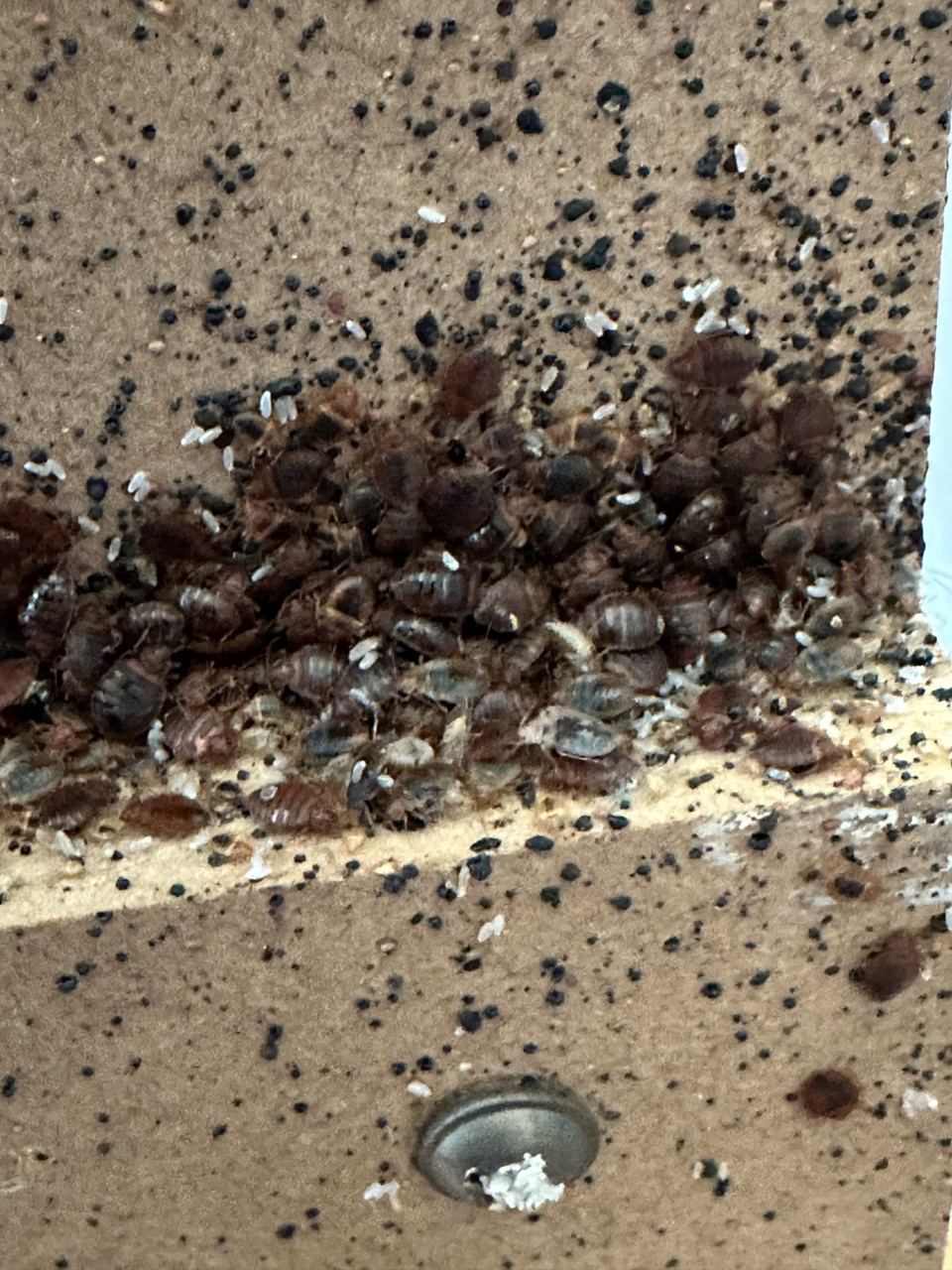 (opens full size in a new tab)
Heavy bed bug harborageLTK member · Jan 2025 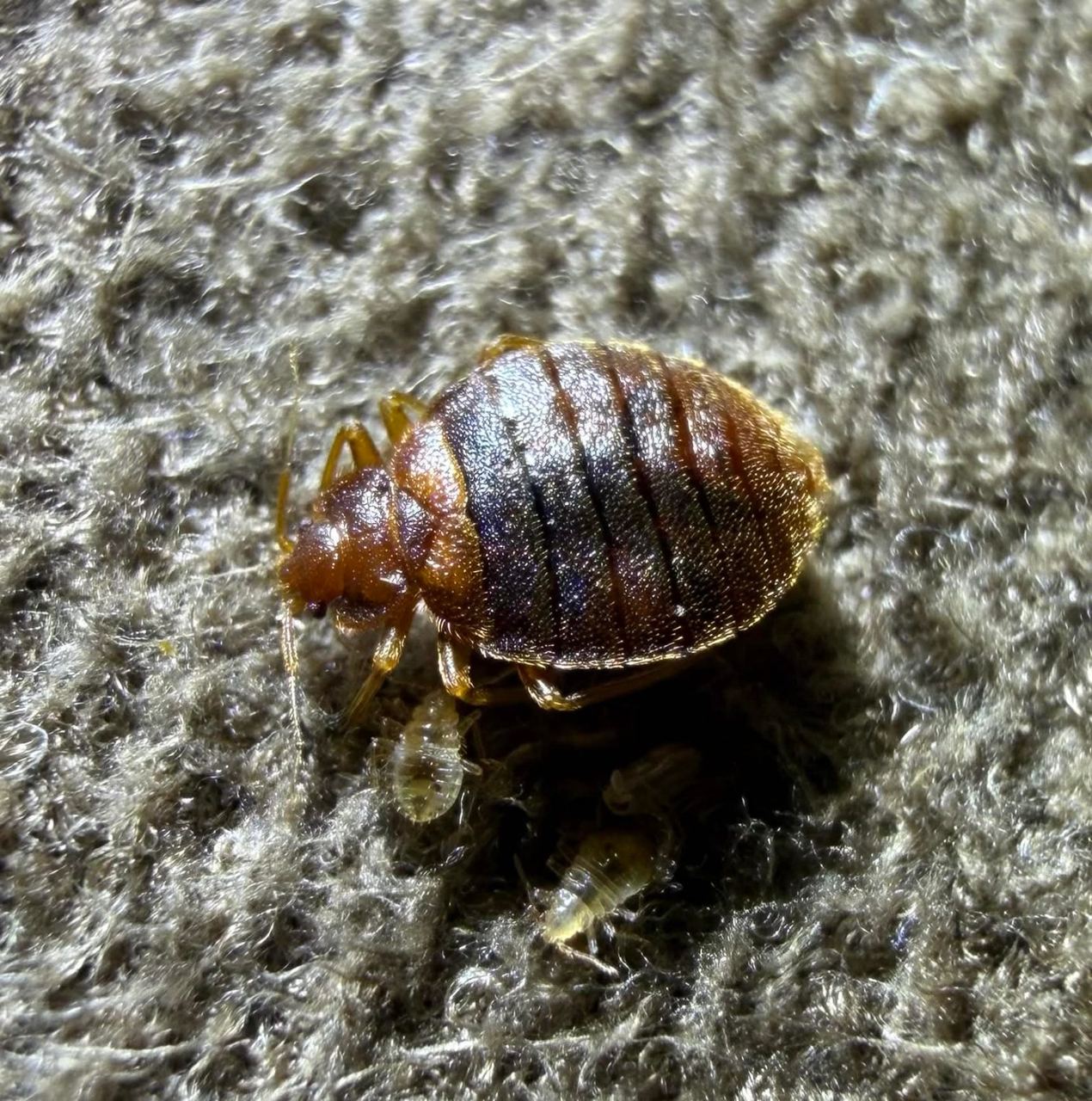 (opens full size in a new tab)
Adult bed bug with nymphsLTK member · May 2026 - (opens full size in a new tab)
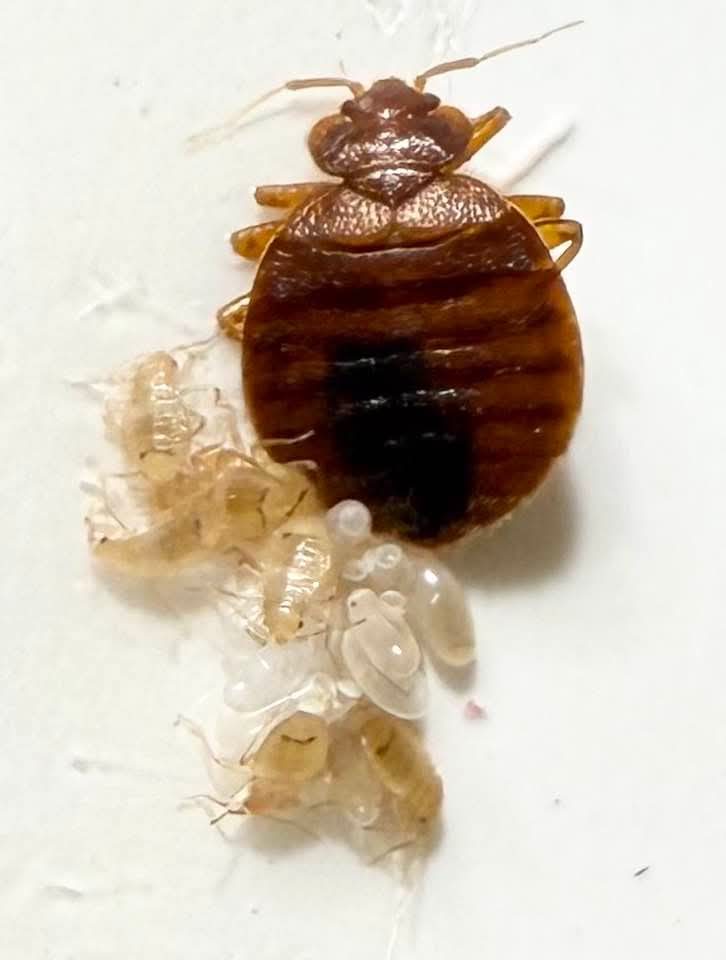
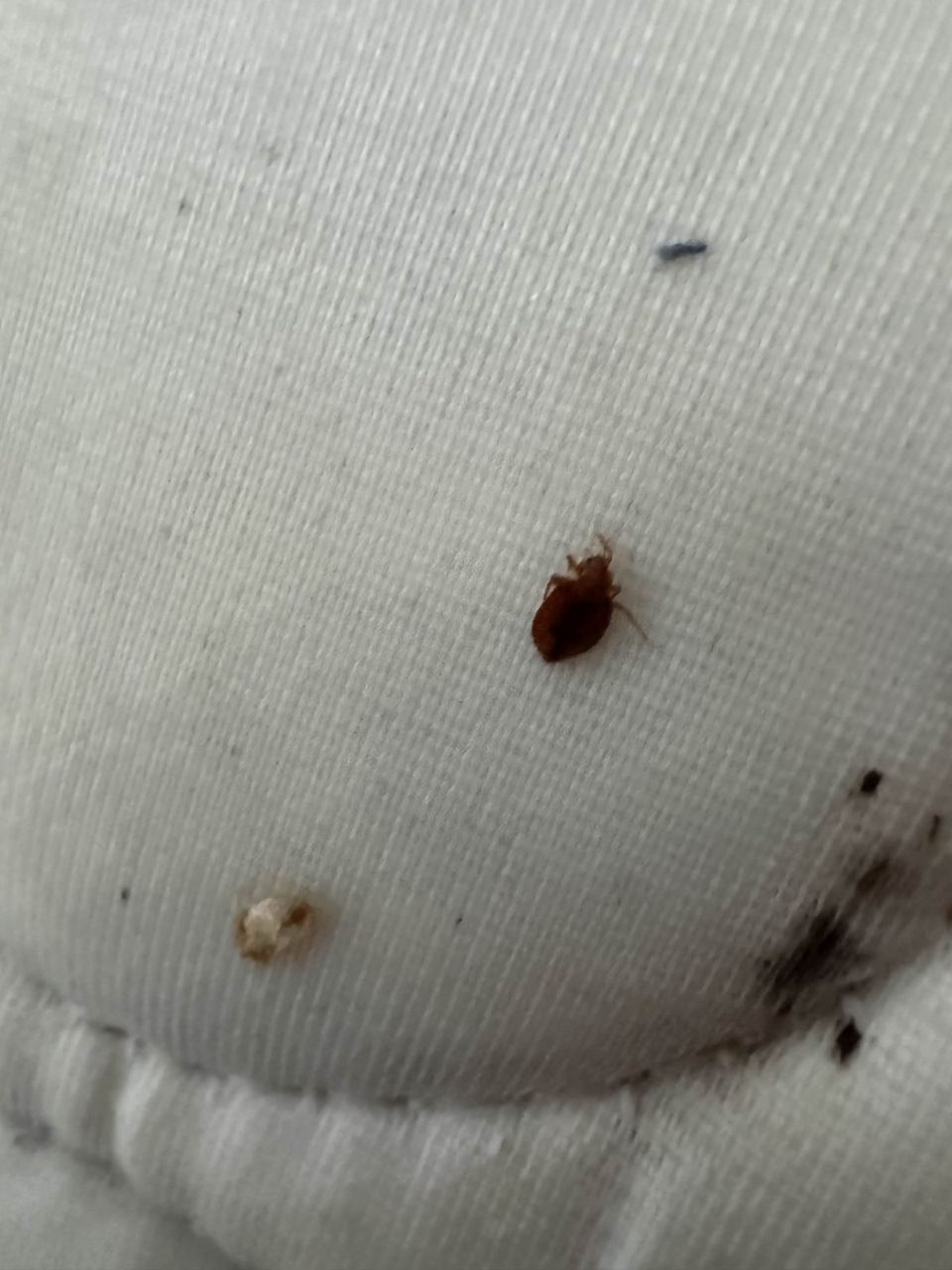
Bed bug with cast skin and spottingLTK member · Nov 2025 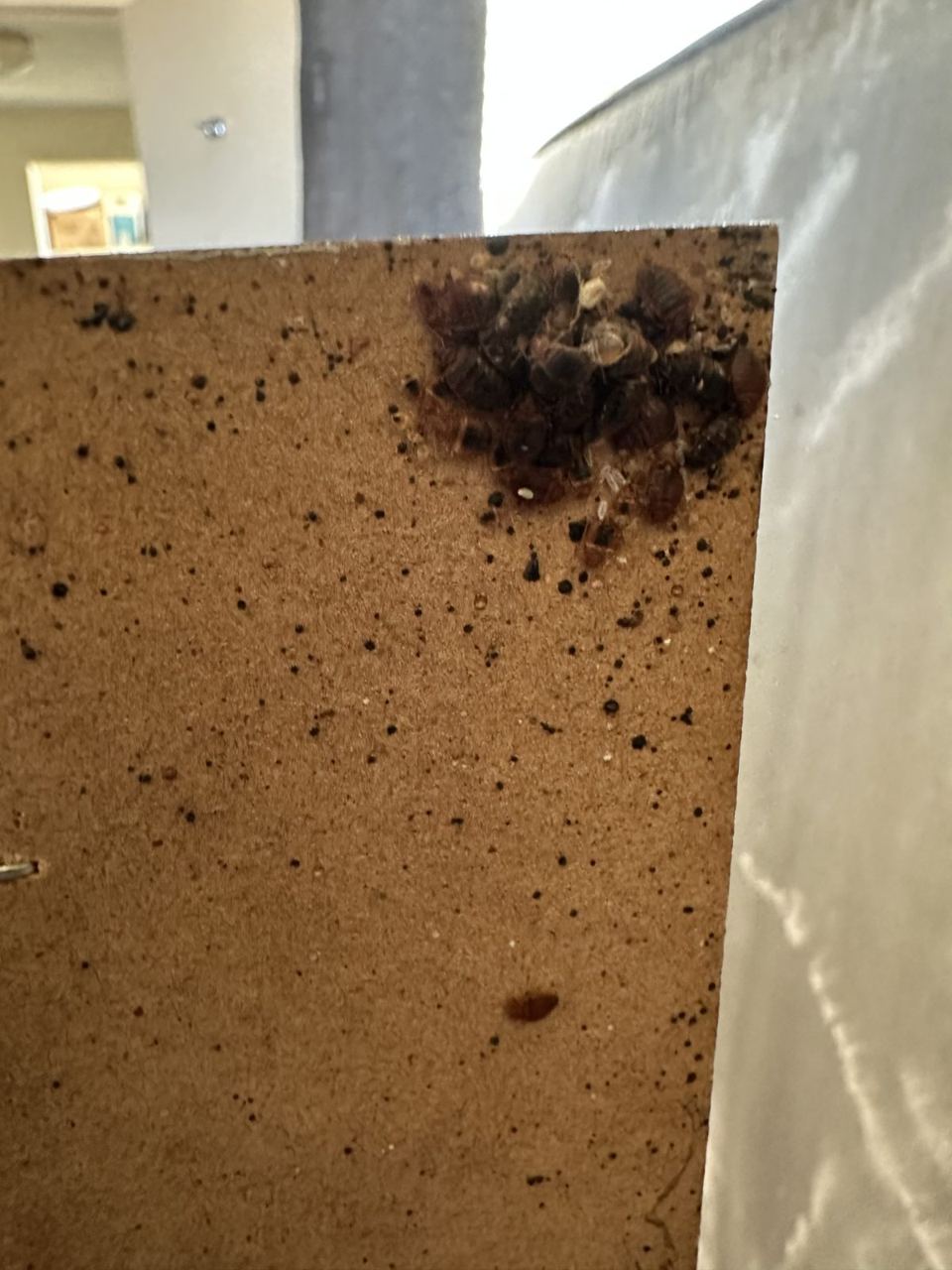 (opens full size in a new tab)
Bed bug cluster on furniture cornerLTK member · Jan 2025
From the LTK podcast
Every episodePest Talk: Bed Bugs
1 hr 46 min
LTK’s first Pest Talk: Brandon Runyon, BCE, on bed bug biology and behavior and advanced treatment methods.
Where it fits in a career
People usually arrive from
Questions people ask
+Do bed bugs spread disease?
CDC says bed bugs are not known to spread diseases to people. Bites can cause itching, sleep loss and skin infections from scratching, and allergic reactions are possible though rare.
+Will I bring bed bugs home?
It is a real risk, which is why NPMA's guidelines tell technicians to minimize contact with infested items, inspect clothes and equipment before leaving, carry a change of clothes for bad sites, and dry clothing on high heat for 30 minutes afterward.
+How hot does a heat treatment need to be?
NPMA's guidelines, citing University of Minnesota research, list exposure times to kill all life stages at the harborage: 7 hours at 113°F, 90 minutes at 118°F, and under a minute at 122°F. EPA's IPM page says at least 120°F for 90 minutes to make sure eggs are killed. Sensors confirm the temperature where bed bugs actually hide, not just the air.
+Why do bed bug jobs need follow-ups?
NPMA says bed bugs and eggs may be missed in inaccessible places, treatments can fail because of resistance or technique, clients may not cooperate, and bed bugs can be reintroduced. Follow-ups confirm the problem is gone.
+Do I need a special licence for bed bugs?
Not in the five states this site covers. The work falls under the general structural licence. Fumigating for bed bugs needs the fumigation category.
+Can I tell if a bite is from a bed bug?
No. NPMA says it is not possible to tell from a skin reaction, and inspectors should not examine a person's body or give an opinion on a reaction. Only live bed bugs or viable eggs confirm activity.
+Why are pesticides alone not enough?
NPMA says insecticide resistance in bed bugs is widespread and varies between populations. Research summarized by Ohio State University documents resistance to pyrethroids and to several neonicotinoids. That is why combined chemical and non-chemical methods are recommended.
+What do clients have to do?
EPA's preparation guidance includes reducing clutter, removing cardboard boxes, moving the bed at least 6 inches from the wall, drying clothing and bedding on high heat for 30 minutes, using encasements and interceptors, and vacuuming. The technician's job includes explaining this clearly.
Still deciding? Ask the people doing bed bug work every day in the LTK Discord.
Ask on Discord(opens Discord in a new tab)Sources
- CDC: About Bed Bugs
- US EPA: Controlling Bed Bugs Using Integrated Pest Management (IPM)
- US EPA: Preparing for Treatment Against Bed Bugs
- NPMA: Bed Bug Best Management Practices, A Guide for Pest Management Professionals (2023)
- Ohio State University bed bug research: Insecticide resistance
- Burrows, Perron and Susser (2013), Suicide following an infestation of bed bugs, American Journal of Case Reports (PMC)
- US EPA pesticide label: Vikane gas fumigant, EPA Reg. No. 62719-4 (accepted 04/14/2014)
- BLS Occupational Outlook Handbook: Pest Control Workers
- O*NET OnLine: Pest Control Workers (37-2021.00), summary and work context
- BLS OEWS frequently asked questions (what wages include, 2,080-hour annual basis)
- BLS National Compensation Survey, Employee Benefits, March 2026, Table 2: Medical care benefits
- BLS National Compensation Survey, Employee Benefits, March 2026, Table 1: Retirement benefits
- BLS National Compensation Survey, Employee Benefits, March 2026, Table 6: Paid leave
- BLS National Compensation Survey, Employee Benefits, March 2026, Table 5: Life insurance benefits
- 40 CFR 171.101: Commercial applicator certification categories (Cornell LII)
- ESA: ACE eligibility requirements
- NPMA QualityPro: Frequently asked questions
Researched 2026-10-01. Licensing details change; confirm with your state agency before you rely on them.