
Fields · Exclusion and building work
Insulation and attic restoration
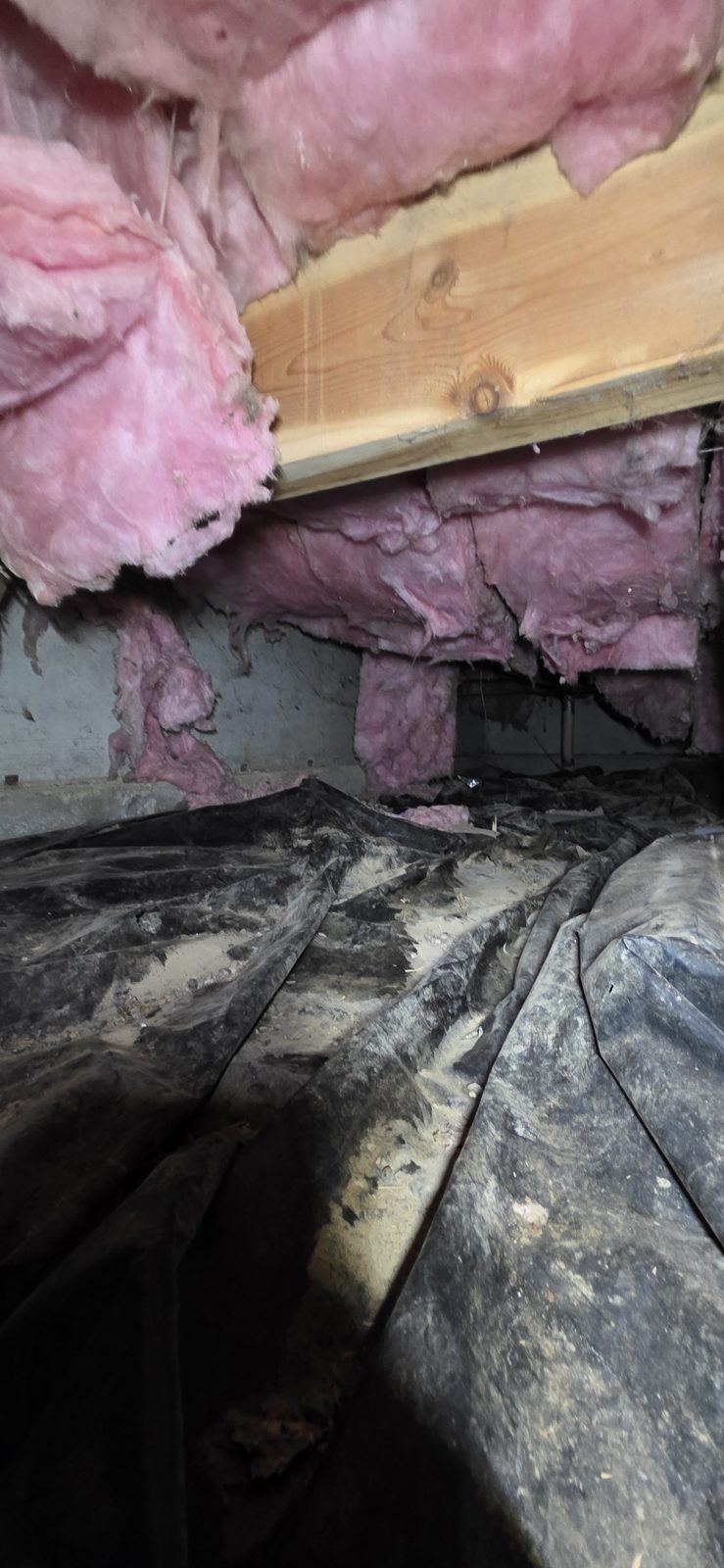
What is insulation and attic restoration work?
Removing contaminated insulation, decontaminating and re-insulating after infestation — usually sold alongside exclusion.
Key factNot a pesticide licence. Respiratory protection and confined-space practice matter far more here.
Thinking about insulation and attic restoration? Ask the people doing it every day in the LTK Discord.
Ask on Discord(opens Discord in a new tab)What the job is really like
In pest control, insulation work usually means attic restoration after an infestation. A crew removes insulation fouled by rodents, bats, birds or other animals, cleans and disinfects the space, seals entry points, and puts new insulation back. Some companies also install insulation that is itself a registered pesticide: TAP (sold as T•A•P) is a borate-treated cellulose insulation with EPA Registration Number 103652-1, labelled to control cockroaches, termites, ants, silverfish and other insects in the building voids where it is applied. The work sits between two trades. On the insulation side, BLS counts floor, ceiling and wall insulation workers as a construction occupation, and states like California license insulation contractors. On the pest side, installing a registered pesticide for hire may need a pesticide licence, depending on the state. It suits people who are strong, tolerate heat and dust, take protective equipment seriously, and like a job with a clear before and after.
A job starts with an attic inspection, often done by the same person who sells it. You check how deep the existing insulation is, how much of it is soiled with droppings, urine or nesting, where the animals got in, and how big the space is. One thing stops a job on the spot: vermiculite. EPA describes it as a pebble-like, pour-in product, usually gray-brown or silver-gold, and says a mine near Libby, Montana supplied over 70 percent of US vermiculite from 1919 to 1990 and was contaminated with asbestos. EPA's advice is to assume it contains asbestos, not disturb it, and hire a professional asbestos contractor.
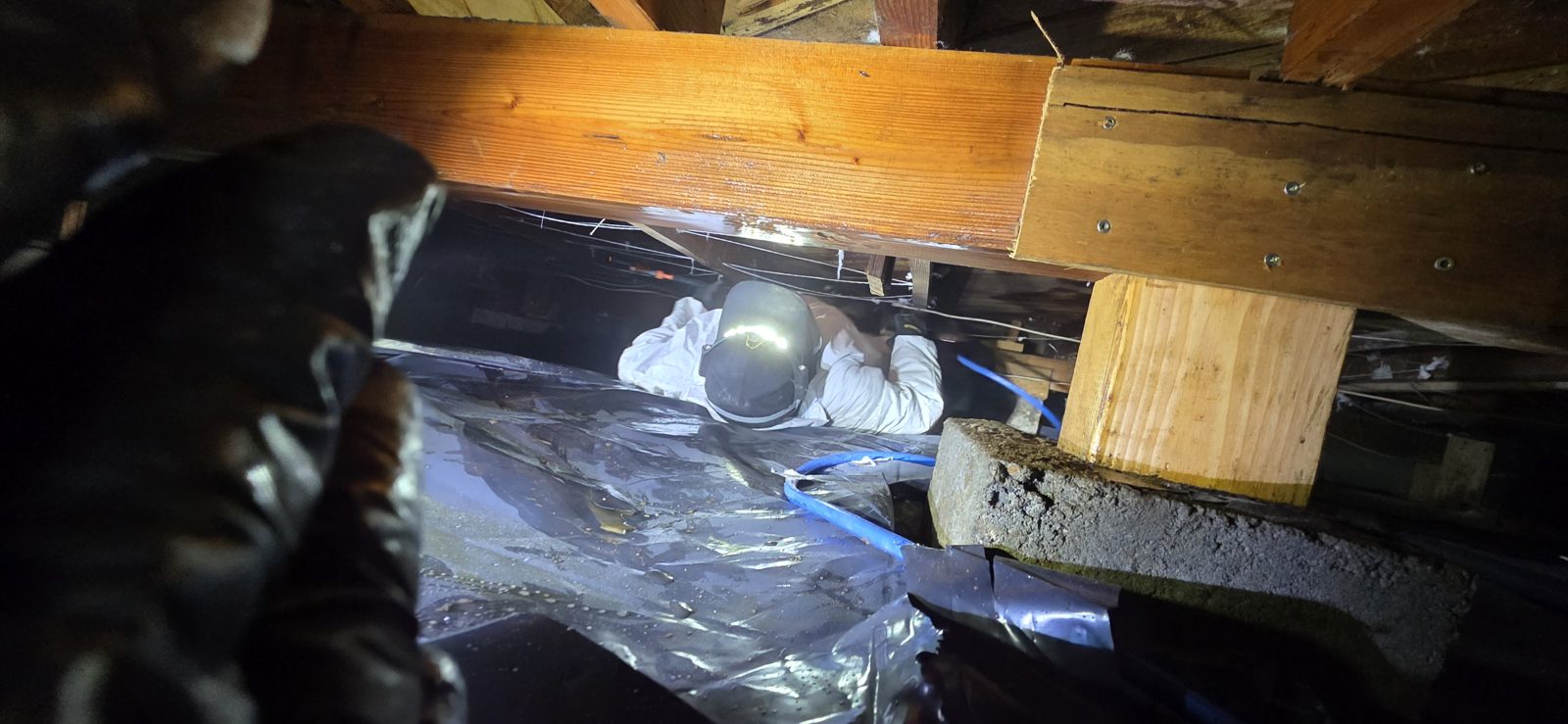
Removal day is the dirty part. Crews suit up before going in. For heavy rodent infestations the CDC lists coveralls, rubber boots or disposable shoe covers, rubber or plastic gloves, goggles, and a half-mask air-purifying respirator with a HEPA filter or a powered air-purifying respirator. When a respirator is required at work, OSHA's respiratory protection standard makes the employer run a written program, provide a medical evaluation before fit testing or use, fit test before first use and at least once a year, and train workers. BLS lists removing and disposing of old insulation as a standard insulator duty; in pest work, the material is bagged and carried or removed from a contaminated attic.
Next comes cleanup and sealing. The CDC's household guidance is to ventilate first, never sweep or vacuum droppings dry, spray them with a bleach solution (1.5 cups of bleach per gallon of water, or 1 part bleach to 9 parts water) or an EPA-registered disinfectant until very wet, and let it soak for 5 minutes or as the label says. For heavy infestations the CDC says to contact the local or state health department and occupational safety authority. Entry points are sealed at this stage, often by an exclusion crew, so the new insulation is not ruined by the next animal.
Then the attic is rebuilt. O*NET's task list for insulation workers describes filling blower hoppers, using controls to regulate the flow of material through the hose, and distributing insulation evenly into ceilings and walls, as well as cutting and fitting batts. ENERGY STAR publishes recommended attic R-values by climate zone, roughly R30 to R60 for an uninsulated attic. If the product is a registered pesticide like TAP, the label governs: it lists long sleeves, long pants, socks and shoes, chemical-resistant gloves, a NIOSH-approved particulate respirator and dust goggles for applicators, says insulation should not cover attic ventilation or soffit vents, and states the product is not for use as sole protection against termites.
Heat shapes the week. Attics in summer are among the hottest places anyone in pest control works. OSHA names heavy physical activity, hot conditions, lack of acclimatization and heat-holding clothing (which describes a full protective suit) as risk factors, and stresses water, rest, shade and a gradual build-up for new workers. Ask any employer how they handle attic heat before you start.
Daily duties
- Inspect attics and crawlspaces for contaminated or damaged insulation, droppings and nesting
- Measure the space and estimate removal and replacement
- Identify vermiculite and stop work for an asbestos professional when it is found
- Set up containment and put on protective equipment, including a fit-tested respirator
- Remove and bag contaminated insulation and nesting material and dispose of it as required
- Wet and disinfect droppings and soiled surfaces before cleanup
- Seal animal entry points, or coordinate with the exclusion crew
- Install baffles or vent chutes so new insulation does not block attic ventilation
- Load blower hoppers and blow loose-fill insulation evenly to the planned depth
- Cut and fit batt insulation where blown material is not suitable
- Follow the pesticide label exactly when installing a registered pest control insulation
- Document before and after conditions with photos and depth measurements
- Clean, maintain and store blowing and removal equipment
Work environment
- Schedule
- BLS says most insulators work full time and more than 40 hours a week may be required to meet construction deadlines. O*NET data for floor, ceiling and wall insulators shows 67 percent working 40 hours and 16 percent more than 40. Pest company attic crews may run on the pest company's schedule instead; ask.
- Seasons
- BLS notes insulators working outdoors may not be able to work in bad weather. In attics the seasonal issue is heat: summer attic work is hard and needs a heat plan. We found no source measuring how demand for pest-related insulation work changes across the year.
- Physical
- Heavy, cramped and repetitive. BLS says insulators spend most of the day standing, bending or kneeling in confined spaces and may work at height on ladders or scaffolds. In O*NET data, 39 percent of floor, ceiling and wall insulators work in cramped spaces or awkward positions every day, 20 percent kneel, crouch or crawl continually, and 29 percent face very hot or cold temperatures every day.
- Hazards
- BLS reports floor, ceiling and wall insulators have one of the highest rates of injuries and illnesses of all occupations, with falls from ladders and knife cuts among the common hazards, and small particles that irritate eyes, skin and lungs. Pest work adds biological hazards: rodent droppings and nesting (CDC hantavirus cleanup guidance), and bird or bat droppings that can carry the fungus causing histoplasmosis. Vermiculite may contain asbestos. Attic heat is a serious hazard (OSHA). O*NET data shows 60 percent of insulators exposed to contaminants every day.
- Vehicle and travel
- Crews travel to each home with a truck or trailer carrying the blowing machine and removal equipment. O*NET data shows 61 percent of insulators work in an enclosed vehicle or equipment every day. Ask whether you will drive a box truck or tow a trailer.
How people get in
Almost always from exclusion or wildlife, as an add-on service that becomes its own crew.
Training and licensing
Getting hired
BLS says there are no specific education requirements for floor, ceiling and wall insulators, and that high school maths, mechanical drawing and science courses help. Pest companies usually also want a driver's licence and good driving record (BLS, pest control workers). If you will apply a registered pesticide product commercially, federal rules set 18 as the minimum age for commercial applicator certification. You must be medically cleared to wear a respirator under OSHA's standard.
Learning on the job
BLS says most floor, ceiling and wall insulators learn on the job, get mandatory OSHA safety training on insulation handling and asbestos abatement, and work alongside experienced installers to learn the equipment. Respirator users must be medically evaluated, fit tested and trained before use, with fit testing at least yearly (29 CFR 1910.134). Expect to learn removal, cleanup and blowing as a helper before you run an attic yourself.
Licensing
There is no single 'pest insulation' licence, and sources do not agree on one regime. Three things can apply. Contractor licensing: some states license insulation as a trade. California's CSLB has a C-2 Insulation and Acoustical classification for contractors who install insulating media for temperature or sound control, requires a licence for jobs that need a permit, use employees, or total $1,000 or more, and requires the licence qualifier to have four years of journey-level experience in the last ten. Pesticide licensing: a product like TAP is an EPA-registered pesticide, and EPA notes that many state agencies require applicator certification to use any pesticide commercially, restricted use or not. Whether installing it needs a pest licence, and in which category, depends on your state. Asbestos: EPA's Model Accreditation Plan requires trained, accredited professionals for asbestos work in schools and public and commercial buildings, and some states license asbestos abatement. Plain removal and replacement of ordinary insulation may need none of the pest licences at all. Ask your state pest regulator and your state contractor board, in writing, before you sell this work.
Certifications worth knowing
Building Performance Institute (BPI)
BPI certification for tightening the building envelope through proper air sealing and insulation installation. BPI lists its former Retrofit Installer Technician certification as retired.
Asbestos worker or contractor/supervisor accreditation
US EPA Model Accreditation Plan, issued through state agencies or authorized training providers
Required to remove asbestos-containing material such as vermiculite in covered buildings. Initial training, an exam, and annual refresher training; states can add requirements.
National Wildlife Control Operators Association (NWCOA)
Online NWCOA training on how diseases pass from animals to people, relevant to anyone handling contaminated attic material.
State pesticide applicator certification
Your state pesticide regulatory agency
Needed in many states before applying a registered pesticide product for hire. Category names differ by state.
- In plain words
- Not a pesticide licence. Respiratory protection and confined-space practice matter far more here.
- Government pay data
- Not tracked as its own job by the Bureau of Labor Statistics
Skills and tools
- Disciplined use of protective equipment, including respirators
- Recognizing contamination, nesting and entry points in an attic
- Recognizing vermiculite and knowing when to stop
- Running blowing and removal equipment
- Measuring, estimating square footage and calculating depth or R-value
- Reading and following pesticide labels exactly
- Working in heat and tight spaces without cutting corners
- Explaining before-and-after findings to a homeowner
- Insulation blowing machine with hopper and hose
- Insulation removal equipment and heavy-duty disposal bags
- Half-mask respirator with HEPA filters or a powered air-purifying respirator
- Disposable coveralls, shoe covers, gloves and goggles
- Sprayer for disinfectant
- Utility knives, saws and staple guns
- Baffles or vent chutes
- Depth rulers or markers
- Ladders and work lights
- Camera or phone for documentation
- Sealing materials for entry points
Career path
- 01HelperBagging, hauling, setup and cleanup. You learn PPE habits and the equipment here.
- 02Installer or attic technicianRun removal and blowing on your own. BLS notes insulators learn mostly on the job alongside experienced workers.
- 03Inspector or estimatorInspect attics, write quotes, spot vermiculite and decide scope. Often paired with exclusion sales.
- 04Crew lead or production managerSchedule crews, run the safety program including respirator fit testing, and check quality.
- 05Licensed contractor or ownerWhere insulation is a licensed trade, the qualifier needs documented experience; in California, four years of journey-level work in the last ten. Owners also need to settle which pest licences apply.
Pay and benefits
The Bureau of Labor Statistics doesn’t track this field as its own job, so these are the national numbers for pest control workers — the closest published benchmark, not this field’s own pay.
- $45,250Median annual pay · $21.75/hr source (BLS, opens in a new tab)
- $34,680–$61,890Lowest 10% to highest 10% of earners source (BLS, opens in a new tab)
- +6%Projected job growth 2025–2035 (all jobs: 3%) source (BLS, opens in a new tab)
- 13,700Openings projected each year, on average source (BLS, opens in a new tab)
$44,930 median inside exterminating and pest control services
$50,980 median across all US occupations
What these numbers leave out
- Self-employed workers — so owner-operators are absent entirely
- Overtime premium pay, shift differentials and non-production bonuses (commissions and production bonuses are included)
- Seasonal variation (annual figures assume 2,080 hours)
Real route pay depends on commission, truck and tool allowances and overtime. Compare notes in the Discord.
BLS tracks insulation workers, floor, ceiling and wall (SOC 47-2131), which is the closest occupation to attic insulation work. In May 2025 their median annual wage was $49,120 ($23.62 an hour), with the lowest 10 percent under $37,030 and the highest 10 percent over $78,190. OEWS counted 44,440 jobs. In drywall and insulation contractors, the largest employer, the median was $48,880. BLS does not publish a separate figure for insulation workers inside pest control companies, and attic technicians at pest companies may be coded as pest control workers (SOC 37-2021), whose median was $45,250. OEWS excludes the self-employed and does not capture overtime, commission or per-job pay, so ask employers how insulation work is paid.
Benefits
Insulation workers are a construction occupation in BLS's benefits data. In March 2026, among private industry workers in construction, extraction, farming, fishing and forestry occupations, 75 percent had access to medical care benefits, 66 percent to retirement benefits, 71 percent to paid sick leave, 77 percent to paid vacation and 82 percent to paid holidays. If a pest company classes you as a pest control worker instead, the service occupations group applies: 47 percent medical, 47 percent retirement, 67 percent paid sick leave. These are group averages, not promises. Ask directly about respirators and protective gear, vehicle use and paid training.
State-by-state licensing
There is no single state pesticide licence for this field. Depending on where you work it can fall under contractor or trade licensing, a third-party certification, or nothing formal at all. A state-by-state guide is in the works — until then, ask in the Discord and someone in your state will point you the right way.
The good and the hard
- Clear, visible results: a filthy attic becomes a clean, insulated one.
- Real trade skills that transfer to insulation and building-performance work outside pest control.
- Often sold with exclusion, so there is a path into inspection and estimating.
- Insulation workers' median pay ($49,120 in May 2025) is above pest control workers' ($45,250).
- Benefit access in the construction group is higher than in service occupations.
- Summer attic heat, in a full suit and respirator.
- BLS reports one of the highest injury and illness rates of all occupations for floor, ceiling and wall insulators.
- Contaminated material carries disease risk, and vermiculite may contain asbestos.
- Cramped spaces, kneeling and heavy lifting most of the day.
- Licensing is unclear and may involve a contractor board, a pesticide regulator and asbestos rules at once.
From the crew
Photos members posted in the LTK Discord, shared with the community’s okay. Browse the pest ID library.
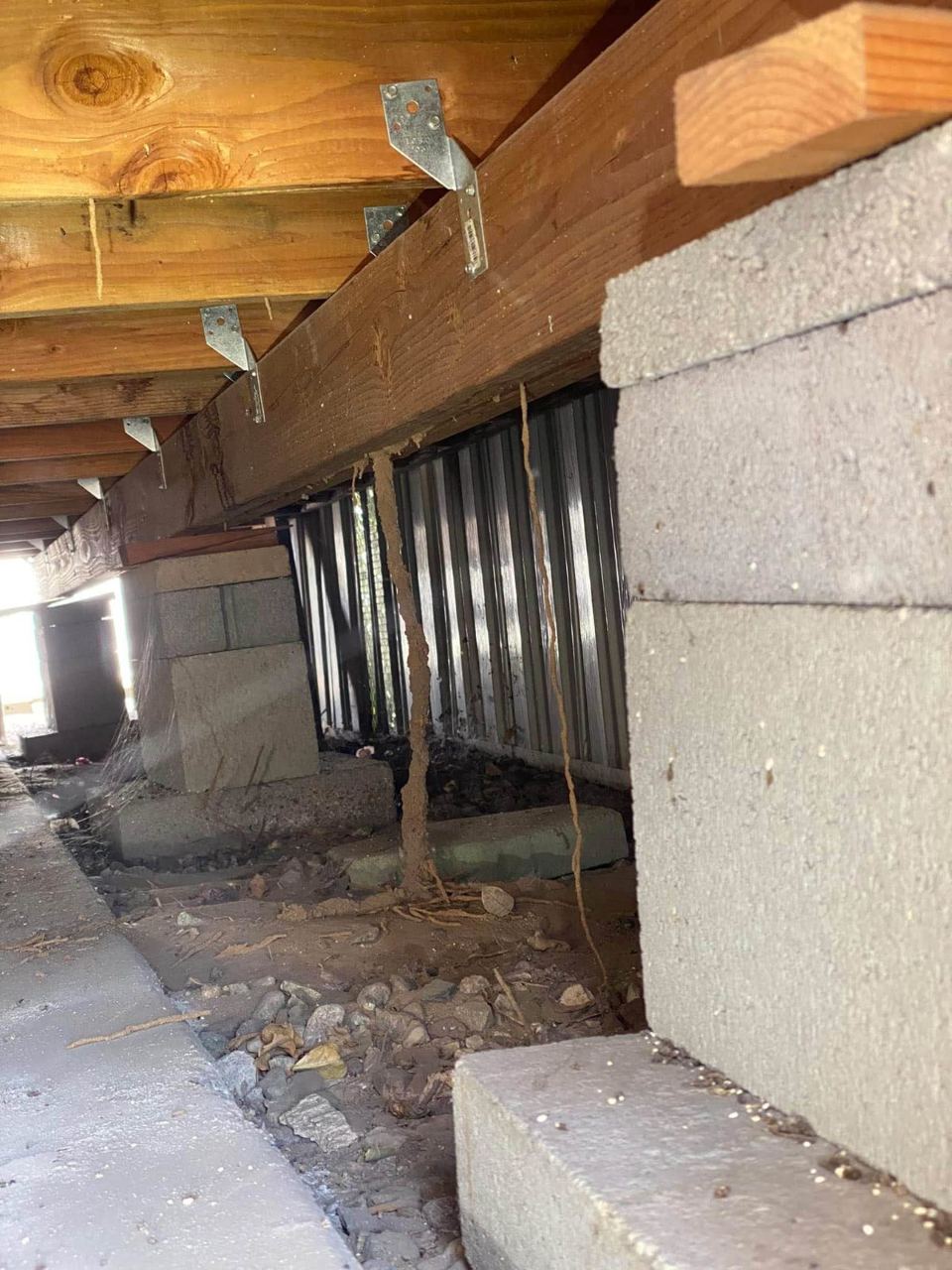 (opens full size in a new tab)
Drop tubes reaching a beamLTK member · Jan 2025 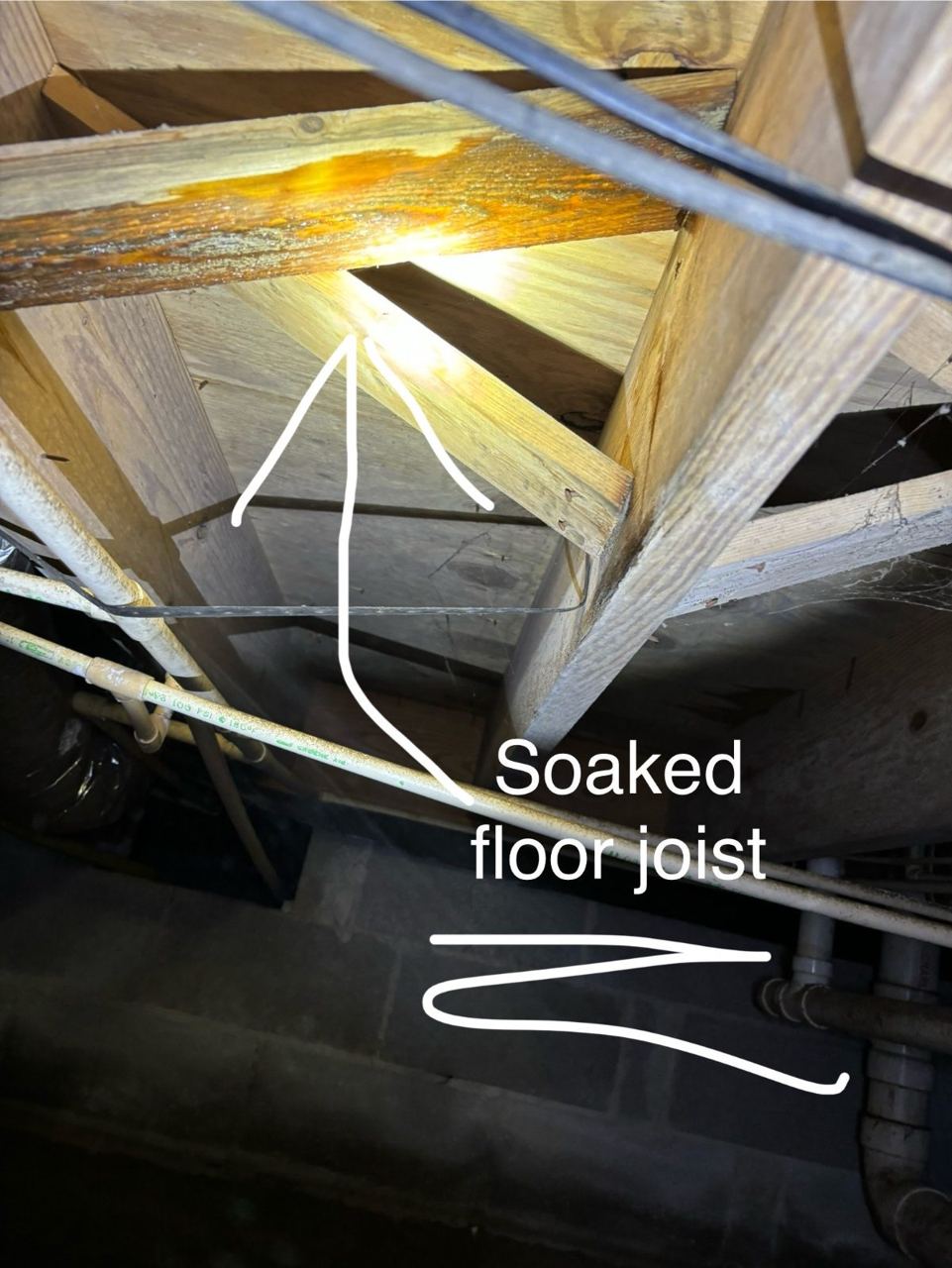 (opens full size in a new tab)
Soaked floor joist in a crawlspaceLTK member · Mar 2025
Where it fits in a career
People usually arrive from
Questions people ask
+Is this pest control or construction?
Both. BLS counts insulators as construction workers, and some states license insulation contractors (California's C-2). If you install a product registered as a pesticide, pest control law may also apply.
+Do I need a pesticide licence to install pest control insulation?
It depends on your state. Products like TAP are EPA-registered pesticides, and EPA notes many states require certification to use any pesticide commercially. Ask your state pesticide agency which category, if any, covers it.
+What happens if the attic has vermiculite?
Stop. EPA says to assume vermiculite contains asbestos, not to disturb it, and to hire a professional asbestos contractor. Asbestos removal needs EPA-accredited training and sometimes a state licence.
+Will I have to wear a respirator?
Very likely. The CDC recommends a HEPA-filtered respirator for heavy rodent infestations, and the TAP label requires a particulate respirator for applicators. OSHA requires your employer to provide a medical evaluation, fit testing before use and yearly, and training.
+Is it safe to vacuum up droppings?
The CDC says not to sweep or vacuum droppings dry, but to wet them with disinfectant and let it soak first. For heavy infestations it says to involve the health department and occupational safety authority. Follow your employer's written procedures.
+Does pest control insulation replace termite treatment?
No. The TAP label says it is not for use as sole protection against termites and does not substitute for soil or foundation treatment.
+How hot does it get?
Hot enough to be a serious hazard. OSHA lists heavy work, hot conditions, protective clothing and lack of acclimatization as risk factors. Ask how the company manages water, breaks and new-worker acclimatization.
+What does it pay?
Floor, ceiling and wall insulation workers had a May 2025 median of $49,120 a year. BLS does not publish a pest-company-specific figure.
Still deciding? Ask the people doing insulation and attic restoration every day in the LTK Discord.
Ask on Discord(opens Discord in a new tab)Sources
- BLS Occupational Outlook Handbook: Insulation Workers
- O*NET OnLine: Insulation Workers, Floor, Ceiling, and Wall (47-2131.00)
- BLS OEWS May 2025 via BLS Public Data API (series OEUN000000000000047213113, OEUN000000023831047213113 and related)
- BLS Employee Benefits in the United States, March 2026: Table 2, Medical care benefits
- BLS Employee Benefits in the United States, March 2026: Table 1, Retirement benefits
- BLS Employee Benefits in the United States, March 2026: Table 6, Paid leave
- EPA pesticide label: T•A•P, EPA Reg. No. 103652-1 (notification, August 2025)
- Texas A&M AgriLife IPM House: T.A.P. pest control insulation
- EPA: Protect Your Family from Asbestos-Contaminated Vermiculite Insulation
- EPA: Asbestos Professionals (Model Accreditation Plan)
- CDC: How to Clean Up After Rodents
- OSHA 29 CFR 1910.134 Respiratory Protection
- OSHA: Heat Exposure
- CDC/NIOSH: Histoplasmosis
- CSLB: Get Licensed to Build guide (includes C-2 Insulation and Acoustical)
- CSLB Industry Bulletin 24-07: minor work exemption rises to $1,000
- EPA: Certification Standards for Pesticide Applicators
- BPI: Certified Professionals
- ENERGY STAR: Recommended Home Insulation R-Values
Researched 2026-10-01. Licensing details change; confirm with your state agency before you rely on them.