
Fields · Structural pest control
Termite and wood-destroying organisms
What is termite and wood-destroying organisms work?
Inspection, treatment and reporting on termites, wood-boring beetles and decay fungi — including the inspection reports that real estate transactions depend on.
Key factA separate licence category in most states. Several states additionally regulate who may sign a WDI/WDO report, because a real estate transaction rests on it.
Thinking about termite and wood-destroying organisms? Ask the people doing it every day in the LTK Discord.
Ask on Discord(opens Discord in a new tab)What the job is really like
Termite and wood-destroying organism work is the inspection, treatment and reporting side of pest control that protects the structure of a building. EPA says termites cause billions of dollars in structural damage every year and property owners spend over two billion dollars to treat them. The work has two halves. One is treatment: liquid termiticides in the soil, bait systems, treated building materials and wood treatments, and for some infestations, fumigation. The other is inspection and reporting, including the wood-destroying insect reports that home sales and loans often depend on. BLS describes termite control workers as applicators who use chemicals, baiting techniques and structural modifications, and who may repair damage. EPA says firms offering termite services must be licensed by the state. The field suits careful, patient people who do not mind crawlspaces and who can write clearly, because a termite inspection report is a document other people make money decisions on. It is usually entered from general pest after adding the termite category.
Many days start with inspections. A technician or inspector arrives at a property, confirms which structures are part of the job, and works through the building from the outside, the inside, the crawlspace or basement and the attic where accessible. On the standard NPMA-33 wood destroying insect inspection report, which NPMA says must be used for HUD and VA guaranteed property transactions, the inspector looks for visible evidence of termites, carpenter ants, carpenter bees and reinfesting wood-boring beetles. That means live insects, dead insects and wings, frass, shelter tubes, exit holes, staining and damage. NPMA's guidance tells the inspector to probe and sound readily accessible wood, and to list the areas that could not be inspected and why.
Then comes the writing. The report records only what was visible on the day. NPMA's guidelines say the inspector is not a damage expert, should not distinguish between structural and cosmetic damage, and that the report clearly states it is not a structural damage report. The inspector still has to make a recommendation, and live termites do not have to be seen for a treatment to be recommended if there is evidence and no documentation of past treatment. Some states set their own rules and forms. In California, only a licensed Branch 3 field representative or operator may inspect before anyone issues an opinion on wood-destroying pests, the report must be delivered within 10 business days of the start of the inspection, and it must include a diagram of the structure showing where infestation or infection was found.
Treatment days look different. For a conventional liquid treatment of subterranean termites, Georgia's minimum treatment standards spell out the work in detail: remove wood debris and cellulose material from under the building, break wood-to-soil contacts, remove accessible termite tunnels, trench along the inside and outside of foundation walls, rod below the trench where needed, and drill concrete slabs, hollow block walls and porches at set intervals so termiticide reaches the soil. The same rule sets the rate at 4 gallons per 10 linear feet per foot of depth for soil, and requires steps to prevent back-siphoning into water supplies and contamination of wells. It is heavy, careful work with a pump, hose, drill and rods.
Other jobs use bait systems. University of California IPM describes baits as slow-acting insecticides that termites share through the colony. Bait work means installing stations around a structure and returning to check and service them. Drywood termites, which nest in dry wood above ground rather than in soil, may be handled with localized treatments such as heat or wood replacement, or with whole-structure fumigation when infestations are widespread, which is fumigation crew work.
Across the week, a termite technician balances inspections, treatments, bait station checks, renewals of service agreements, and paperwork. California requires registered companies to keep inspection reports, field notes and activity forms for three years. The paperwork is not an add-on to the job. It is a large part of what you are paid for and what you are accountable for.
Daily duties
- Inspect structures, crawlspaces, basements, attics and surrounding areas for termites and other wood-destroying insects and organisms.
- Probe and sound accessible wood to find hidden damage.
- Identify the type of termite or other wood-destroying organism, since subterranean, drywood and dampwood termites need different approaches.
- Identify conducive conditions such as wood-to-soil contact, moisture problems and wood debris under the structure.
- Complete wood-destroying insect inspection reports, including NPMA-33 forms or state-required forms, and list areas that could not be inspected.
- Draw foundation diagrams showing where evidence or damage was found, where state rules require it.
- Recommend treatment or corrective action based on evidence and documentation of past treatment.
- Measure foundations and calculate the volume of termiticide needed.
- Trench, rod and drill to apply liquid termiticide to the soil around and under the structure, following the label and state treatment standards.
- Drill and treat hollow masonry, slabs, porches and other critical entry points.
- Install, monitor and service termite bait stations.
- Prevent back-siphoning and protect wells and water supplies during mixing and application.
- Seal drill holes after treatment.
- Explain findings and treatment options to homeowners, buyers, sellers and real estate agents.
- Keep inspection reports, field notes and treatment records as state law requires.
Work environment
- Schedule
- BLS does not publish separate hours for termite work. For pest control workers overall, most are full time, evenings and weekends are common, and some work more than 40 hours a week. Inspection scheduling often depends on deadlines set by property sales and loan closings, so ask employers how quickly reports must be turned around.
- Seasons
- University of California IPM says termite swarms of winged reproductives happen in spring and fall, and swarms are when many homeowners first notice termites. Neither BLS nor any source opened for this guide gives figures on how termite workload varies by month. Inspection volume also tracks home sales in your area. Ask employers how hours change through the year.
- Physical
- This is among the more physical structural lanes. BLS notes that pest control workers kneel, bend and crawl in tight spaces to inspect sites. Termite inspections and treatments put you in crawlspaces and attics, and treatments involve trenching, carrying hose and equipment, and drilling concrete and block.
- Hazards
- Termiticides are pesticides with label requirements, and EPA notes that in most cases termiticide application can only be properly performed by a trained pest management professional. Drilling concrete, brick and block creates respirable crystalline silica dust; OSHA says silica can cause silicosis, an incurable lung disease, as well as lung cancer, COPD and kidney disease, and has a construction standard covering this exposure. Attics and crawlspaces can be very hot; OSHA says heavy physical work and lack of acclimatization raise the risk of heat illness for indoor and outdoor workers. O*NET's survey of pest control workers found 35 percent face minor burns, cuts, bites or stings every day.
- Vehicle and travel
- Termite crews usually drive trucks carrying tanks, pumps and hose reels. O*NET lists driving a truck equipped with power spraying equipment as a core task for pest control workers, and BLS says many companies require a driver's licence and a good driving record. Inspectors may drive a lighter vehicle across a wider territory. Ask employers what the vehicle setup is.
How people get in
Usually a lateral move from general pest after a year or two, adding the termite category. Some companies hire directly into termite.
Training and licensing
Getting hired
The entry requirements are the same as for pest control workers generally: BLS says a high school diploma or equivalent is typical, and many companies require a driver's licence and a good driving record. The federal minimum age for certified applicators is 18, and California's structural pest law sets 18 as the minimum age to apply for a field representative licence. Most people move into termite work after time in general pest, and some companies hire directly into termite crews.
Learning on the job
States set training minimums per category. In Texas, an apprentice must complete 8 hours of classroom training and 40 hours of on-the-job training in each category, so adding Termite Control means its own category training and exam. In California, the Structural Pest Control Board will not accept a Branch 3 field representative application without proof of training and experience in pesticide application, Branch 3 pest identification and biology, application equipment, hazards and safety, structural repairs, and structural inspection procedures and report writing, under the supervision of a Branch 3 licensee. In Florida, an unlicensed employee who will inspect for wood-destroying organisms needs a special ID card and must be trained by the certified operator in charge in WDO detection and control, biology and identification, the inspection forms used for reporting, and the applicable laws, on top of the standard 40 hours of site training. BLS says pest control workers often specialize in areas such as termite elimination after completing general instruction.
Licensing
Termite and wood-destroying organism work is a separate licence category in many states, and several states also control who may inspect and sign the report. Texas has a Termite Control category. Florida has Termites and Other Wood-Destroying Organisms. California organises it as Branch 3, Termite and Other Wood-Destroying Organisms, and only a Branch 3 field representative or operator may inspect before a company issues an opinion on wood-destroying pests. Washington issues a separate Structural Pest Inspector licence. Not every state splits termite work out by name, so check your state's category list. Where a state prescribes its own inspection form or procedure, NPMA's guidance says the state form and rules come first. Treatment standards can also be set in state rule, as Georgia does. See this site's state pages and your state agency for specifics. This is not legal advice.
Certifications worth knowing
State termite or WDO licence category
Your state pesticide regulatory agency
The category that lets you treat for termites and, in many states, inspect and report. Usually an added category exam on top of a core exam.
Associate Certified Entomologist (ACE)
Entomological Society of America
Voluntary credential for experienced professionals: current licence allowing unsupervised structural application, at least 5 years of verifiable US pest management experience, two references and an exam. Renew every 3 years with 18 CEUs.
QualityPro (company accreditation)
NPMA QualityPro
Company-level accreditation covering hiring practices, background and motor vehicle record checks, insurance, safety, customer communications and employee training and testing.
- In plain words
- A separate licence category in most states. Several states additionally regulate who may sign a WDI/WDO report, because a real estate transaction rests on it.
- Government pay data
- Counted as pest control workers by the Bureau of Labor Statistics
Skills and tools
- Careful, systematic inspection habits, so no accessible area is skipped.
- Recognising termite evidence: shelter tubes, wings, frass, blistered or darkened wood, damage that follows the grain.
- Clear technical writing, because the report is relied on by buyers, sellers and lenders.
- Simple sketching of foundation diagrams.
- Measurement and calculation of linear footage and termiticide volume.
- Understanding of building construction: slabs, crawlspaces, block walls, porches and where they let termites in.
- Patience and stamina for crawlspace and drilling work.
- Explaining findings calmly to people with a lot of money riding on the answer.
- Flashlight
- Probe or screwdriver for probing and sounding wood
- Moisture meter, which the MSU manual lists as useful when inspecting for wood-destroying insects
- Sound detection device for hearing insects working inside wood
- Ladder
- Inspection forms such as the NPMA-33 or the state-required form
- Graph paper or software for foundation diagrams
- Truck-mounted tank, pump and hose reel for liquid termiticide
- Trenching shovel
- Soil rods for injecting below trenches and under slabs
- Hammer drill and masonry bits for slabs and block walls
- Patching material for sealing drill holes
- Termite bait stations and monitoring devices
- Personal protective equipment, including respiratory protection for dust where required
Career path
- 01General pest technicianMost termite technicians start on a general pest route, learning labels, safety, equipment and customers.
- 02Termite technicianAdds the termite category, completes category training, and works on treatment crews and bait accounts.
- 03WDO inspectorInspects for real estate transactions and writes reports. In some states this needs its own licence level, such as California's Branch 3 field representative or Washington's Structural Pest Inspector.
- 04Certified applicator or operator in the termite categoryCan supervise others in the category and, in many states, qualify a company for termite work.
- 05Specialist routesFrom here, people move into fumigation, exclusion, management or ownership. Five years of experience opens the ACE credential.
Pay and benefits
National figures for pest control workers — the government job category this field is counted under.
- $45,250Median annual pay · $21.75/hr source (BLS, opens in a new tab)
- $34,680–$61,890Lowest 10% to highest 10% of earners source (BLS, opens in a new tab)
- +6%Projected job growth 2025–2035 (all jobs: 3%) source (BLS, opens in a new tab)
- 13,700Openings projected each year, on average source (BLS, opens in a new tab)
$44,930 median inside exterminating and pest control services
$50,980 median across all US occupations
What these numbers leave out
- Self-employed workers — so owner-operators are absent entirely
- Overtime premium pay, shift differentials and non-production bonuses (commissions and production bonuses are included)
- Seasonal variation (annual figures assume 2,080 hours)
Real route pay depends on commission, truck and tool allowances and overtime. Compare notes in the Discord.
BLS does not publish pay for termite or WDO work separately. It counts termite control workers within pest control workers (SOC 37-2021), whose median annual wage was $45,250 in May 2025 ($21.75 an hour), with the lowest 10 percent under $34,680 and the highest 10 percent over $61,890. The median in exterminating and pest control services was $44,930. Those figures include commission and production bonuses but not overtime premium, assume 2,080 hours a year, and exclude self-employed workers. No official source opened for this guide shows whether termite work pays more or less than general pest work, so this guide makes no claim either way. Ask employers how inspections and treatments are paid, for example hourly, per job or by commission on sales.
Benefits
There are no official benefit figures for termite work specifically. The closest are BLS National Compensation Survey figures for March 2026 for private industry workers in service occupations, the broad group that includes building and grounds work: 47 percent had access to medical care benefits, 47 percent to retirement benefits, 67 percent to paid sick leave, 57 percent to paid vacation, 56 percent to paid holidays and 33 percent to life insurance. Across all private industry workers, access was 71 percent for medical care and 72 percent for retirement. Full-time workers had much higher access to medical care (87 percent) than part-time workers (23 percent). These are broad context, not what a given pest company offers. Ask employers about health coverage, retirement contributions, paid time off, vehicle use, and whether they pay for category exams, inspector licences and continuing education.
State-by-state licensing
This field runs through each state’s pesticide licensing programme, and every state names and splits its categories differently. Here’s what it’s called in the states we’ve verified so far.
- AlabamaALAlabama Department of Agriculture and Industries (ADAI) — Pesticide Management DivisionWDC — Control and/or Eradication of Wood Destroying Organisms (Certified Operator) · WDS — Control and/or Eradication of Wood Destroying Organisms (Branch Supervisor)
- AlaskaAKAlaska Department of Environmental Conservation (DEC) — Pesticide Control ProgramSee the full list of licence categories
- ArizonaAZArizona Department of Agriculture — Office of Pest Management (OPM), formerly the Pest Management Division (PMD)R3-8-102(3)(a)(i) — Wood-destroying organism treatment · R3-8-102(3)(a)(ii) — Wood-destroying insect inspection · R3-8-102(3)(b) — Wood preservation
- ArkansasARArkansas Department of Agriculture — Pest Control Program (Arkansas State Plant Board rules)1 — Termite and Other (Wood Destroying) Structural Pest Control
- CaliforniaCACalifornia Structural Pest Control Board (SPCB), Department of Consumer AffairsBranch 3 — Termite and other wood-destroying organisms
- ColoradoCOColorado Department of Agriculture (CDA) — Pesticide Applicator Certification and Licensing Program301 — Wood Destroying Organism Pest Control · 306 — Wood Preservation and Wood Products Treatment
- ConnecticutCTConnecticut Department of Energy and Environmental Protection (DEEP) — Pesticide Management Program7B — Termite and Wood Destroying Organisms · 7G — Wood Preservation
- DelawareDEDelaware Department of Agriculture (DDA) — Pesticides Section7B — Wood Destroying Pest Control · 7D — Wood Preservation
- FloridaFLFlorida Department of Agriculture and Consumer Services (FDACS) — Bureau of Licensing and EnforcementWDO — Termites and other wood-destroying organisms
- GeorgiaGAGeorgia Department of Agriculture — Structural Pest Control Section (Georgia Structural Pest Control Commission)WDO — Wood-destroying Organism Control (Category 30)
- HawaiiHIHawaii Pest Control Board, Department of Commerce and Consumer Affairs (DCCA) Professional and Vocational Licensing — with applicator certification by the Hawaii Department of Agriculture and Biosecurity (DAB) Pesticides BranchBR-3 — Termite · 7B — Termite Pest Control
- IdahoIDIdaho State Department of Agriculture (ISDA) — Agricultural Resources Division, Pesticide Applicator Licensing & CertificationWP — Wood Preservative
- IllinoisILIllinois Department of Public Health (IDPH) — Division of Environmental Health, Structural Pest Control ProgramB — Termites and Other Wood-Destroying Organisms · H — Wood Products Pest Control
- IndianaINOffice of Indiana State Chemist (OISC) — Pesticide Section, Purdue University7b — Termite Control · 12 — Wood Destroying Pest Inspection
- IowaIAIowa Department of Agriculture and Land Stewardship (IDALS) — Pesticide Bureau7B — Termite control · 7E — Wood preservatives
- KansasKSKansas Department of Agriculture (KDA) — Pesticide and Fertilizer Program7A — Wood-destroying pest control · 7F — Wood preservation and wood products treatment
- KentuckyKYKentucky Department of Agriculture (KDA) — Structural Pest Control Branch7(c) — Wood preservatives
- LouisianaLALouisiana Department of Agriculture and Forestry (LDAF) — Structural Pest Control CommissionLP3 — Termite control
- MaineMEMaine Board of Pesticides Control (BPC), Department of Agriculture, Conservation and Forestry7D — Wood Preserving · 7F — Termite Pests
- MarylandMDMaryland Department of Agriculture (MDA) — Pesticide Regulation Section7B — Wood destroying insects
- MassachusettsMAMassachusetts Department of Agricultural Resources (MDAR) — Pesticide Program43 — Termite & Structural Pest Control · 52 — Wood Preservative
- MichiganMIMichigan Department of Agriculture and Rural Development (MDARD) — Pesticide Section2A — Wood Preservation · 7B — Wood Destroying Pest Management
- MinnesotaMNMinnesota Department of Agriculture (MDA) — Pesticide & Fertilizer Management DivisionQ — Wood Preservatives
- MississippiMSMississippi Department of Agriculture and Commerce (MDAC) — Bureau of Plant IndustryWDIL — Wood destroying insect control · UPL — Utility pole pest control (limited wood destroying insect licence)
- MissouriMOMissouri Department of Agriculture — Bureau of Pesticide Control7B — Termite Pest Control · 11 — Wood Products Pest Control
- MontanaMTMontana Department of Agriculture (MDA) — Pesticide Program11 — Wood Product Pest Control
- NebraskaNENebraska Department of Agriculture (NDA) — Pesticide Program08W — Wood Destroying Organisms · 10 — Wood Preservation
- NevadaNVNevada Department of Agriculture — Pest Control SectionC7 — Preservation of wood
- New HampshireNHNew Hampshire Department of Agriculture, Markets and Food — Division of Pesticide ControlF3 — Termites and other wood-destroying insects · F5 — Pole treating and wood preservation
- New JerseyNJNew Jersey Department of Environmental Protection (NJDEP) — Pesticide Control Program7B — Termites and other wood destroying pests · 7E — Wood preserving pest control
- New MexicoNMNew Mexico Department of Agriculture (NMDA), New Mexico State University — Pesticide Compliance6A — Wood Preservation · 7D — Wood-Destroying Pests
- New YorkNYNew York State Department of Environmental Conservation (NYSDEC) — Bureau of Pesticides Management7C — Termite · 7D — Lumber & Wood Products
- North CarolinaNCNorth Carolina Department of Agriculture and Consumer Services (NCDA&CS) — Structural Pest Control and Pesticides DivisionW — Wood-Destroying Organisms (includes control & inspections)
- North DakotaNDNorth Dakota Pesticide Control Board / North Dakota Department of Agriculture — certification delegated to NDSU Extension Pesticide ProgramClass 14 — Wood preservatives
- OhioOHOhio Department of Agriculture (ODA) — Division of Plant Health, Pesticide & Fertilizer Regulation10b — Termite control · 12 — Wood-destroying insect diagnostic inspection · 4b — Wood preservation
- OklahomaOKOklahoma Department of Agriculture, Food, and Forestry (ODAFF) — Consumer Protection Services DivisionSee the full list of licence categories
- OregonOROregon Department of Agriculture (ODA) — Pesticides ProgramSubcategory — Wood Treatment
- PennsylvaniaPAPennsylvania Department of Agriculture (PDA) — Bureau of Plant Industry, Pesticide Programs12 — Wood Destroying Pests · 19 — Wood Preservation
- Rhode IslandRIRhode Island Department of Environmental Management (DEM) — Division of Agriculture, Pesticides7B — Termite and Structural Pest
- South CarolinaSCClemson University — Department of Pesticide Regulation (DPR)See the full list of licence categories
- South DakotaSDSouth Dakota Department of Agriculture and Natural Resources (DANR) — Division of Agriculture & Environmental Services15 — Wood Preservative pest control
- TennesseeTNTennessee Department of Agriculture (TDA) — Consumer and Industry Services, PesticidesWDO — Wood Destroying Organisms (requires C07) · WPC — Wood Preservatives (requires C11) · C11 — Wood Preservatives
- TexasTXTexas Department of Agriculture — Structural Pest Control Service (SPCS)TC — Termite control · WP — Wood preservation
- UtahUTUtah Department of Agriculture and Food (UDAF) — Pesticide Program14 — Wood Preservation Pest Control · 15 — Wood Destroying Organisms Pest Control
- VermontVTVermont Agency of Agriculture, Food and Markets (VAAFM) — Public Health and Agricultural Resource Management Division7D — Wood and Fiber Product Pest Control
- VirginiaVAVirginia Department of Agriculture and Consumer Services (VDACS) — Office of Pesticide Services7B — Wood-Destroying Pest Control · 12 — Wood Preservation and Wood Products Treatment
- WashingtonWAWashington State Department of Agriculture (WSDA) — Pesticide Management DivisionSee the full list of licence categories
- West VirginiaWVWest Virginia Department of Agriculture (WVDA) — Pesticide & Environmental Services Division8D — Wood Preservation and Wood Product Treatment
- WisconsinWIWisconsin Department of Agriculture, Trade and Consumer Protection (DATCP) — Bureau of Agrichemical Management7.3 — Termite Control · 7.4 — Wood Preservation
- WyomingWYWyoming Department of Agriculture (WDA) — Technical Services Division, Pesticide Program907J — Wood Destroying Pests and Decay Organisms · 916 — Wood Preservatives and Wood Treatment
Your state not here yet? We add states only after checking them against the state agency. Ask in the Discord — someone there has licensed in it.
The good and the hard
- Termite work protects the structure of people's homes; EPA puts the damage at billions of dollars a year.
- Inspection and report writing reward people who are careful and organised.
- Adding a category builds on what you already know from general pest.
- The skills lead naturally to fumigation, exclusion, management and ownership.
- Each house is different, so the work does not become repetitive in the same way as a fixed route.
- Crawlspaces, attics, trenching and concrete drilling are hard on the body.
- Silica dust from drilling and heat in attics are real health hazards that need proper controls.
- Reports are relied on in property sales, so mistakes carry real consequences for the company and for you.
- Inspection deadlines are often set by someone else's closing date.
- State rules on forms, filing and treatment standards are detailed and must be followed exactly.
From the crew
Photos members posted in the LTK Discord, shared with the community’s okay. Browse the pest ID library.
 (opens full size in a new tab)
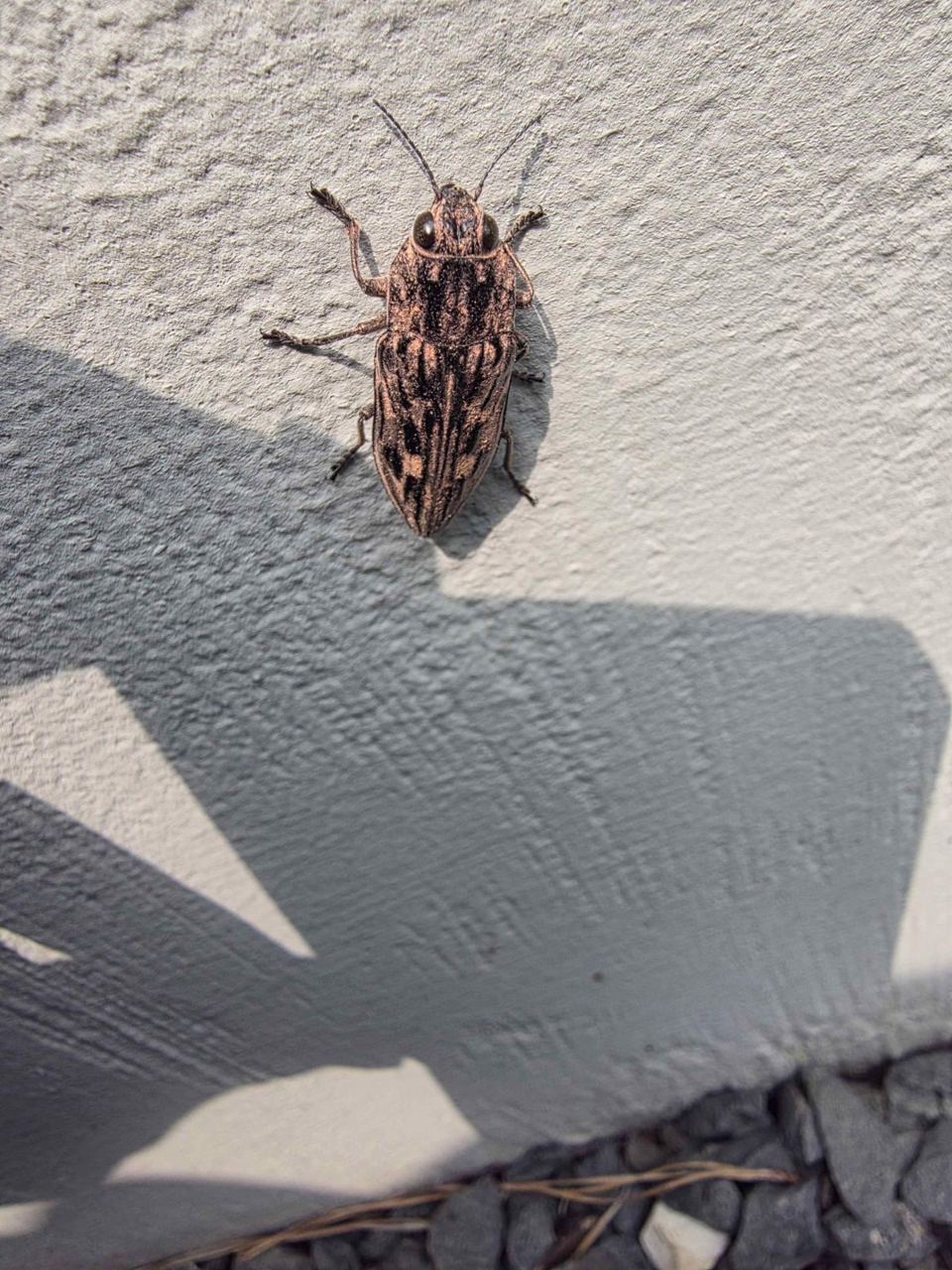
Wood-boring beetle, dorsal viewLTK member · May 2026 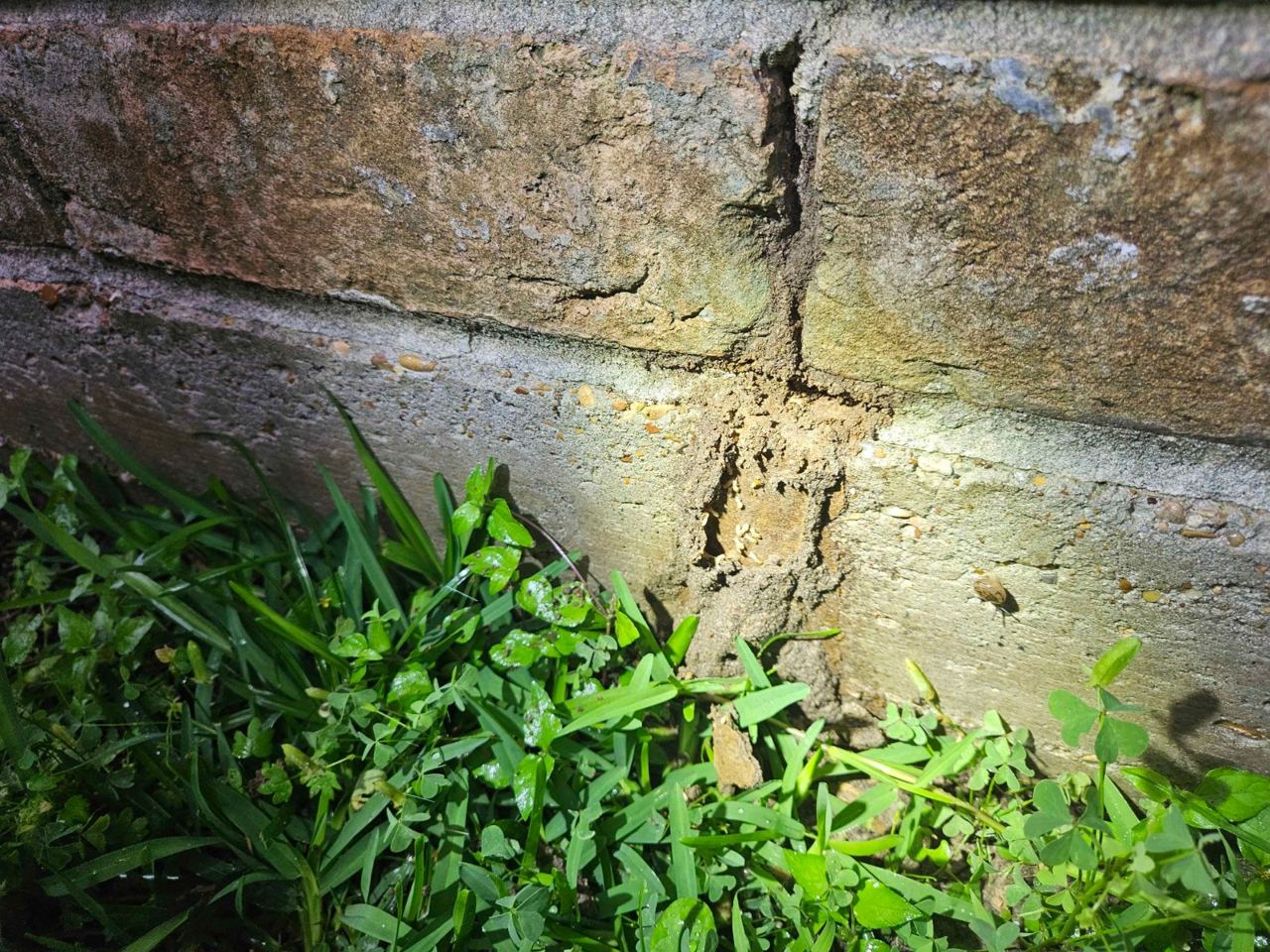 (opens full size in a new tab)
Live subterranean termites in tubeLTK member · May 2026 - (opens full size in a new tab)
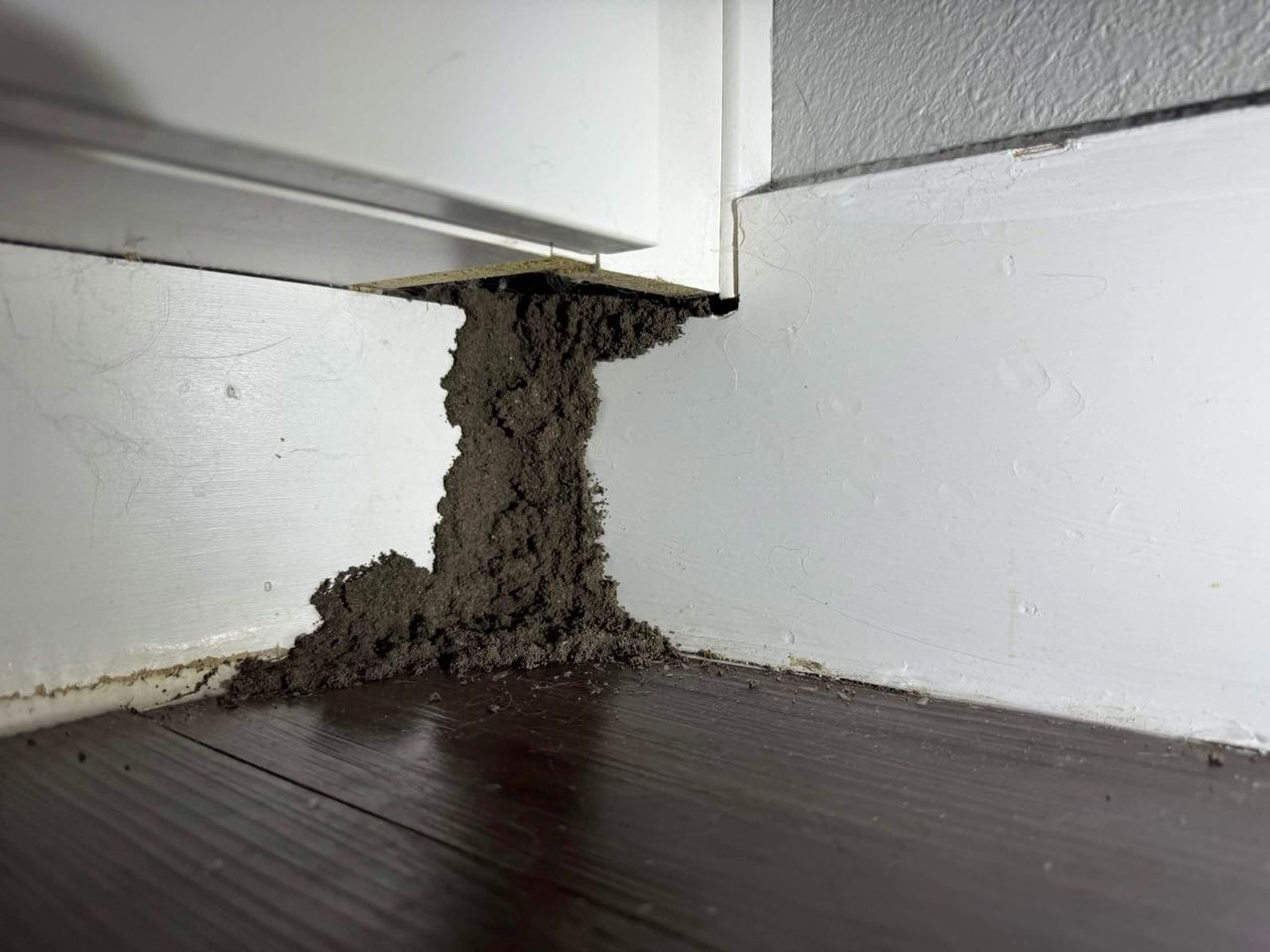
Huge interior termite mud tubeLTK member · May 2026 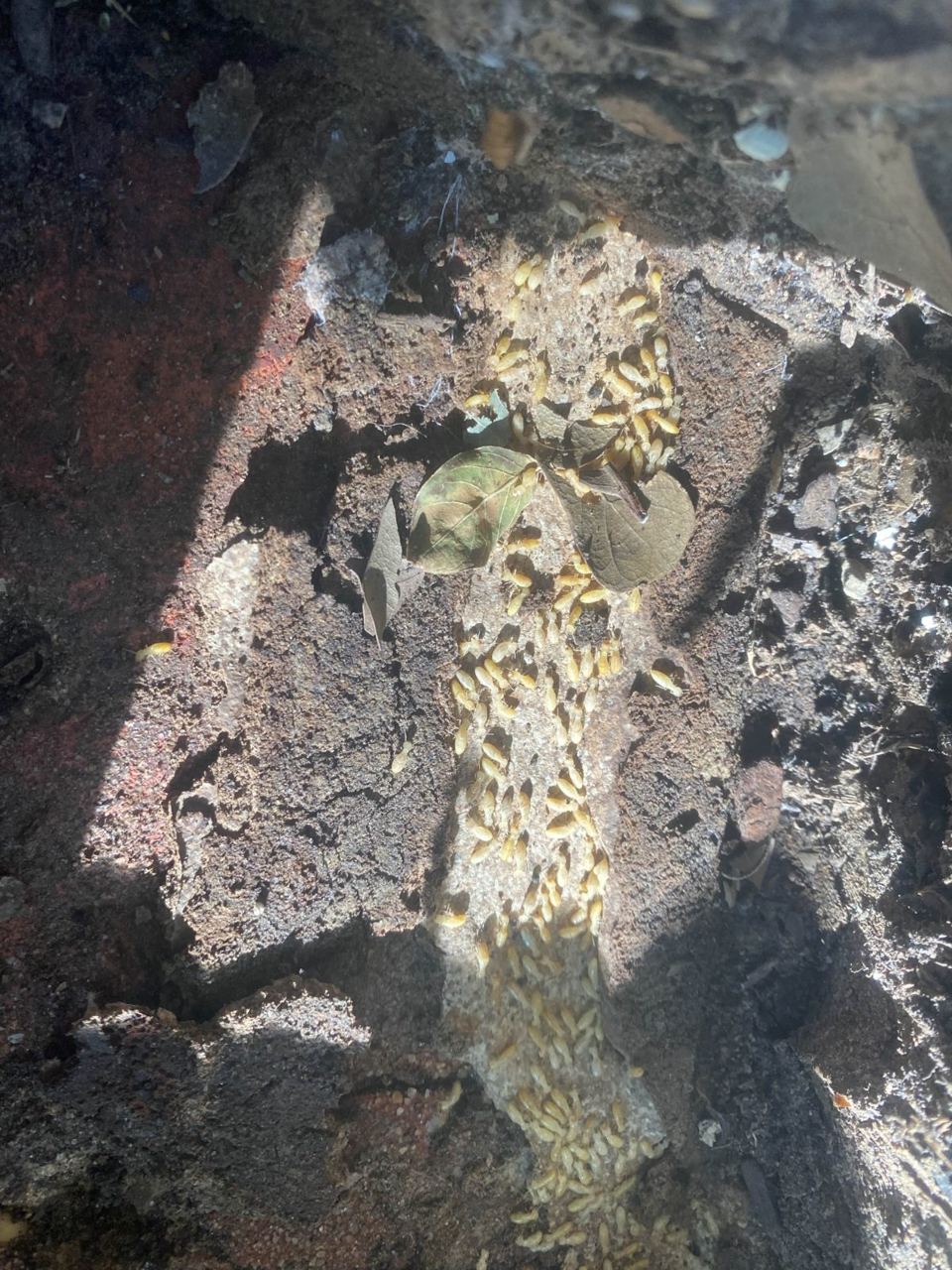 (opens full size in a new tab)
Exposed termite colony activityLTK member · Feb 2025 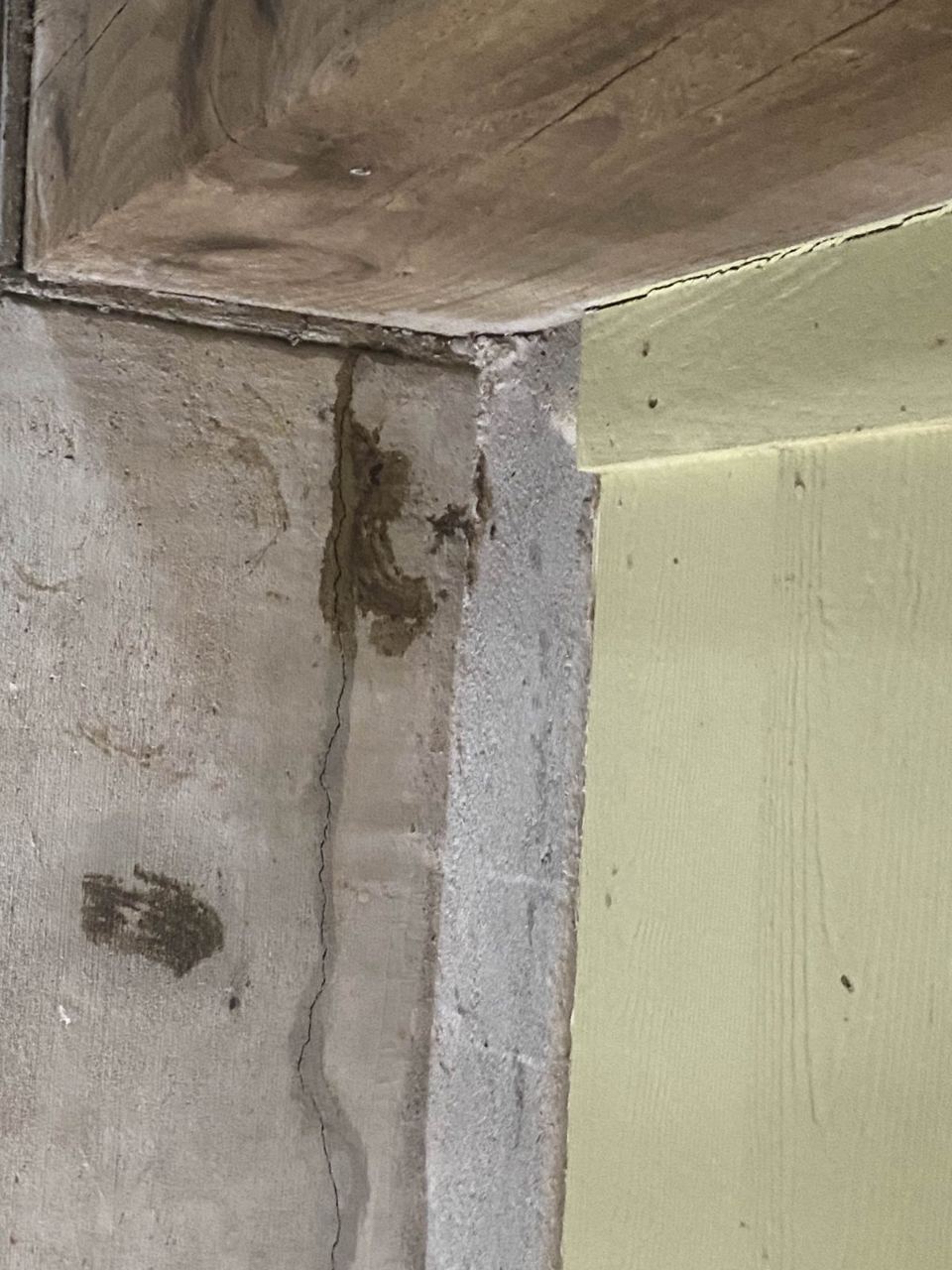 (opens full size in a new tab)
Mud tube up to the framingLTK member · Feb 2025 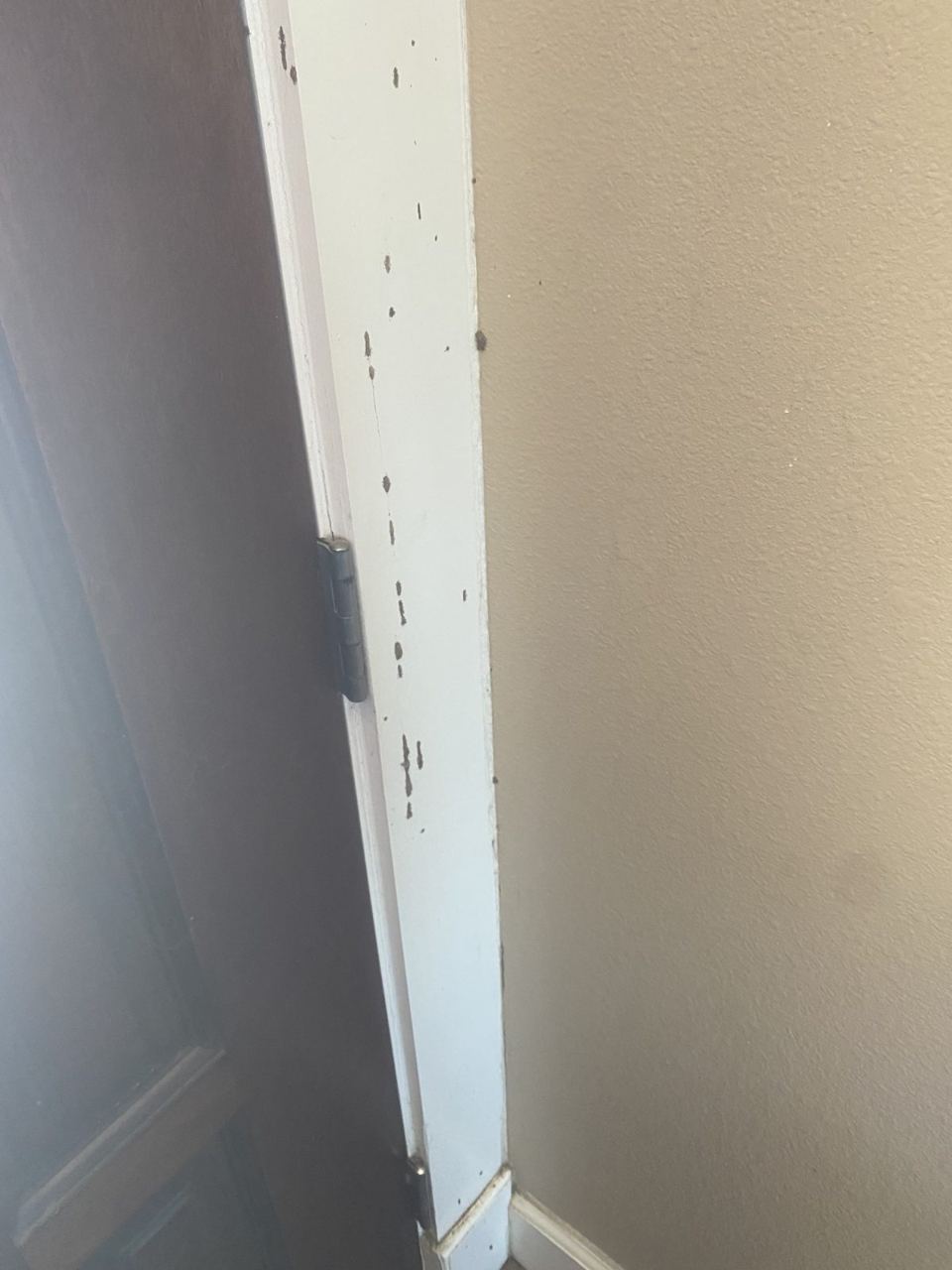 (opens full size in a new tab)
Mud spotting on a door jambLTK member · Mar 2025 - (opens full size in a new tab)
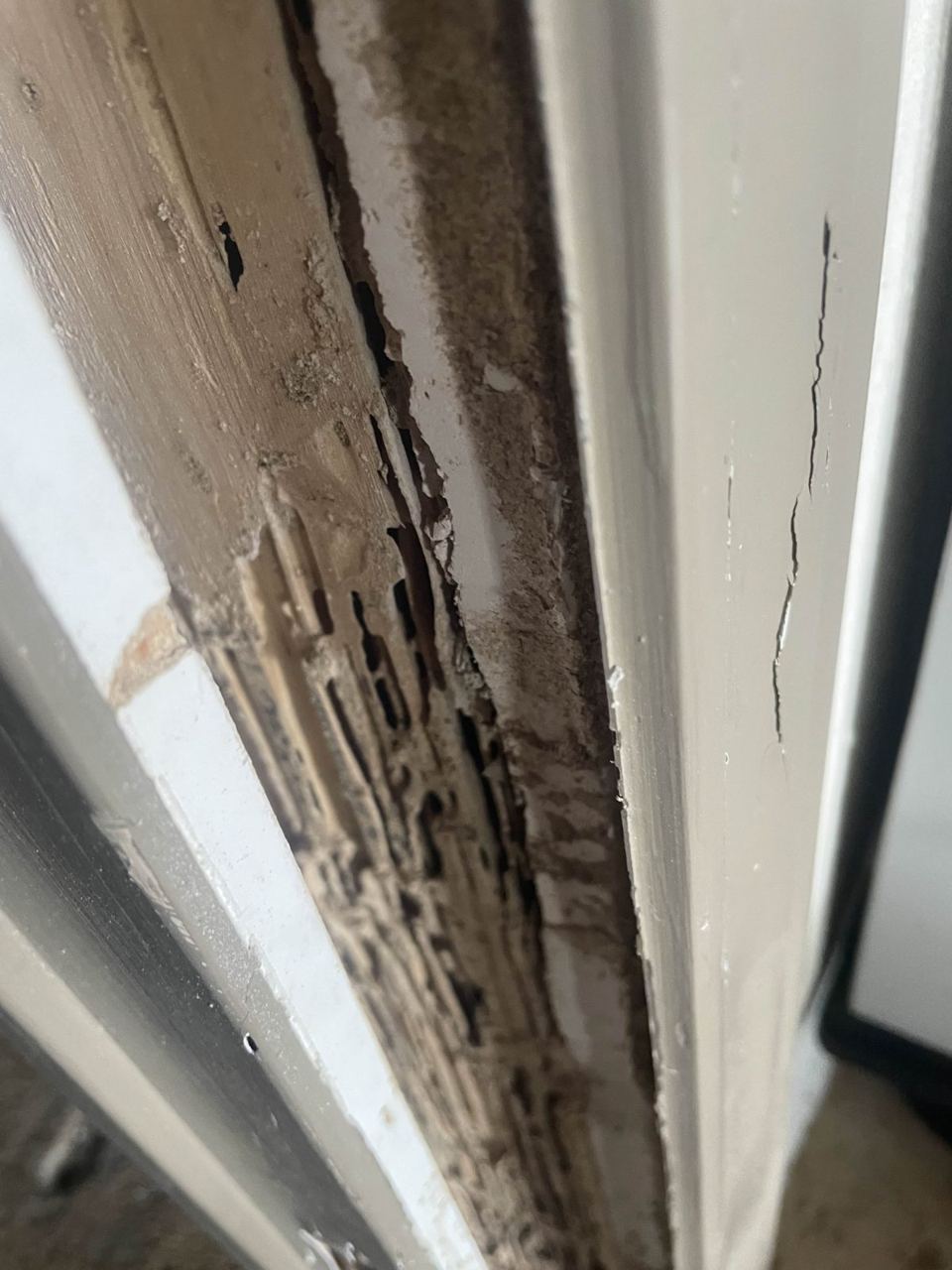
Layered gallery damage in trimLTK member · Oct 2025 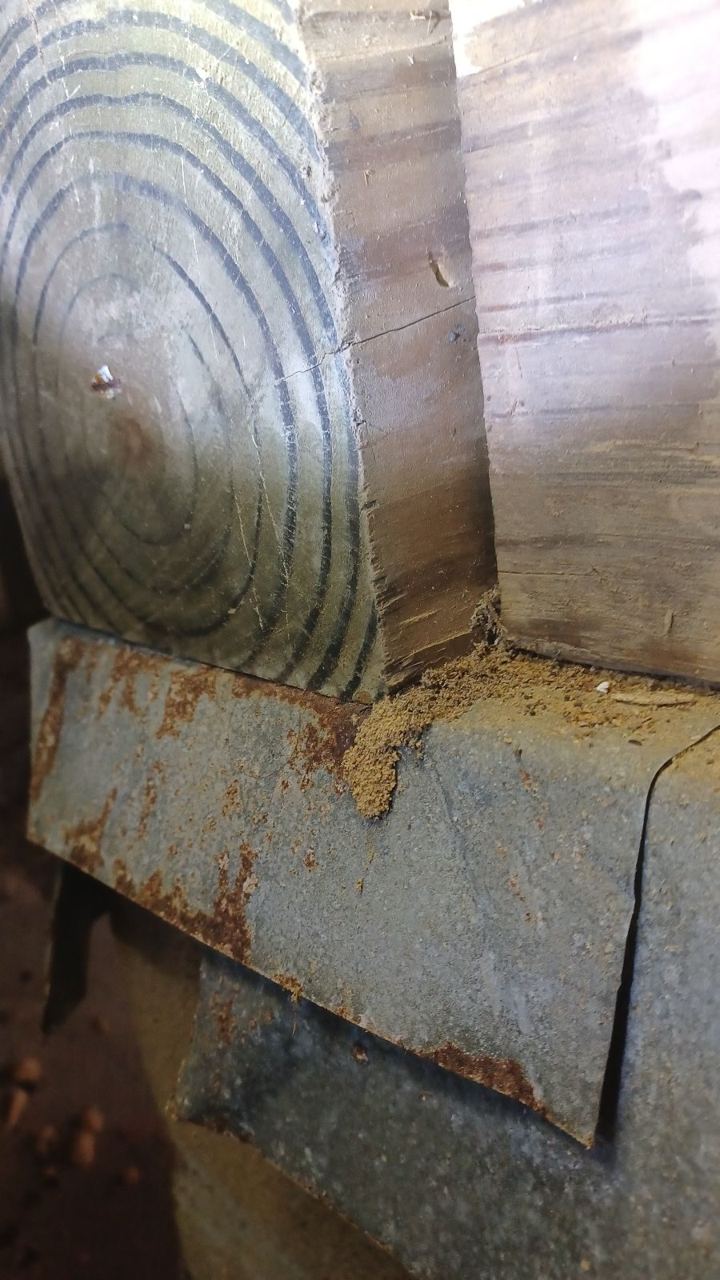 (opens full size in a new tab)
Soil bridging the termite shieldLTK member · Jan 2026
Where it fits in a career
People usually arrive from
Questions people ask
+Do I need a separate licence for termite work?
In many states, yes: termite and WDO is its own category, such as Texas Termite Control, Florida Termites and Other Wood-Destroying Organisms, or California Branch 3. Some states fold it into a broader category. Check your state.
+What is a WDI or WDO report?
A report of visible evidence of wood-destroying insects (or, in some states, organisms including fungi) found on the day of inspection. NPMA says the NPMA-33 form must be used for HUD and VA guaranteed property transactions unless a state requires its own form.
+Does the report guarantee there are no termites?
No. The NPMA guidelines say the report reflects conditions on the inspection date only and provides no warranty unless one is attached. It covers visible evidence, and the inspector must list areas that could not be inspected.
+Do I have to judge structural damage?
No. NPMA's guidance says the inspector is not a damage expert and the report states it is not a structural damage report. If damage questions arise, a qualified structural professional should be contacted.
+How are termites treated?
EPA lists liquid soil-applied termiticides, termite baits, building materials impregnated with termiticides, and wood treatments. Drywood infestations may be treated locally or by fumigation when widespread.
+Is drilling concrete a health risk?
Yes. OSHA lists drilling concrete, brick, block and mortar as a source of respirable crystalline silica, which can cause silicosis and lung cancer. Use the dust controls and respiratory protection your employer provides.
+Can I inspect for real estate as a new hire?
It depends on the state. California requires a Branch 3 field representative or operator. Florida lets trained unlicensed employees with a special ID card inspect under a certified operator's supervision.
+Does termite work pay more than general pest?
BLS does not separate the two, so there is no official answer. Ask employers how termite work is paid where you are.
Still deciding? Ask the people doing termite and wood-destroying organisms every day in the LTK Discord.
Ask on Discord(opens Discord in a new tab)Sources
- US EPA: Termites, How to Identify and Control Them
- University of California IPM Pest Notes: Termites
- NPMA: Suggested Guidelines for Completing the NPMA-33 (Version 1.3, 2019)
- Georgia Department of Agriculture: Structural Pest Control Rule 620-6-.04, Control Measures (2018)
- 16 CCR 1990: California wood destroying pest inspection report requirements (Cornell LII)
- California Structural Pest Control Act (Business and Professions Code), SPCB
- BLS Occupational Outlook Handbook: Pest Control Workers
- O*NET OnLine: Pest Control Workers (37-2021.00), summary and work context
- BLS OEWS frequently asked questions (what wages include, 2,080-hour annual basis)
- BLS National Compensation Survey, Employee Benefits, March 2026, Table 2: Medical care benefits
- BLS National Compensation Survey, Employee Benefits, March 2026, Table 1: Retirement benefits
- BLS National Compensation Survey, Employee Benefits, March 2026, Table 6: Paid leave
- BLS National Compensation Survey, Employee Benefits, March 2026, Table 5: Life insurance benefits
- Texas Department of Agriculture SPCS: Technician and Apprentice Licensing
- UF/IFAS Extension PI293: Florida Rules for Direct Supervision of Unlicensed Pesticide Applicators
- Michigan State University Extension E-2048: General Pest Management, Category 7A
- OSHA: Crystalline Silica
- OSHA: Heat Exposure
- ESA: ACE eligibility requirements
- NPMA QualityPro: Frequently asked questions
Researched 2026-10-01. Licensing details change; confirm with your state agency before you rely on them.