
Fields · Running the business
Owning a pest control company
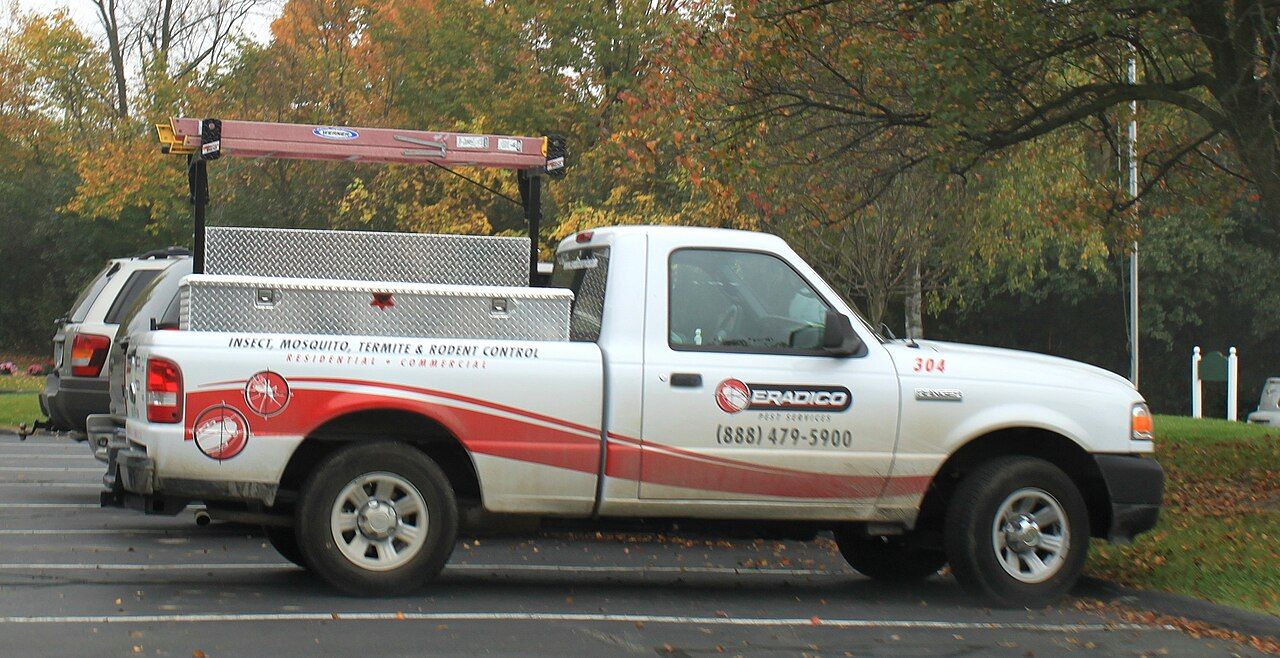
What is owning a pest control company work?
Running your own company — licensing, insurance, pricing, hiring, cash flow, and eventually deciding whether to sell to a roll-up.
Key factThe company needs its own business licence on top of anyone’s applicator licence, a named certified person responsible for it, and insurance or bond minimums. The figures differ a lot by state — see Starting a company.
Thinking about owning a pest control company? Ask the people doing it every day in the LTK Discord.
Ask on Discord(opens Discord in a new tab)What the job is really like
Owning a pest control company means you stop being paid for pest control and start being paid for running a business that does pest control. Most owners in this trade are small. Census data for 2022 counts 13,603 employer firms in exterminating and pest control services, and about 65 percent of them had fewer than five employees. At the other end, 21 firms with 500 or more employees employed about 36 percent of the industry's workers. People reach ownership two ways: a technician or manager who goes out on their own, or someone from outside the trade who buys or starts a company and hires the licensed people. The first knows the work and has to learn the business; the second is the reverse. This guide covers the path to owning, what owners actually do, and the money, with sourced numbers. The legal setup is covered elsewhere on this site: Starting a company for state licensing, and the Owners section for hiring, insurance, vehicles and hazmat, records, OSHA, and buying or selling a company.
In a one-truck company the owner is the technician, salesperson, scheduler, bookkeeper and customer service desk. Days are spent on the route, and evenings on quotes, invoices, callbacks and paperwork. BLS lists bookkeeping as a key skill for pest control workers and notes that self-employed workers in particular need it to run their business.
Once there are employees, the owner's day moves off the truck. Hiring and keeping technicians, routing, pricing, collections, marketing, and handling the customers who want to speak to the owner take most of the time. Payroll, workers' compensation, vehicle insurance and licence renewals all have deadlines. The owner pages on this site cover hiring your first technician, the insurance a pest company carries, and the record-keeping rules for pesticide applications.
Compliance never goes away. The company needs its own state business licence and a named certified person responsible for the pest control work, often the owner. Florida, for example, requires the certified operator in charge to be a full-time employee who personally supervises chemical selection, safe use, concentrations, training and control measures. Texas requires each commercial business licence to designate a responsible certified applicator who cannot serve two businesses at once. Once the company has more than 10 employees, it also has to keep OSHA injury and illness records, because the industry is not on OSHA's partially exempt list.
Money is the constant background. SBA tells new businesses to calculate start-up costs in two groups, one-time costs such as permits and equipment and monthly costs such as salaries, and to work out a break-even point before launching. In a route business, owners watch cash flow closely, because payroll and fuel are due whether or not customers have paid yet.
Later in an owner's career the question becomes what happens to the company: grow it, hand it on, or sell it. The industry includes very large national companies that buy smaller ones, and the buying and selling page in the Owners section covers how those deals work.
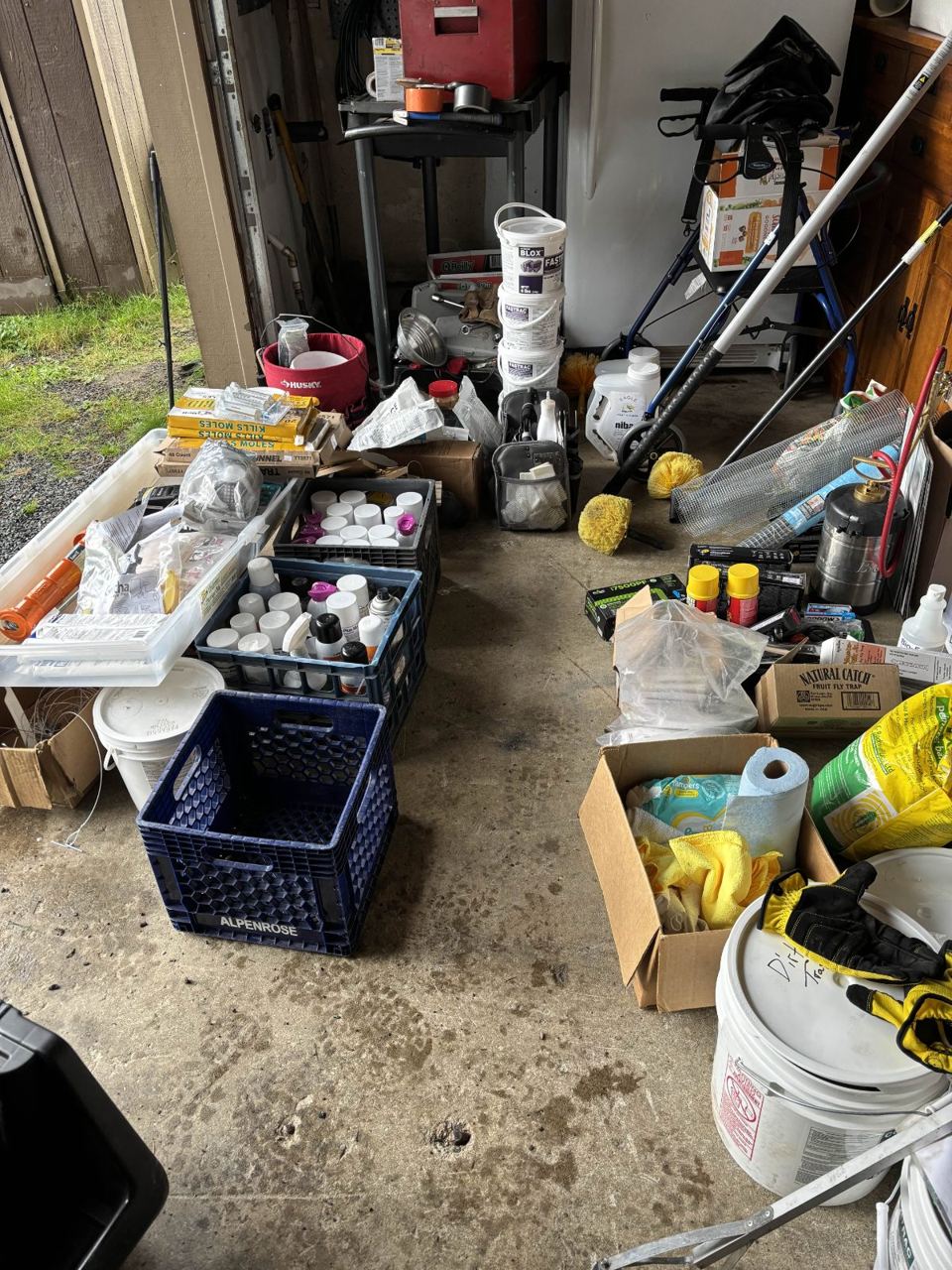
Daily duties
- Hold or hire the state-required certified or qualifying person and keep the business licence current.
- Carry the insurance and any bond your state requires.
- Set prices and service agreements.
- Market the company and sell services.
- Hire, train, pay and keep technicians and office staff.
- Classify workers correctly and meet payroll tax and wage law obligations.
- Run scheduling, routing and customer service.
- Invoice, collect and manage cash flow.
- Keep pesticide application records as state law requires.
- Run vehicle safety and meet rules for carrying pesticides.
- Meet OSHA obligations, including injury records once you pass 10 employees.
- Choose products and equipment, and manage storage and inventory.
- Handle complaints, damage claims and disputes.
- Plan the company's future: growth, buying other routes, or selling.
Work environment
- Schedule
- Owners set their own schedule in theory and have the longest hours in practice, especially early on. BLS says evenings and weekends are common in pest control work, and an owner is the last person covering. There is no national survey of owner hours in this industry.
- Seasons
- Revenue follows pest seasons, while many costs, such as insurance, vehicle payments and core staff, do not. Recurring service agreements smooth this out, which is one reason owners build them.
- Physical
- Fully physical while you are the main technician. BLS describes route work as standing, bending, kneeling and crawling in attics and crawlspaces that are hot in summer and cold in winter. Less physical as the company grows and you move into management.
- Hazards
- All the field hazards while you are on the route, plus the financial and legal risks of running a business: liability claims, regulatory violations and cash shortfalls. A business licence that depends on your certification puts your own licence on the line for your employees' work.
- Vehicle and travel
- Your trucks are your workplace. Pesticides on vehicles are regulated, and some loads trigger federal hazardous materials rules; see the vehicles and hazmat page in the Owners section. Expect to drive your whole service area, and more as you grow.
How people get in
Two routes, and they produce different companies: a technician or manager who goes out on their own, or someone who buys in from outside the trade. The first knows the work and learns the business; the second is the reverse.
Training and licensing
Getting hired
BLS says some pest control workers start their own pest management business, and most owners who come from the trade start as technicians. To own and operate legally you need what your state requires of a business, usually a business licence plus a certified person responsible for the work, plus insurance or bond minimums. Texas, for example, requires the responsible certified applicator to qualify through one of several routes, such as a technician licence held for at least six months plus at least 12 of the last 24 months working under a certified applicator, and then pass a general standards exam and at least one category exam. Requirements differ widely, so start with the Starting a company page for your state.
Learning on the job
There is no formal training path to ownership. The common route is years on a route, then supervision or management, where you learn pricing, scheduling, hiring and the numbers on someone else's money. SBA's business guide is a free starting point for business planning, start-up costs and funding.
Licensing
Ownership itself does not need a pesticide licence in every state, but the company does. The general pattern: the company holds a state business licence for pest control, names a certified person who is responsible for the work, and files proof of insurance or a bond. Technicians are licensed or registered individually under the state's applicator rules, which follow EPA's certification framework: competency by exam, restricted use pesticides only by or under the direct supervision of certified applicators, and recertification at least every five years. If you are buying in from outside the trade, you will need to hire or partner with a certified person who meets your state's rules. See Starting a company on this site for TX, WA, FL, CA and SC, and check with your state pesticide agency. This is general information, not legal or financial advice.
Certifications worth knowing
QualityPro (endorsed by the National Pest Management Association)
A company credential. Requires at least two years in business, minimum insurance, criminal background and motor vehicle record checks where appropriate and lawful, a drug-free workplace policy, tested and trained employees, and 18 professional standards. Add-on certifications include GreenPro, QualityPro Schools, QualityPro Food Safety and QualityPro Public Health.
Associate Certified Entomologist (ACE)
Entomological Society of America Certification Corporation
Five years of verifiable pest management experience, a current US applicator licence and an exam. An individual credential owners often hold or encourage, because it signals technical depth to customers.
OSHA Outreach Training Program (30-hour)
US Occupational Safety and Health Administration, through authorised trainers
Voluntary safety training aimed at supervisors and people with safety responsibilities. Not a certification and not a substitute for standard-specific training, but useful once you have employees.
- In plain words
- The company needs its own business licence on top of anyone’s applicator licence, a named certified person responsible for it, and insurance or bond minimums. The figures differ a lot by state — see Starting a company.
- Government pay data
- Not tracked as its own job by the Bureau of Labor Statistics
State-by-state business licence, insurance and fee rules are in Starting a pest control company; hiring, insurance, OSHA and selling are in Running the business.
Skills and tools
- Pricing work so it covers labour, vehicles, product, insurance and profit
- Bookkeeping and cash flow management
- Hiring and keeping good technicians
- Selling and customer service
- Knowing your state's licensing, record-keeping and insurance rules
- Delegating work you used to do yourself
- Saying no to unprofitable work
- Planning ahead: equipment, hiring and season changes
- Accounting software or a bookkeeper
- Service, scheduling and billing software
- Business bank account and payroll service
- Service vehicles fitted for pesticide transport
- Full technician equipment: sprayers, dusters, bait and monitoring devices, PPE
- Pesticide storage that meets label and state rules
- Written service agreements and price lists
- Insurance policies and the certificates customers ask for
- Record systems for pesticide applications, training and licences
- A business plan with start-up costs and break-even figures
Career path
- 01Licensed technicianLearn the work and get licensed. Most owners from the trade start here.
- 02Certified applicator in the categories you will sellGet the level of certification your state requires for the person responsible for a business licence. In Texas, for example, that is a certified applicator who has passed general standards and category exams.
- 03Supervisor or managerLearn pricing, scheduling, hiring and the numbers on someone else's money. Many owners skip this step and wish they had not.
- 04Owner-operatorStart a company or buy a route. You are the technician and the business at the same time. See Starting a company for your state.
- 05Owner with employeesHire your first technician, move off the truck, add insurance, payroll and OSHA obligations. After two years in business you can apply for QualityPro accreditation.
- 06Grow, hand on or sellExpand by adding routes or buying other companies, pass the company on, or sell. See the buying and selling page in the Owners section.
Pay and benefits
The Bureau of Labor Statistics doesn’t track this field as its own job, so these are the national numbers for pest control workers — the closest published benchmark, not this field’s own pay.
- $45,250Median annual pay · $21.75/hr source (BLS, opens in a new tab)
- $34,680–$61,890Lowest 10% to highest 10% of earners source (BLS, opens in a new tab)
- +6%Projected job growth 2025–2035 (all jobs: 3%) source (BLS, opens in a new tab)
- 13,700Openings projected each year, on average source (BLS, opens in a new tab)
$44,930 median inside exterminating and pest control services
$50,980 median across all US occupations
What these numbers leave out
- Self-employed workers — so owner-operators are absent entirely
- Overtime premium pay, shift differentials and non-production bonuses (commissions and production bonuses are included)
- Seasonal variation (annual figures assume 2,080 hours)
Real route pay depends on commission, truck and tool allowances and overtime. Compare notes in the Discord.
There is no public national figure for what pest control owners earn. BLS wage data (OEWS) excludes self-employed workers, so owner-operators are not in it, and BLS says about 5 percent of pest control workers are self-employed. What public data does show is the size of the businesses. Census Statistics of US Businesses for 2022 counts 13,603 employer firms in exterminating and pest control services, with 16,080 establishments, 139,917 employees, $7.04 billion in annual payroll and $19.56 billion in receipts. Firms with fewer than five employees (8,882 of them) averaged about $237,000 in receipts each; firms with 5 to 9 employees about $737,000; 10 to 19 employees about $1.59 million; and 20 to 99 employees about $4.67 million. These are receipts, not profit: payroll, vehicles, product, insurance, rent and taxes come out before the owner is paid. Across the industry, payroll averaged about $50,300 per employee. If you are self-employed, IRS self-employment tax adds 15.3 percent (12.4 percent Social Security and 2.9 percent Medicare) on net earnings, which an employee would split with an employer. For context on what you would pay staff, BLS reports a May 2025 median of $44,930 for pest control workers in the industry. SBA's size standard for exterminating and pest control services is $17.5 million in average annual receipts, so nearly every firm in the trade counts as a small business for federal programmes.
Benefits
As an owner you provide your own benefits and decide what to offer employees. For comparison, BLS's National Compensation Survey for March 2026 shows that among private industry workers in service occupations, the group pest control workers fall into, 47 percent had access to medical care benefits, 47 percent to a retirement plan and 67 percent to paid sick leave. At private establishments with 1 to 49 workers, 55 percent had access to medical care, 55 percent to retirement plans and 75 percent to paid sick leave. Those are the benchmarks your employees will compare you against. What you offer, and what it costs, is a business decision to work out with an accountant or benefits adviser.
State-by-state licensing
This field runs through each state’s pesticide licensing programme, and every state names and splits its categories differently. Here’s what it’s called in the states we’ve verified so far.
- AlabamaALAlabama Department of Agriculture and Industries (ADAI) — Pesticide Management DivisionSee the full list of licence categories
- AlaskaAKAlaska Department of Environmental Conservation (DEC) — Pesticide Control ProgramSee the full list of licence categories
- ArizonaAZArizona Department of Agriculture — Office of Pest Management (OPM), formerly the Pest Management Division (PMD)See the full list of licence categories
- ArkansasARArkansas Department of Agriculture — Pest Control Program (Arkansas State Plant Board rules)See the full list of licence categories
- CaliforniaCACalifornia Structural Pest Control Board (SPCB), Department of Consumer AffairsSee the full list of licence categories
- ColoradoCOColorado Department of Agriculture (CDA) — Pesticide Applicator Certification and Licensing ProgramSee the full list of licence categories
- ConnecticutCTConnecticut Department of Energy and Environmental Protection (DEEP) — Pesticide Management ProgramSee the full list of licence categories
- DelawareDEDelaware Department of Agriculture (DDA) — Pesticides SectionSee the full list of licence categories
- FloridaFLFlorida Department of Agriculture and Consumer Services (FDACS) — Bureau of Licensing and EnforcementSee the full list of licence categories
- GeorgiaGAGeorgia Department of Agriculture — Structural Pest Control Section (Georgia Structural Pest Control Commission)See the full list of licence categories
- HawaiiHIHawaii Pest Control Board, Department of Commerce and Consumer Affairs (DCCA) Professional and Vocational Licensing — with applicator certification by the Hawaii Department of Agriculture and Biosecurity (DAB) Pesticides BranchSee the full list of licence categories
- IdahoIDIdaho State Department of Agriculture (ISDA) — Agricultural Resources Division, Pesticide Applicator Licensing & CertificationSee the full list of licence categories
- IllinoisILIllinois Department of Public Health (IDPH) — Division of Environmental Health, Structural Pest Control ProgramSee the full list of licence categories
- IndianaINOffice of Indiana State Chemist (OISC) — Pesticide Section, Purdue UniversitySee the full list of licence categories
- IowaIAIowa Department of Agriculture and Land Stewardship (IDALS) — Pesticide BureauSee the full list of licence categories
- KansasKSKansas Department of Agriculture (KDA) — Pesticide and Fertilizer ProgramSee the full list of licence categories
- KentuckyKYKentucky Department of Agriculture (KDA) — Structural Pest Control BranchSee the full list of licence categories
- LouisianaLALouisiana Department of Agriculture and Forestry (LDAF) — Structural Pest Control CommissionSee the full list of licence categories
- MaineMEMaine Board of Pesticides Control (BPC), Department of Agriculture, Conservation and ForestrySee the full list of licence categories
- MarylandMDMaryland Department of Agriculture (MDA) — Pesticide Regulation SectionSee the full list of licence categories
- MassachusettsMAMassachusetts Department of Agricultural Resources (MDAR) — Pesticide ProgramSee the full list of licence categories
- MichiganMIMichigan Department of Agriculture and Rural Development (MDARD) — Pesticide SectionSee the full list of licence categories
- MinnesotaMNMinnesota Department of Agriculture (MDA) — Pesticide & Fertilizer Management DivisionSee the full list of licence categories
- MississippiMSMississippi Department of Agriculture and Commerce (MDAC) — Bureau of Plant IndustrySee the full list of licence categories
- MissouriMOMissouri Department of Agriculture — Bureau of Pesticide ControlSee the full list of licence categories
- MontanaMTMontana Department of Agriculture (MDA) — Pesticide ProgramSee the full list of licence categories
- NebraskaNENebraska Department of Agriculture (NDA) — Pesticide ProgramSee the full list of licence categories
- NevadaNVNevada Department of Agriculture — Pest Control SectionSee the full list of licence categories
- New HampshireNHNew Hampshire Department of Agriculture, Markets and Food — Division of Pesticide ControlSee the full list of licence categories
- New JerseyNJNew Jersey Department of Environmental Protection (NJDEP) — Pesticide Control ProgramSee the full list of licence categories
- New MexicoNMNew Mexico Department of Agriculture (NMDA), New Mexico State University — Pesticide ComplianceSee the full list of licence categories
- New YorkNYNew York State Department of Environmental Conservation (NYSDEC) — Bureau of Pesticides ManagementSee the full list of licence categories
- North CarolinaNCNorth Carolina Department of Agriculture and Consumer Services (NCDA&CS) — Structural Pest Control and Pesticides DivisionSee the full list of licence categories
- North DakotaNDNorth Dakota Pesticide Control Board / North Dakota Department of Agriculture — certification delegated to NDSU Extension Pesticide ProgramSee the full list of licence categories
- OhioOHOhio Department of Agriculture (ODA) — Division of Plant Health, Pesticide & Fertilizer RegulationSee the full list of licence categories
- OklahomaOKOklahoma Department of Agriculture, Food, and Forestry (ODAFF) — Consumer Protection Services DivisionSee the full list of licence categories
- OregonOROregon Department of Agriculture (ODA) — Pesticides ProgramSee the full list of licence categories
- PennsylvaniaPAPennsylvania Department of Agriculture (PDA) — Bureau of Plant Industry, Pesticide ProgramsSee the full list of licence categories
- Rhode IslandRIRhode Island Department of Environmental Management (DEM) — Division of Agriculture, PesticidesSee the full list of licence categories
- South CarolinaSCClemson University — Department of Pesticide Regulation (DPR)See the full list of licence categories
- South DakotaSDSouth Dakota Department of Agriculture and Natural Resources (DANR) — Division of Agriculture & Environmental ServicesSee the full list of licence categories
- TennesseeTNTennessee Department of Agriculture (TDA) — Consumer and Industry Services, PesticidesSee the full list of licence categories
- TexasTXTexas Department of Agriculture — Structural Pest Control Service (SPCS)See the full list of licence categories
- UtahUTUtah Department of Agriculture and Food (UDAF) — Pesticide ProgramSee the full list of licence categories
- VermontVTVermont Agency of Agriculture, Food and Markets (VAAFM) — Public Health and Agricultural Resource Management DivisionSee the full list of licence categories
- VirginiaVAVirginia Department of Agriculture and Consumer Services (VDACS) — Office of Pesticide ServicesSee the full list of licence categories
- WashingtonWAWashington State Department of Agriculture (WSDA) — Pesticide Management DivisionSee the full list of licence categories
- West VirginiaWVWest Virginia Department of Agriculture (WVDA) — Pesticide & Environmental Services DivisionSee the full list of licence categories
- WisconsinWIWisconsin Department of Agriculture, Trade and Consumer Protection (DATCP) — Bureau of Agrichemical ManagementSee the full list of licence categories
- WyomingWYWyoming Department of Agriculture (WDA) — Technical Services Division, Pesticide ProgramSee the full list of licence categories
Your state not here yet? We add states only after checking them against the state agency. Ask in the Discord — someone there has licensed in it.
The good and the hard
- You decide how the work is done, which customers to take and what standard to hold.
- Recurring service agreements can build a steady, saleable business over time.
- The industry is mostly small firms, so small companies can compete locally.
- Ownership is the one role in the trade with no fixed pay ceiling.
- There is an established market for selling pest control companies when you are ready to exit.
- Most new businesses do not last. BLS data shows that of private establishments in administrative and waste services opened in the year to March 2015, 82 percent were still open a year later, 52 percent after five years and 37 percent after ten.
- Your licence, and sometimes your personal finances, are exposed to your employees' mistakes.
- Early years mean long hours and doing every job yourself.
- Payroll, insurance and vehicle costs are due even in slow months.
- Hiring and keeping good technicians is a constant job.
- You compete against very large national companies with bigger marketing budgets.
From the LTK podcast
Every episodeIndustry Interview: Jarred Lajaunie
14 min
Recorded at PestWorld 2025: Jarred Lajaunie, owner of Lajaunie’s Pest Control in Thibodaux, Louisiana, on working his way up from hourly technician to branch manager to owner.
Industry Interview: Christian Allen
1 hr 26 min
Bonus episode with guest host Jorge Bedoya: Christian Allen, founder and CEO of Tailor Made Pest and Wildlife, on building and scaling a service business, including SEO and local search.
Industry Interview: Chad Moreschi
1 hr 4 min
Chad Moreschi, owner-operator and co-founder of GorillaDesk, on how field service software is changing the way startups and growing pest companies run.
Industry Interview: Maria Sorrentino
1 hr 3 min
Maria Sorrentino, A.C.E., CEO and co-owner of Pest Pros in Michigan and founder of Hive Mind Consulting, on leadership, scaling a business and leading as a woman in the trade.
Where it fits in a career
People usually arrive from
- General pest control
- Termite and wood-destroying organisms
- Wildlife control
- Bird management and exclusion
- K9 work in pest control
- Exclusion and pest-proofing
- Insulation and attic restoration
- Fumigation
- Commercial and food safety
- Mosquito and vector control
- Turf and ornamental
- Bed bug work
- Management: branch, technical, safety and operations
Questions people ask
+Can I start a pest control company without a licence?
The company needs a state business licence and, in most states, a named certified person responsible for the work. You can own the company without being that person in many states if you employ someone who qualifies. Check Starting a company for your state.
+How much does it cost to start?
There is no reliable national figure. SBA recommends listing one-time costs (licences, permits, equipment, vehicles) and monthly costs (insurance, payroll, fuel, software) and working out a break-even point before you launch. State licence fees and insurance minimums are on the Starting a company pages.
+How much do owners make?
No public data source measures it. BLS wage data excludes the self-employed. Census data shows average receipts per firm by size, for example about $237,000 a year for firms with fewer than five employees in 2022, but receipts are not profit.
+How many pest control companies are there?
Census counted 13,603 employer firms in 2022 with 16,080 locations. About 94 percent had fewer than 20 employees. That count excludes one-person businesses with no payroll.
+Should I buy an existing company or start from scratch?
Both happen in this trade. Buying gets you customers and cash flow on day one but costs more up front; starting is cheaper but slower. The buying and selling page in the Owners section covers how deals are usually structured.
+Can I get an SBA loan?
SBA mostly backs loans made by participating lenders rather than lending itself, and its Lender Match tool connects businesses with those lenders. Pest control companies under $17.5 million in average annual receipts meet SBA's size standard. Eligibility and terms are set by the SBA programme and the lender.
+When do I need to worry about OSHA paperwork?
Every employer must report work-related fatalities, in-patient hospitalisations, amputations and loss of an eye. Once you had more than 10 employees at any time in the previous year, you must also keep OSHA injury and illness records.
+What is QualityPro and when can I get it?
An NPMA-endorsed accreditation for pest companies. It requires at least two years in business plus standards on insurance, hiring checks, training, vehicles and safety.
Still deciding? Ask the people doing owning a pest control company every day in the LTK Discord.
Ask on Discord(opens Discord in a new tab)Sources
- Census Bureau: 2022 SUSB Annual Data Tables by Establishment Industry
- Census Bureau: 2022 SUSB US and state, 6-digit NAICS (data file)
- Census Bureau: County Business Patterns 2023, US file
- eCFR: 13 CFR 121.201, SBA size standards by NAICS code
- SBA: Plan your business (startup costs and break-even point)
- SBA: Loans (SBA-guaranteed loan programs)
- BLS Business Employment Dynamics: Survival of private sector establishments by opening year, Administrative and Waste Services (Table 7)
- BLS Business Employment Dynamics: Survival of private sector establishments by opening year, total private (Table 7)
- BLS Occupational Outlook Handbook: Pest Control Workers
- BLS OEWS May 2025, NAICS 561710: pest control workers (37-2021), annual median
- IRS: Self-employment tax (Social Security and Medicare taxes)
- eCFR: 29 CFR 1904 Subpart B, Scope (recordkeeping exemptions)
- Florida Statutes 482.152: Duties of certified operator in charge
- EPA: Certification Standards for Pesticide Applicators
- QualityPro Accreditation
- QualityPro (credentials overview)
- ESA Certification: Associate Certified Entomologist
- OSHA: Outreach Training Program
- BLS National Compensation Survey: Medical care benefits, March 2026 (Table 2)
- BLS National Compensation Survey: Paid leave, March 2026 (Table 6)
Researched 2026-10-01. Licensing details change; confirm with your state agency before you rely on them.
