
Fields · Structural pest control
Fumigation
What is fumigation work?
Whole-structure and commodity fumigation — the highest-consequence work in the industry.
Key factA separate category everywhere, with additional prequalification. Texas, for example, requires 40 hours of training approved before you may even schedule the exam.
Thinking about fumigation? Ask the people doing it every day in the LTK Discord.
Ask on Discord(opens Discord in a new tab)What the job is really like
Fumigation is pest control with a gas. A fumigation crew seals a building, a chamber, a container or a commodity, introduces a fumigant that reaches every void and crevice, holds it for the required time, then airs out the space and proves with instruments that it is safe to re-enter. BLS describes fumigators as applicators who seal buildings and use gases to treat large-scale infestations. Structural fumigation with sulfuryl fluoride treats drywood termites, wood-boring beetles, bed bugs and other pests in whole buildings. Commodity fumigation with phosphine-releasing products protects stored grain and other products. The fumigants are highly hazardous. The Vikane label calls sulfuryl fluoride a highly hazardous material that must be used only by people trained in respiratory equipment, gas detection and emergency procedures, and NIOSH lists 200 ppm as immediately dangerous to life or health. Every state this site covers treats fumigation as its own category, often with extra prerequisites. The field suits experienced, disciplined applicators who follow procedure exactly, every time. It is not an entry-level job.
A structural fumigation starts well before the gas. The crew confirms the job details and the state notice. Florida, for example, requires the company to notify the state agency at least 24 hours before a general fumigation, naming the fumigant, the certified operator or fumigation ID cardholder in charge, the structure, the date, the target pest and the duration. The occupants must have left, with people, pets and desirable plants removed, and food, feed, drugs and medicines removed unless they are sealed as the label allows. The Vikane label also requires an adult occupant to receive the product's fact sheet. In apartments and townhouses, if one unit is fumigated, the label requires every unit in the structure to be vacated.
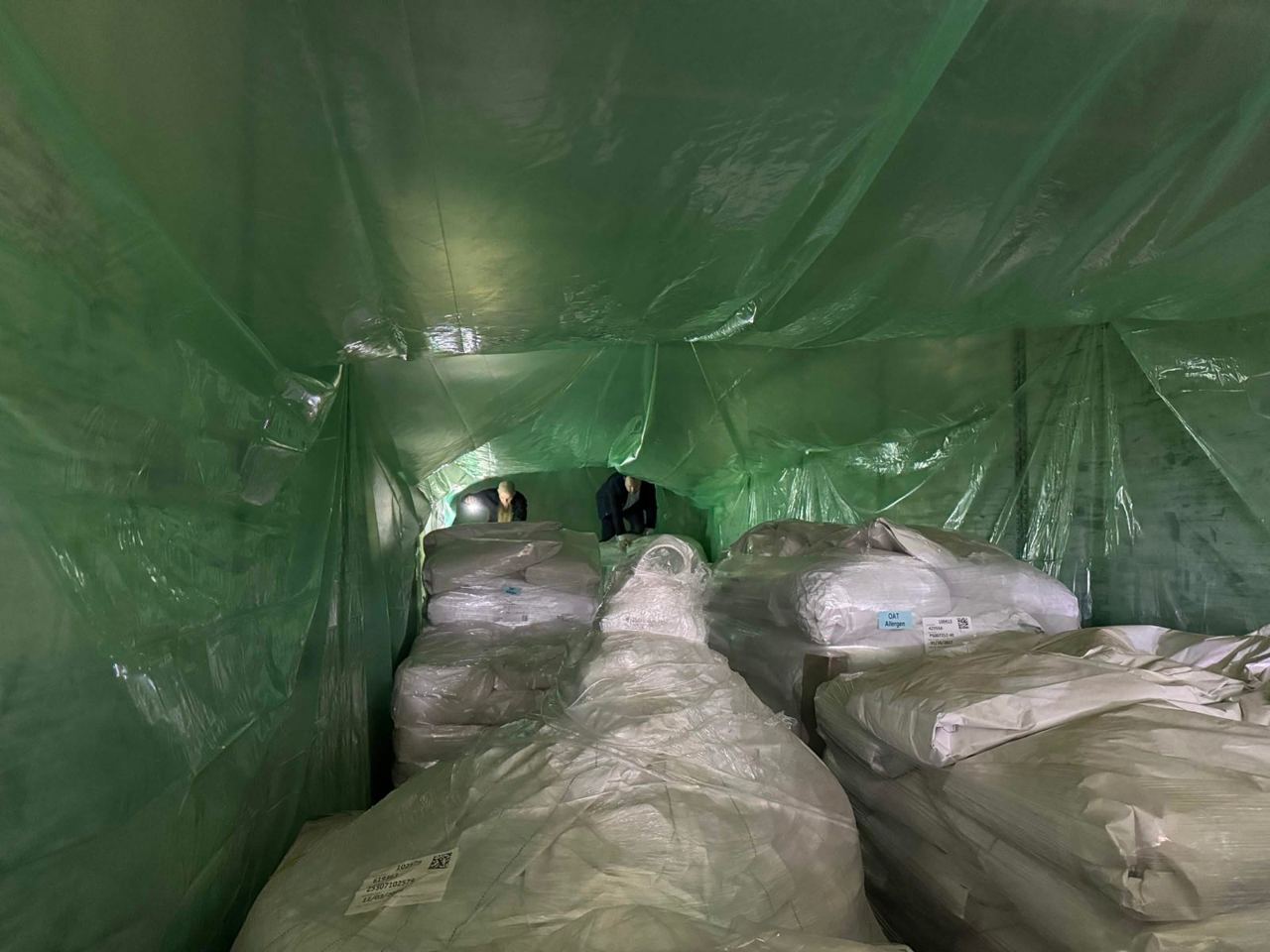
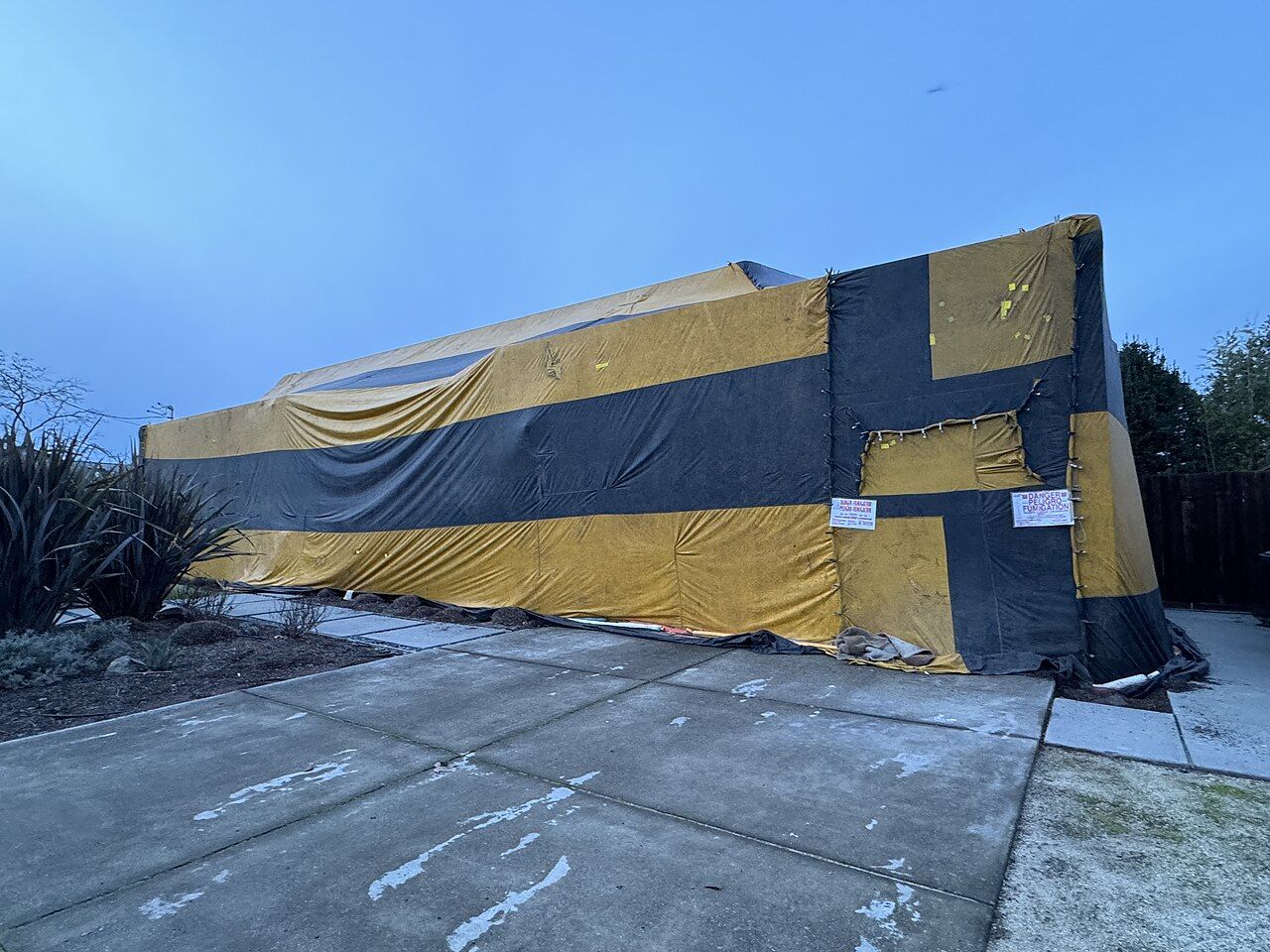
Then the building is sealed. For a tarpaulin fumigation, the Vikane label calls for a highly resistant material such as vinyl-coated nylon or polyethylene sheeting at least 4 mil thick, sealed at the ground. O*NET lists positioning and fastening tarpaulin edges over the building and taping vents to make it airtight and check for leaks among the tasks of pest control workers. That means ladders, roof work and heavy tarps. Every exterior door gets a secondary lock or barricade so only the state licensed applicator in charge can get in, and warning placards go up showing the date, the fumigant and the applicator's name, address and phone number.
Before releasing the fumigant, the crew calculates the dose for the volume and conditions, and introduces chloropicrin as a warning agent. The label says chloropicrin causes smarting of the eyes and tears and must be released inside at least 5 to 10 minutes before the fumigant. The fumigant itself is released from outside the structure. The label requires two trained people, at least one a state-licensed or certified applicator, to be present during introduction, during any re-entry before aeration, and at the start of the initial aeration whenever exposure exceeds 1 ppm. Anyone entering above 1 ppm wears a positive-pressure self-contained breathing apparatus.
Aeration and clearance are where discipline matters most. Under one of the Vikane label's aeration procedures, the crew opens the structure and runs fans capable of moving a total of 5,000 cubic feet per minute for at least an hour, wearing respiratory protection, then secures the building for at least 6 hours from the first opening of the seal. Afterward the crew measures the concentration in the breathing zone of every room, where people stand, sit or lie down, with an approved clearance device. Only when every reading is 1 ppm or less may a certified applicator authorize removing the placards and re-occupying the building.
Commodity fumigation follows the same logic in a different setting. USDA's grain fumigation handbook, which covers ships' holds, land carriers and river barges, describes the certified applicator inspecting holds for their ability to keep gas in, writing a signed statement on which holds are suitable, choosing the application method and dose, holding a pre-fumigation conference with the vessel's officer, placarding every entrance, and confirming carriers are gas free, which for metal phosphide is 0.3 ppm or less. Throughout, the paperwork is as important as the gas.
Daily duties
- Inspect the structure or commodity and confirm the target pest and that fumigation is appropriate.
- Measure the space and calculate fumigant dosage and cost.
- File the advance notice of fumigation with the state agency where required.
- Give occupants the required fact sheet and preparation instructions, and confirm all people, pets and plants are out.
- Remove or properly seal food, feed, drugs and medicines.
- Prepare multi-unit and connected structures as the label requires, including vacating every unit.
- Install and seal tarpaulins or tape and seal the structure, and check for leaks.
- Secure all entrances with secondary locks or barricades.
- Post warning placards with the required information and keep them up until clearance.
- Introduce the warning agent and then the fumigant, from outside the structure, with the required crew present.
- Wear and maintain self-contained breathing apparatus and use gas detection devices.
- Monitor fumigant concentration during the exposure period.
- Run the label's aeration procedure, including fans and minimum waiting times.
- Clear the structure room by room with a calibrated clearance device before re-entry is authorized.
- Keep fumigation records and calibration records as the label and state require.
- Store fumigant cylinders upright, secured and locked in a posted storage area.
Work environment
- Schedule
- BLS does not publish hours for fumigators separately. For pest control workers overall, most are full time, evenings and weekends are common, and some work more than 40 hours. Structural fumigations run over more than one day because of exposure and aeration periods; the Vikane label requires at least 6 hours from the start of aeration before re-entry under its aeration procedures. Ask employers how crews are scheduled across tarping, introduction and clearance visits.
- Seasons
- The Vikane label says not to fumigate for insect pests when the temperature at the site of pest activity is below 40°F, which limits some structural insect fumigations in cold conditions. No source opened for this guide gives figures on seasonal workload. Ask employers how the season runs in your region.
- Physical
- Tarping is heavy, at-height work. O*NET lists positioning and fastening tarpaulins over buildings and taping vents among the tasks of pest control workers, and BLS notes workers kneel, bend and crawl in tight spaces. Working in a self-contained breathing apparatus adds weight and effort.
- Hazards
- The fumigant is the main hazard. NIOSH lists sulfuryl fluoride with a recommended exposure limit of 5 ppm averaged over a work shift and a 10 ppm short-term limit, an OSHA limit of 5 ppm, and 200 ppm as immediately dangerous to life or health, with effects on the eyes, skin, respiratory system, central nervous system and kidneys. USDA's handbook notes aluminum phosphide is in the most toxic of EPA's four label toxicity categories, and in 2010 EPA prohibited all uses of aluminum and magnesium phosphide products around residential areas to reduce the risk of accidental poisonings, particularly of children. USDA's handbook notes phosphine is flammable above 1.79 percent in air. Falls from ladders and roofs during tarping are a further risk; OSHA calls falls among the most common causes of serious work-related injuries and deaths. The chloropicrin warning agent is a lachrymator that causes eye irritation and tears.
- Vehicle and travel
- Crews travel to the job with tarps, sandbags or seals, fans, cylinders, detection equipment and breathing apparatus. Fumigant cylinders must be stored upright and secured, according to the Vikane label. BLS says many pest control companies require a driver's licence and a good driving record, and transport of hazardous materials may bring additional requirements; ask employers what driving credentials they expect.
How people get in
Experienced applicators only. Nobody starts here and nobody should.
Training and licensing
Getting hired
Nobody starts as a fumigator. The usual route is experience as a licensed pest control technician or applicator first. The federal minimum age for certified applicators is 18, and California's structural pest law sets 18 as the minimum age to apply for a field representative licence. BLS says many companies require a driver's licence and a good driving record. Expect employers to check background and driving record; QualityPro-accredited companies must.
Learning on the job
Fumigation training is formal and specific. The Vikane label requires application personnel to take part in the registrant's sulfuryl fluoride training and stewardship plan, and Florida's rules, as summarized by UF/IFAS, require residential fumigation employees to complete stewardship training annually. In Florida, an unlicensed employee who will serve as the secondary person on a fumigation must get a Fumigation Identification Card endorsement after training from the certified operator in charge in basic fumigation procedures, use of self-contained breathing apparatus, fumigant safety equipment and immediate reporting of irregularities. To serve as the primary person, they must also pass the Special ID cardholder exam in fumigation and still work under the certified operator's direct supervision. Expect months of crew work before you are trusted to lead a job.
Licensing
Fumigation is its own licence category everywhere this site covers, and the federal certification standards in 40 CFR Part 171 include a separate non-soil fumigation category for applicators using restricted use fumigants on anything other than soil. EPA's 2017 revision of those standards added specialized certification for fumigation. States add prerequisites. Texas requires certified applicators testing in structural fumigation to submit 40 hours of training for prequalification before scheduling the exam, and splits Structural Fumigation from Commodity Fumigation. California's Structural Pest Control Board will not accept a Branch 1 (fumigation) field representative application without proof of six months' training and experience fumigating under the immediate supervision of a licensed fumigator, or the equivalent, and California's applicator licence covers only Branches 2 and 3, not fumigation. Florida has a Fumigation category and its ID card endorsements. South Carolina lists 7B Structural Fumigation. Check this site's state pages and your state agency for specifics. This is not legal advice.
Certifications worth knowing
State fumigation licence category
Your state pesticide regulatory agency
The category that allows you to perform or supervise fumigations. Often has prerequisites such as Texas's 40 hours of training or California's six months of supervised experience.
Sulfuryl fluoride training and stewardship
The fumigant registrant, as required by the product label
Label-required training for application personnel using sulfuryl fluoride structural fumigants. Florida requires residential fumigation employees to complete it annually.
Florida Fumigation ID card endorsement and Special ID cardholder (fumigation)
Florida Department of Agriculture and Consumer Services
Florida credentials that let trained unlicensed employees act as the secondary or, after an exam, the primary person on a fumigation under a certified operator.
Associate Certified Entomologist (ACE)
Entomological Society of America
Voluntary credential for experienced professionals with at least 5 years of US pest management experience. Not fumigation-specific.
- In plain words
- A separate category everywhere, with additional prequalification. Texas, for example, requires 40 hours of training approved before you may even schedule the exam.
- Government pay data
- Not tracked as its own job by the Bureau of Labor Statistics
Skills and tools
- Absolute procedural discipline: following the label and the checklist in order, every time.
- Math for volume, dosage and fan capacity calculations.
- Competence with self-contained breathing apparatus.
- Using and calibrating gas detection and clearance devices.
- Reading buildings for leaks, connected spaces and shared plumbing or ducts.
- Clear communication with occupants, neighbours and crew.
- Teamwork, since key steps legally require two trained people.
- Recordkeeping for notices, calibrations and clearances.
- Comfort and safety at height on ladders and roofs.
- Tarpaulins of vinyl-coated nylon or polyethylene at least 4 mil thick
- Sealing tape, clamps and sand or water snakes to seal tarps to the ground
- Fumigant cylinders, scales and introduction lines
- Chloropicrin evaporation containers and wicking material
- Fans for distribution and aeration
- Positive-pressure self-contained breathing apparatus
- Approved clearance devices such as INTERSCAN, MIRAN SapphIRe or Spectros ExplorIR analyzers
- Gas monitoring equipment for concentration during exposure
- Secondary locks and barricades for exterior doors
- Warning placards
- Ladders
- Measuring tools for calculating volume
- Personal protective equipment
Career path
- 01Licensed technician in another categoryFumigators come from experienced pest control work, often general pest or termite.
- 02Fumigation crew memberWorks on tarping, sealing and aeration under a licensed fumigator. In Florida this can mean a Fumigation ID card endorsement as the secondary person.
- 03Licensed fumigatorPasses the state fumigation category after meeting prerequisites such as Texas's 40 hours or California's six months of supervised fumigation experience, and can lead jobs.
- 04Fumigation supervisor or certified operator in chargeResponsible for crews, notices, equipment, calibration and compliance. Often the person a company's fumigation work depends on.
- 05Commercial, commodity or management rolesSome move into commodity and food-industry fumigation, commercial and food safety work, management or ownership.
Pay and benefits
The Bureau of Labor Statistics doesn’t track this field as its own job, so these are the national numbers for pest control workers — the closest published benchmark, not this field’s own pay.
- $45,250Median annual pay · $21.75/hr source (BLS, opens in a new tab)
- $34,680–$61,890Lowest 10% to highest 10% of earners source (BLS, opens in a new tab)
- +6%Projected job growth 2025–2035 (all jobs: 3%) source (BLS, opens in a new tab)
- 13,700Openings projected each year, on average source (BLS, opens in a new tab)
$44,930 median inside exterminating and pest control services
$50,980 median across all US occupations
What these numbers leave out
- Self-employed workers — so owner-operators are absent entirely
- Overtime premium pay, shift differentials and non-production bonuses (commissions and production bonuses are included)
- Seasonal variation (annual figures assume 2,080 hours)
Real route pay depends on commission, truck and tool allowances and overtime. Compare notes in the Discord.
BLS does not publish pay for fumigators separately. It counts them within pest control workers (SOC 37-2021), whose median annual wage was $45,250 in May 2025 ($21.75 an hour), with the lowest 10 percent under $34,680 and the highest 10 percent over $61,890, and a median of $44,930 in exterminating and pest control services. Those figures include commissions and production bonuses but not overtime premium, assume 2,080 hours, and exclude the self-employed. No official source opened for this guide shows fumigation pay compared with other pest work. Ask employers how fumigation crews are paid, whether there is a premium for licensed fumigators, and how multi-day jobs and call-outs are handled.
Benefits
No official benefit figures exist for fumigation specifically. The nearest are BLS National Compensation Survey figures for March 2026 for private industry workers in service occupations: 47 percent had access to medical care benefits, 47 percent to retirement benefits, 67 percent to paid sick leave, 57 percent to paid vacation, 56 percent to paid holidays and 33 percent to life insurance. For all private industry workers, access was 71 percent for medical care and 72 percent for retirement, and 87 percent of full-time private workers had access to medical care against 23 percent of part-time workers. These describe a broad group, not any one employer. Ask employers about health coverage, retirement, paid time off, whether they pay for fumigation category training and exams and for annual stewardship training, and how breathing apparatus is fitted and maintained.
State-by-state licensing
This field runs through each state’s pesticide licensing programme, and every state names and splits its categories differently. Here’s what it’s called in the states we’ve verified so far.
- AlabamaALAlabama Department of Agriculture and Industries (ADAI) — Pesticide Management DivisionFC — Fumigation Pest Control (Certified Operator) · FB — Fumigation Pest Control (Branch Supervisor)
- AlaskaAKAlaska Department of Environmental Conservation (DEC) — Pesticide Control Program16 — Non-soil fumigation
- ArizonaAZArizona Department of Agriculture — Office of Pest Management (OPM), formerly the Pest Management Division (PMD)171.101(n) — Non-soil fumigation
- ArkansasARArkansas Department of Agriculture — Pest Control Program (Arkansas State Plant Board rules)3 — General Fumigation · 8 — Non-Commercial Fumigation
- CaliforniaCACalifornia Structural Pest Control Board (SPCB), Department of Consumer AffairsBranch 1 — Fumigation
- ColoradoCOColorado Department of Agriculture (CDA) — Pesticide Applicator Certification and Licensing Program303 — Structural Fumigation · 309B — Non-Soil Fumigation Pest Control
- ConnecticutCTConnecticut Department of Energy and Environmental Protection (DEEP) — Pesticide Management Program7C — Fumigation · 7Ci — Structural (Fumigation) · 7Cii — Soil (Fumigation) · 7Ciii — Pipe (Fumigation)
- DelawareDEDelaware Department of Agriculture (DDA) — Pesticides Section7C — Fumigation Pest Control
- FloridaFLFlorida Department of Agriculture and Consumer Services (FDACS) — Bureau of Licensing and EnforcementFUM — Fumigation
- GeorgiaGAGeorgia Department of Agriculture — Structural Pest Control Section (Georgia Structural Pest Control Commission)FUM — Fumigation (Category 28)
- HawaiiHIHawaii Pest Control Board, Department of Commerce and Consumer Affairs (DCCA) Professional and Vocational Licensing — with applicator certification by the Hawaii Department of Agriculture and Biosecurity (DAB) Pesticides BranchBR-1 — Fumigation · 7A — Fumigation Pest Control · 7E — Vault Fumigation Pest Control
- IdahoIDIdaho State Department of Agriculture (ISDA) — Agricultural Resources Division, Pesticide Applicator Licensing & CertificationNS — Non-Soil Fumigation
- IllinoisILIllinois Department of Public Health (IDPH) — Division of Environmental Health, Structural Pest Control ProgramD — Fumigation
- IndianaINOffice of Indiana State Chemist (OISC) — Pesticide Section, Purdue University7d — Fumigation
- IowaIAIowa Department of Agriculture and Land Stewardship (IDALS) — Pesticide Bureau7C — Non-soil fumigation
- KansasKSKansas Department of Agriculture (KDA) — Pesticide and Fertilizer ProgramSee the full list of licence categories
- KentuckyKYKentucky Department of Agriculture (KDA) — Structural Pest Control Branch7(b) — Structural fumigation · 13 — Non-soil fumigation
- LouisianaLALouisiana Department of Agriculture and Forestry (LDAF) — Structural Pest Control CommissionLP4 — Structural fumigation · LP5 — Ship fumigation · LP6 — Commodity fumigation
- MaineMEMaine Board of Pesticides Control (BPC), Department of Agriculture, Conservation and Forestry7B — Structural Fumigation
- MarylandMDMaryland Department of Agriculture (MDA) — Pesticide Regulation Section7E — Fumigation
- MassachusettsMAMassachusetts Department of Agricultural Resources (MDAR) — Pesticide Program42 — Fumigation
- MichiganMIMichigan Department of Agriculture and Rural Development (MDARD) — Pesticide SectionSee the full list of licence categories
- MinnesotaMNMinnesota Department of Agriculture (MDA) — Pesticide & Fertilizer Management DivisionSPCA — Fumigant Endorsement · N — Non-soil Fumigation
- MississippiMSMississippi Department of Agriculture and Commerce (MDAC) — Bureau of Plant IndustryFUML — Fumigation pest control
- MissouriMOMissouri Department of Agriculture — Bureau of Pesticide Control7C — Fumigation Pest Control
- MontanaMTMontana Department of Agriculture (MDA) — Pesticide Program9 — Non-Soil Fumigation
- NebraskaNENebraska Department of Agriculture (NDA) — Pesticide Program11 — Structural and Non-Soil Fumigation
- NevadaNVNevada Department of Agriculture — Pest Control SectionC4 — Fumigation
- New HampshireNHNew Hampshire Department of Agriculture, Markets and Food — Division of Pesticide ControlF4N — Non-Soil fumigation
- New JerseyNJNew Jersey Department of Environmental Protection (NJDEP) — Pesticide Control Program7C — Fumigation pest control
- New MexicoNMNew Mexico Department of Agriculture (NMDA), New Mexico State University — Pesticide Compliance7C — Fumigation
- New YorkNYNew York State Department of Environmental Conservation (NYSDEC) — Bureau of Pesticides Management7B — Fumigation
- North CarolinaNCNorth Carolina Department of Agriculture and Consumer Services (NCDA&CS) — Structural Pest Control and Pesticides DivisionF — Fumigation
- North DakotaNDNorth Dakota Pesticide Control Board / North Dakota Department of Agriculture — certification delegated to NDSU Extension Pesticide ProgramClass 12 — Nonsoil fumigation
- OhioOHOhio Department of Agriculture (ODA) — Division of Plant Health, Pesticide & Fertilizer Regulation10c — Fumigation
- OklahomaOKOklahoma Department of Agriculture, Food, and Forestry (ODAFF) — Consumer Protection Services Division7c — Fumigation
- OregonOROregon Department of Agriculture (ODA) — Pesticides ProgramSubcategory — Space Fumigation
- PennsylvaniaPAPennsylvania Department of Agriculture (PDA) — Bureau of Plant Industry, Pesticide Programs13 — Structural Fumigation · 20 — Commodity and Space Fumigation
- Rhode IslandRIRhode Island Department of Environmental Management (DEM) — Division of Agriculture, Pesticides7C — Fumigation
- South CarolinaSCClemson University — Department of Pesticide Regulation (DPR)7B — Structural fumigation
- South DakotaSDSouth Dakota Department of Agriculture and Natural Resources (DANR) — Division of Agriculture & Environmental Services14 — Non-soil Fumigation pest control
- TennesseeTNTennessee Department of Agriculture (TDA) — Consumer and Industry Services, PesticidesFUM — Fumigation - Structural (requires C07)
- TexasTXTexas Department of Agriculture — Structural Pest Control Service (SPCS)SF — Structural fumigation · CF — Commodity fumigation
- UtahUTUtah Department of Agriculture and Food (UDAF) — Pesticide Program13(a) — Fumigation Pest Control — Stored Commodities · 13(b) — Fumigation Pest Control — Structural
- VermontVTVermont Agency of Agriculture, Food and Markets (VAAFM) — Public Health and Agricultural Resource Management Division13 — Non-soil Fumigation
- VirginiaVAVirginia Department of Agriculture and Consumer Services (VDACS) — Office of Pesticide Services7C — Fumigation (Non-Agricultural)
- WashingtonWAWashington State Department of Agriculture (WSDA) — Pesticide Management DivisionSee the full list of licence categories
- West VirginiaWVWest Virginia Department of Agriculture (WVDA) — Pesticide & Environmental Services Division8C — General Fumigation
- WisconsinWIWisconsin Department of Agriculture, Trade and Consumer Protection (DATCP) — Bureau of Agrichemical Management7.2 — Space & Commodity Fumigation
- WyomingWYWyoming Department of Agriculture (WDA) — Technical Services Division, Pesticide Program909 — Fumigation - Soil and Non-Soil
Your state not here yet? We add states only after checking them against the state agency. Ask in the Discord — someone there has licensed in it.
The good and the hard
- It is skilled, specialist work that few people are qualified to do.
- A fumigation reaches pests that local treatments cannot, such as widespread drywood termite infestations.
- Clear procedures and measurable clearance standards mean you know when a job is done right.
- Crew work, rather than working alone all day.
- Experience leads to commodity and food-industry work, supervision and management.
- The fumigants can kill. There is no margin for shortcuts.
- Tarping means heavy lifting, ladders and roof work.
- Working in breathing apparatus is tiring.
- Multi-day jobs, return visits for clearance, and advance notice rules make schedules rigid.
- Prerequisites mean years of other pest work before you can lead a fumigation.
- Records, notices and calibrations are checked, and mistakes have legal consequences.
From the crew
Photos members posted in the LTK Discord, shared with the community’s okay. Browse the pest ID library.
- (opens full size in a new tab)
Tarped pallets under fumigationLTK member · Mar 2026 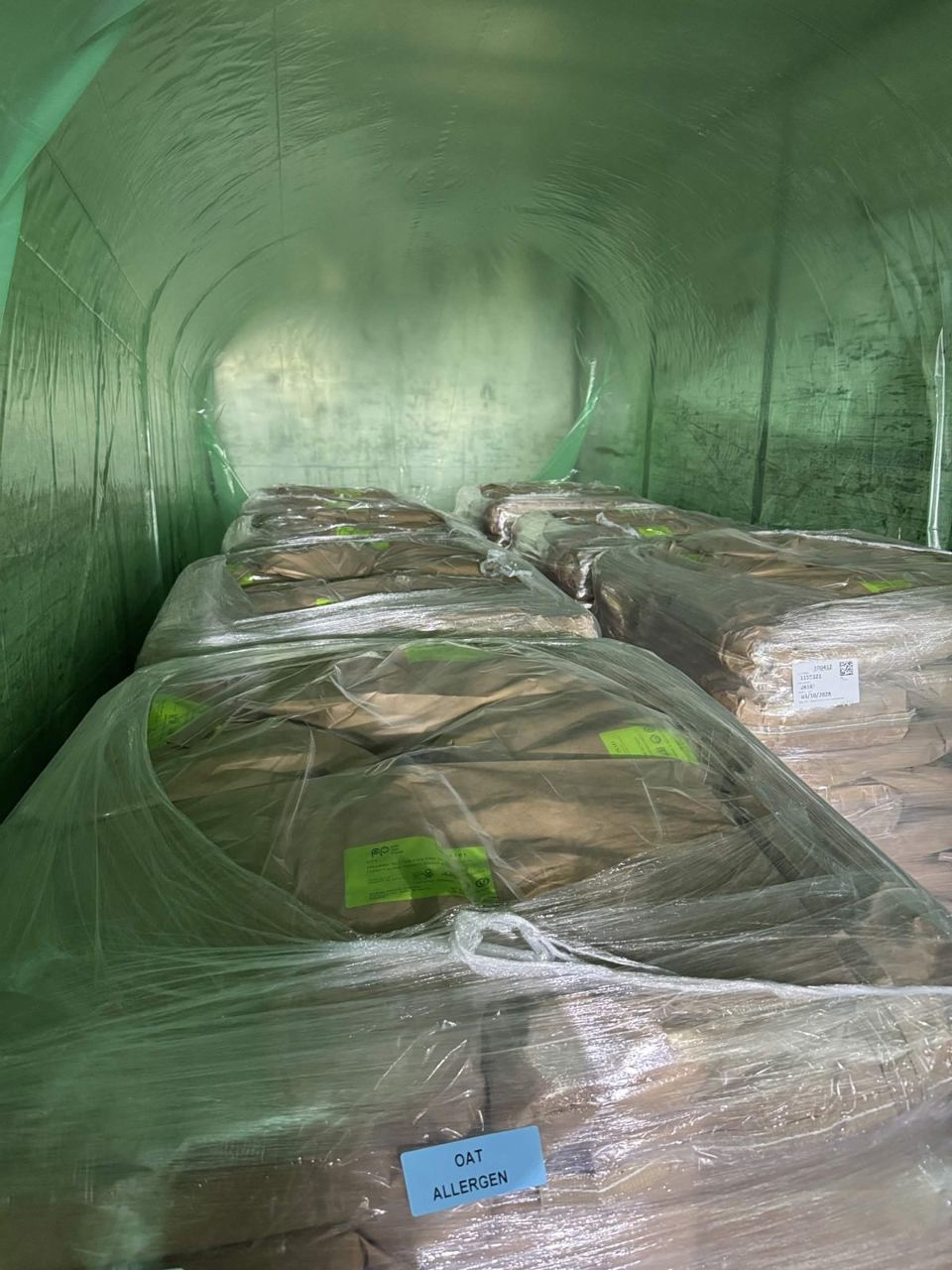 (opens full size in a new tab)
Commodity fumigation under tarpLTK member · Jul 2026
Where it fits in a career
People usually arrive from
Questions people ask
+Can I start in fumigation?
Not realistically. States require experience or training first: Texas requires 40 hours of training before the structural fumigation exam, and California requires six months of supervised fumigation experience for a Branch 1 field representative application. Most fumigators come from other pest control work.
+What fumigants are used?
Sulfuryl fluoride is used for structures and household goods; the Vikane label lists pests including drywood termites, wood-boring beetles, bed bugs, cockroaches and rodents. Aluminum and magnesium phosphide, which release phosphine, are used mainly for stored grain and other commodities, and EPA prohibits their use around residential areas.
+When is a building safe to re-enter?
Under the Vikane label, when an approved, calibrated clearance device shows 1 ppm or less in the breathing zone of every room, and a certified applicator authorizes removal of the placards.
+Why are two people required?
The Vikane label requires two trained people, at least one licensed or certified by the state, during introduction, re-entry before aeration and the start of initial aeration when exposure exceeds 1 ppm, so someone can help if something goes wrong.
+Do I need to wear a breathing apparatus?
Yes, whenever you enter an area above 1 ppm sulfuryl fluoride, the label requires a positive-pressure self-contained breathing apparatus. You need training in how to use it.
+What is the warning agent?
Chloropicrin. It causes eye irritation and tears at very low concentrations, so anyone who enters by mistake knows to leave. The label requires it to be released inside before the fumigant.
+Is fumigation a separate licence?
Yes, in every state this site covers, and the federal standards include a non-soil fumigation category. Check your state's prerequisites.
+What about fumigating apartments?
If one unit in a multi-unit building is fumigated, the Vikane label requires every unit in the structure to be vacated and treated as a fumigated structure, with notices, securing and clearance for each.
Still deciding? Ask the people doing fumigation every day in the LTK Discord.
Ask on Discord(opens Discord in a new tab)Sources
- US EPA pesticide label: Vikane gas fumigant, EPA Reg. No. 62719-4 (accepted 04/14/2014)
- NIOSH Pocket Guide to Chemical Hazards: Sulfuryl fluoride
- US EPA news release (April 7, 2010): restrictions on aluminum and magnesium phosphide fumigants
- USDA AMS Federal Grain Inspection Service: Fumigation Handbook (October 2023)
- Fla. Admin. Code R. 5E-14.110: Fumigation Requirements, Notices (Cornell LII)
- Texas Department of Agriculture SPCS: Certified Applicator Licensing
- California Structural Pest Control Act (Business and Professions Code), SPCB
- UF/IFAS Extension PI293: Florida Rules for Direct Supervision of Unlicensed Pesticide Applicators
- 40 CFR 171.101: Commercial applicator certification categories (Cornell LII)
- US EPA: Revised Certification Standards for Pesticide Applicators
- BLS Occupational Outlook Handbook: Pest Control Workers
- O*NET OnLine: Pest Control Workers (37-2021.00), task statements and tools
- BLS OEWS frequently asked questions (what wages include, 2,080-hour annual basis)
- BLS National Compensation Survey, Employee Benefits, March 2026, Table 2: Medical care benefits
- BLS National Compensation Survey, Employee Benefits, March 2026, Table 1: Retirement benefits
- BLS National Compensation Survey, Employee Benefits, March 2026, Table 6: Paid leave
- BLS National Compensation Survey, Employee Benefits, March 2026, Table 5: Life insurance benefits
- OSHA: Fall Protection
- ESA: ACE eligibility requirements
Researched 2026-10-01. Licensing details change; confirm with your state agency before you rely on them.