
Fields · Detection
K9 work in pest control
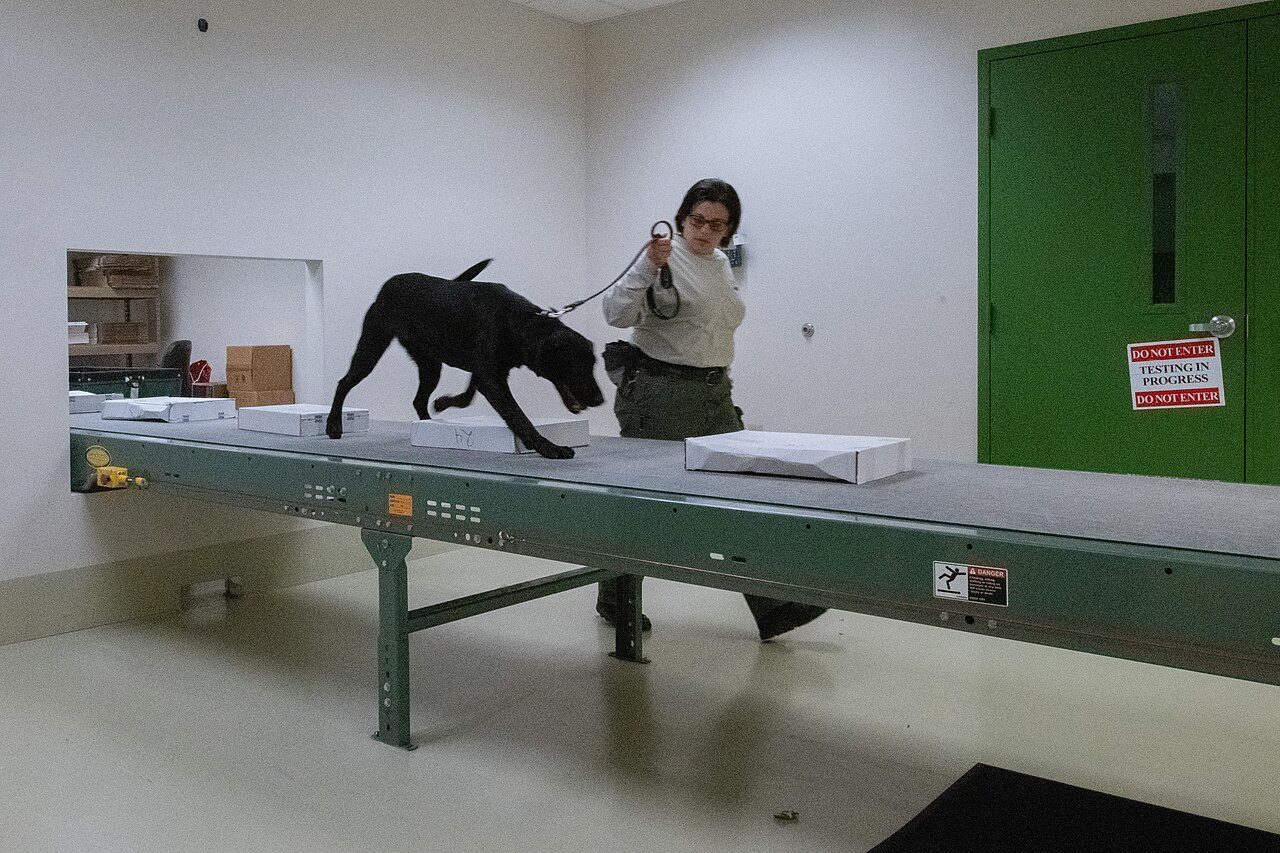
What is k9 work in pest control work?
Dog and handler teams that sniff out bed bugs, termites and rodents, and herding dogs that move Canada geese off lawns, ponds and fields — used where people and traps miss what a dog can find.
Key factIt depends on the state and the work. Some states treat detection as licensed pest control (North Carolina requires a structural pest control licence for bed bug dog work, and Maryland requires each dog and handler to be certified as a team every year). Goose herding falls under federal migratory bird rules instead. Private certification helps but is not a licence.
Thinking about k9 work in pest control? Ask the people doing it every day in the LTK Discord.
Ask on Discord(opens Discord in a new tab)What the job is really like
K9 detection in pest control means working with a dog trained to find a target pest by scent, most often bed bugs, and also termites and some other pests. The handler and dog work as one team. They search hotel rooms, apartments, offices, dorms, theatres and other places where a visual inspection would be slow or unreliable, and the handler reads the dog's alerts and reports what they mean. No state licence covers detection itself, but in most cases it is pest control work done by a pest control business, and at least one state, Maryland, regulates canine teams directly. Credibility rests on independent team certification and on honest reporting, because field research has shown that teams can perform much worse in real buildings than in controlled tests. The job suits people who want to work closely with a dog every day, who are patient and disciplined about training, and who are comfortable telling a client the limits of what a dog alert proves.
The day starts with the dog: exercise, a health check, toileting and setting up the vehicle for travel. The dog lives with the handler or in the company's care, so the working relationship never fully switches off.
Training is built into every week. The SWGDOG guideline for pest and insect detection dogs recommends an average of four hours a week of routine training to keep a team proficient, combined regularly with supervised training by a qualified trainer other than the handler. Training uses varied locations, amounts of target odor, heights, containers, distractors and blank searches. NPMA's bed bug best practices say distractors commonly found in the environments you inspect should be part of ongoing training.
Inspection days are often large jobs: a block of hotel rooms, a floor of apartments, or a school or office. The dog searches in short working periods with breaks, and the handler watches for the dog's trained alert and pinpoints the location. Rutgers researchers who studied teams in occupied apartments recorded inspection times of a few minutes to about ten minutes per apartment, and found that the team that took the longest per unit performed best on the first day.
After an alert, the handler or a technician tries to confirm it. NPMA's best practices say that before treatment the handler or a pest professional should try to confirm a canine alert by a visual inspection, by monitoring devices or by a second canine team. If live bed bugs cannot be confirmed, the client may choose to treat anyway but should be told that activity was not confirmed.
The rest of the day is reports and records. Clients get a report of what was searched, where the dog alerted and what was confirmed. The business keeps records of the team's training and certification. In Maryland that is a legal requirement: records must be kept for two years and shown to the Department of Agriculture on request. Heat, travel and the dog's condition shape the schedule. Penn Vet researchers note that heat injury is the most common non-traumatic cause of death in police and military working dogs, so cooling breaks and shade are part of planning any working day.
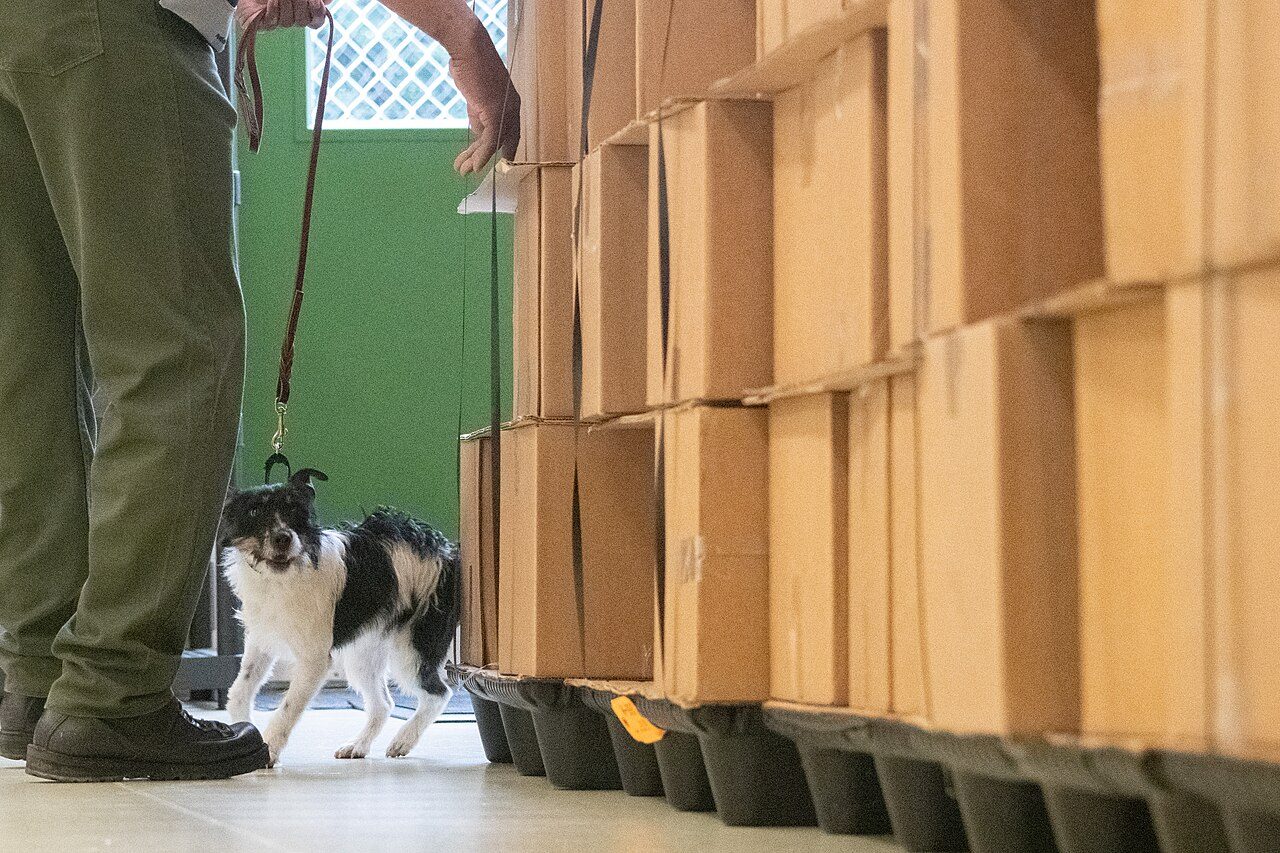
Kinds of K9 work
Dogs earn their place in pest control in five different ways. Each has its own training, its own evidence and its own rules.
A trained dog and handler search rooms, furniture and whole buildings for the scent of live bed bugs and viable eggs. The dog gives a trained alert, and the handler marks the spot for a technician to check. Teams are used in hotels, multifamily housing, offices and schools, and to confirm whether a treated unit is clear.
How it works, the evidence and the rules +Hide details −
How it works
The dog works on lead and sniffs beds, furniture, baseboards and wall voids, then gives a trained alert, usually a sit or a paw, at the strongest source of odor. The dog is rewarded with food or play for a correct find. Dogs can be trained to pick out live bugs and viable eggs from dead bugs, cast skins and feces.
UF/IFAS Extension lists where dogs help most: when bed bugs are suspected but a visual inspection finds nothing, whole-building inspections, places other than bedrooms (offices, theaters, schools, public transport), and confirming that control worked.
An alert is a lead, not proof. Before anyone treats, a technician should find live bugs or viable eggs where the dog alerted. A false alert can mean pesticide applied where none is needed.
Dog teams need regular maintenance training. The Rutgers field study suggests training in real infested sites, building up the dog in heat, and turning down jobs when conditions are too poor for a good inspection.
What the evidence says
Lab and controlled tests show what a well-trained dog can do. Pfiester, Koehler & Pereira (2008, Journal of Economic Entomology 101:1389–1396) found dogs told bed bugs apart from other insects with a 97.5% positive indication rate and 0% false positives. They picked live bugs and viable eggs over dead bugs, cast skins and feces with a 95% positive indication rate and a 3% false-positive rate on bed bug feces. In hotel rooms with planted bugs, they were 98% accurate. Real buildings are harder. Cooper, Wang & Singh (2014, Journal of Economic Entomology 107:2171–2181) tested 11 commercial dog teams in naturally infested New Jersey apartments. Every handler believed their dog found more than 95% of infestations. Across three experiments, the mean detection rate was 44% (range 10–100%) and the mean false-positive rate was 15% (range 0–57%). Teams with higher detection rates also had more false positives. Results changed a lot from day to day for the same team. Detection did not depend on infestation level, and neither the team's experience nor its certification status predicted detection rate. Only 1 of 16 inspections reached at least 90% detection with no more than 10% false positives. For comparison, the same paper cites a 93% detection rate from interceptor traps left in place for 7–14 days.
Rules
Rules differ a lot by state, and in some states, inspection-only dog work is licensed pest control. North Carolina's Department of Agriculture says canine scent detection for bed bugs is structural pest control. Anyone offering it must hold a "P-phase" Structural Pest Control licence or employ a full-time licence holder. They must also keep inspection records and work under the contracting company. UF/IFAS Extension says dog detection counts as a pest control activity in Florida and requires licensing from FDACS. Maryland regulation COMAR 15.05.01.14(C) bars a pest control business from using a dog team unless the dog and handler are certified together as a team for each target pest by a Department-recognized certifier. Teams must recertify every year, and businesses must keep training records for 2 years. Testers need at least 5 years of documented scent-dog experience and cannot be the dog's trainer. Voluntary certification bodies exist, such as the National Entomology Scent Detection Canine Association (NESDCA), a body of pest control owners and operators that certifies dog teams. Do not assume private certification meets a state rule or proves field accuracy. Check your state.
- Pfiester, Koehler & Pereira 2008, J. Econ. Entomol. 101(4):1389–1396
- Cooper, Wang & Singh 2014, J. Econ. Entomol. 107(6):2171–2181 (Rutgers PDF)
- NCDA&CS — Canine Scent Pest Detection: License Requirements (2013)
- Maryland Dept. of Agriculture — COMAR 15.05.01 (incl. .14C Canine Pest Detection Teams)
- UF/IFAS Extension — Bed Bug Identification & Inspection
Dogs trained on termite odor search walls, floors and wood in structures to find live termite activity hidden behind finishes. They add to a standard termite or WDI inspection and do not replace it. The evidence comes mostly from lab and controlled tests, and dogs can alert on old termite-damaged wood.
How it works, the evidence and the rules +Hide details −
How it works
The handler leads the dog along walls, baseboards, door frames and other likely spots. The dog alerts where termite odor is strongest, and the inspector then probes, opens or uses other tools to confirm live activity.
In the main peer-reviewed study, dogs were trained with US Customs scent-detection methods changed to use food rewards. Dogs trained on eastern subterranean termites also found several other termite species.
Dogs are most useful for finding hidden activity quickly. They are weaker at telling live termites apart from old damage, so findings need confirming before anyone treats or writes a report.
What the evidence says
Brooks, Oi & Koehler (2003, Journal of Economic Entomology 96:1259–1266) found trained dogs were 95.93% accurate at finding 40 or more eastern subterranean termite workers. They wrongly alerted on 2.69% of containers without termites. The same dogs were 100% accurate on dark southern subterranean termites, 98.89% on Formosan subterranean termites, 97.33% on powderpost termites and 88.89% on southeastern drywood termites. False responses were 25.33% to termite-damaged wood, 6.67% to American cockroaches and 2.67% to Florida carpenter ants. Cooper et al. (2014) quote Brooks et al. as proposing at least 90% detection and no more than 10% false positives as a reasonable minimum standard. Cooper et al. also cite an earlier termite study (Lewis et al. 1997) with a mean 81% detection rate and 28% false positives in a lab setting. We found no peer-reviewed field study of commercial termite dog teams in real structures.
Rules
Wood-destroying insect inspections and reports are regulated pest control work in many states, often with set report forms. In Maryland, for example, COMAR 15.05.01.14 sets WDI report content, and its canine team rules apply to "any pest". In North Carolina, structural pest control by statute includes identifying infestations and making inspections. A dog alert alone should not be the basis of a WDI report finding. Check your state for licence category and report requirements.
Scent dogs are trained to find rodents, or their droppings, where people and traps miss them. Some pest control teams use dogs to pinpoint rodent activity in warehouses and commercial accounts. Most published research comes from agency and conservation programs that use dogs to confirm an eradication worked.
How it works, the evidence and the rules +Hide details −
How it works
Dogs are trained on the target animal or its scat and search large areas, such as marsh, islands or ports, where traps and cameras would miss the last few animals. Scat is often the target because it is easier to find across a large landscape than the animal itself.
In the Chesapeake Bay Nutria Eradication Project, USDA Wildlife Services, the US Fish and Wildlife Service and Maryland DNR used detector dogs with shoreline and ground surveys, monitoring platforms, lures and remote cameras. Dog teams were especially useful for confirming that nutria were gone from areas already trapped.
On islands, detection dogs search for rats after an eradication, and as ongoing biosecurity, to catch a reinvasion early.
In commercial pest control, a dog can work stacked pallets, racking and wall lines in a warehouse to point the technician at live activity, so traps and exclusion go where the rodents actually are. We found no published accuracy data for this commercial use, so treat a dog alert as a lead to confirm, the same as with bed bugs.
What the evidence says
Davis, Seddon, Craig & Russell (2023, Biological Invasions) reviewed 51 empirical studies from 17 countries, 58% from New Zealand. They concluded that motion-sensing cameras and rodent detection dogs have greatly improved detection of rats at low densities. Dogs can reliably detect even a single rat, but cost and the skill needed for training and upkeep limit their wider use. Cameras consistently detected rats at lower densities than other techniques. In Maryland, USFWS reports the last known nutria was caught in May 2015, after more than 20 years of work. About 14,000 nutria were removed, and more than 700 landowners protected about 250,000 acres of marsh. Detector dogs were one tool among several, and no separate detection rate for the dogs was reported in the sources opened.
Rules
This work is usually done by or under contract to federal, state or tribal agencies, often on public or conservation land, and access depends on landowner and agency permission. Trapping or killing the target animal falls under wildlife and pesticide rules that vary by state and species. Check your state wildlife agency.
Terriers and similar dogs are used to find, flush and kill rats on farms, in barns and sometimes in cities, often together with people moving cover or clearing harborage. It is an old practice with a lot of anecdote but almost no published research on how well it works. It also carries real disease, poison and legal risks.
How it works, the evidence and the rules +Hide details −
How it works
Handlers move feed, bales, debris or other cover, and the dogs catch and kill rats as they run. Some groups use ferrets or tools to flush burrows. A session can remove the rats that are exposed, but it does not touch the harborage, food and entry points that let a population rebuild.
At best this is a knockdown tool inside an integrated program: sanitation, exclusion, harborage removal and monitoring. It is not a stand-alone control.
What the evidence says
We found no peer-reviewed study or university extension publication that measures how well ratting dogs control rat populations. Published evidence is anecdotal, from news and hobby sources, and is not used here. Treat claims of "eradication" with caution. The welfare and health risks are better documented. CDC says rodents carry and spread the bacteria that cause leptospirosis, and that animals can be infected through bites from rodents, by eating infected tissues, or through contact with infected urine. A leptospirosis vaccine for dogs is available in the US. EPA warns that pets and predators can be poisoned by eating rodents that took certain rodenticides. With second-generation anticoagulants, a rodent can feed many times before it dies, so a carcass may hold many times the lethal dose. Never run dogs where rodenticide baits are, or recently were, in use.
Rules
There is no federal licence for ratting dogs, and we found no state that licenses them. The federal animal-fighting law, 7 U.S.C. 2156, defines an animal fighting venture as a fight between at least two animals for sport, wagering or entertainment. It excludes activity whose primary purpose is using animals to hunt another animal. Ratting done as pest control on a job is a different thing from rats and dogs run for an audience or for bets, and state animal-cruelty and animal-fighting laws vary, so check your state before you offer it. Get written permission from the property owner, and from the landlord where it is not the same person, and confirm local leash and animal-control rules.
Trained herding dogs, usually border collies, chase resident Canada geese off lawns, ponds, golf courses, sports fields, corporate grounds and airfields. Repeated over time, this teaches geese the site is unsafe. The work is legal hazing under federal rules only as long as the dog scares and moves geese and never catches, injures or kills them.
How it works, the evidence and the rules +Hide details −
How it works
The handler sends the dog at geese on turf, or on water with help from a boat, and the dog stalks and pushes them until they fly off. USDA Wildlife Services says the most effective dogs are trained off lead to chase birds as soon as they land. Some communities hire professional canine teams to disperse waterfowl in parks.
Hazing works best before geese settle. Pair it with habitat changes, a no-feeding policy and, where registered, nest and egg treatment. USDA APHIS notes that adult geese not tending flightless goslings leave more readily when harassed.
During the summer molt (roughly mid-June to early July in USDA's description), adults and goslings cannot fly. Chasing them then risks dogs catching birds and does little to move them.
Expect geese to move nearby rather than disappear. Treat dog hazing as site protection, not population control.
What the evidence says
Holevinski, Curtis & Malecki (2007, Human–Wildlife Interactions 1(2)) marked 368 adult and 400 juvenile geese in one urban and one suburban community in western New York and hazed them after the molt. Border collies with remote-controlled boats removed more than 90% of geese in 97% of 37 events, border collies alone succeeded in 94% of 113 events, and night-time lasers in 64% of 134 events. But geese stayed loyal to sites, averaging 16.9 hazing events per radio-marked bird. They moved to places where hazing was not allowed, and on average they moved only 1.18 km, not far enough to reach hunting areas. Only 13% of adults and 7% of juveniles were harvested over 2 years. The authors concluded hazing alone is unlikely to reduce urban and suburban goose populations. Dogs clear a site, but they do not shrink the population.
Rules
Canada geese are protected under the Migratory Bird Treaty Act, which bars pursuing, hunting, taking, capturing or killing migratory birds unless regulations permit it (16 U.S.C. 703). Under 50 CFR 21.100(a), no permit is required merely to scare or herd depredating migratory birds other than endangered or threatened species or bald or golden eagles. USFWS also says control aimed only at scaring geese out of an area, such as harassment, needs no federal permit. A dog that catches, injures or kills a goose takes it unlawfully, so the dog must be under reliable control. Nest and egg work is separate: under 50 CFR 21.162, landowners, homeowners' associations and local governments must register with USFWS through the eRCGR site before destroying nests or treating eggs. They must also register each employee or agent, report by October 31 each year, and hold any required state or tribal permits. Associations and local governments need the landowner's consent for private property. USFWS now says nest and egg work may take place at any time of year. Older APHIS material citing March 1–June 30 is out of date. Some states restrict harassing wildlife, and local leash laws may limit off-lead dogs. Check your state wildlife agency and local ordinances.
- eCFR 50 CFR Part 21 (21.100 depredation permits; 21.162 nest and egg depredation order)
- USFWS Resident Canada Goose Registration — FAQ
- USDA APHIS Wildlife Services — Preventing and Managing Waterfowl Damage
- Holevinski, Curtis & Malecki 2007, Human–Wildlife Interactions 1(2)
- 16 U.S.C. § 703 (Cornell LII) — Migratory Bird Treaty Act prohibitions
Daily duties
- Care for the dog daily: feeding, exercise, grooming, health checks and veterinary care.
- Run routine maintenance training each week, with blank searches and distractors.
- Keep training aids stored and handled so they do not contaminate each other.
- Arrange and pass annual independent team certification for each target pest.
- Plan inspections with clients: units, access, timing and what the dog will and will not search.
- Search rooms, furniture, vehicles, luggage and common areas with the dog.
- Read the dog's behaviour and pinpoint alert locations accurately.
- Confirm alerts visually, with monitors or with a second team before treatment is recommended.
- Write clear inspection reports that separate confirmed findings from unconfirmed alerts.
- Tell clients the team's certification status.
- Keep training, certification, proficiency and deployment records.
- Manage the dog's workload, heat exposure and rest breaks.
- Transport the dog safely and keep the vehicle set up for its welfare.
- Work with treatment technicians and follow up after treatment to check results.
Work environment
- Schedule
- Hotels, multi-unit housing and commercial clients often want inspections at times that suit their occupancy, which can mean early mornings, nights or weekends. BLS says evening and weekend work is common for pest control workers generally. On top of client work, expect training sessions every week and daily dog care on days off.
- Seasons
- No source was found that measures seasonal demand for canine inspections. Heat is the seasonal factor that matters most for the dog: warm months mean shorter work periods, more cooling breaks and careful vehicle management.
- Physical
- Walking, bending and kneeling through many rooms a day, handling a strong, motivated dog on lead, and lifting or moving furniture during confirmation. BLS notes that pest control workers often kneel, bend and crawl in tight spaces.
- Hazards
- For the handler: the usual inspection hazards, including pesticide residues in treated rooms and the physical strain of long search days. For the dog: heat. Penn Vet researchers say working dogs are bred and trained for high drive, which can override signs of overheating, and that heat injury is the most common non-traumatic cause of death in police and military working dogs. Their study found voluntary head dunking in cool water cooled dogs fastest, and they also recommend ice packs on a collar and wet towels at the neck and armpits as practical field methods.
- Vehicle and travel
- You drive between client sites with the dog, often for long days and sometimes overnight trips for large accounts. The vehicle needs a secure, ventilated space for the dog and a plan for heat while parked. Ask employers who owns and equips the vehicle and who pays for the dog's food and veterinary care.
How people get in
Either a pest professional who takes on a dog, or a dog handler who enters pest. Both routes exist and they produce very different practitioners.
Training and licensing
Getting hired
Most handlers come from one of two directions: a pest control technician who takes on a dog, or a dog handler, often with police, military or professional training experience, who moves into pest control. No source sets an education standard for handlers. BLS lists a high school diploma or equivalent as typical entry education for pest control workers. NPMA's bed bug best practices say handlers should be trained in bed bug biology, behaviour, inspection methods and identification, which points toward a pest control background or training.
Learning on the job
Handler training happens with the specific dog, because certification is for the team, not for the dog or handler alone. The SWGDOG guideline says initial training should be done by a competent, qualified detector dog trainer using a structured curriculum, should cover all conditions the team could meet during certification, and should continue until the team is certified or judged not certifiable. After that, training is permanent: SWGDOG recommends an average of four hours a week of maintenance training plus regular supervised training by someone other than the handler. No independent source was found for how long initial handler training typically takes or what a trained dog costs, so ask any trainer for a written course outline, the hours involved, what is included, and what happens if the team fails certification.
Licensing
No state licence covers canine detection on its own, but the work usually sits inside pest control law. - Pest control licensing. Inspections for bed bugs and termites are normally sold by licensed pest control businesses, and any treatment that follows needs a licensed applicator. Check your state pesticide agency for whether a detection-only business must be licensed. - Maryland regulates canine teams directly (COMAR 15.05.01.14 C). A pest control business may not use a canine scent pest detection team unless the dog and handler are trained to the regulation's standard and the business is licensed. Each team must be certified for each target pest by a person or organization recognized by the Department, and recertified every year. Only teams can be certified, not dogs or handlers alone. Pseudo-scents and extracts may be used in training but not in certification tests. Records must be kept for two years. - Other states may have their own rules. Check before you sell canine inspections in a new state. This is not legal advice.
Certifications worth knowing
Independent third-party team certification to the NPMA minimum standards
National Pest Management Association (standards); certification by independent organizations
NPMA's bed bug best practices say canine inspections shall be done by a team with current, independent third-party certification. The minimum standards: team-only certification valid one year, testing under field conditions in at least four areas, a 20-minute total search time, pass in every room with one false alert allowed but not on a placed distractor, no pseudo-scents or extracts, two proctors with at least five years' scent dog experience who are not the dog's trainer.
World Detector Dog Organization (WDDO) certification
World Detector Dog Organization
Certifies teams in several scent disciplines including bed bugs, using a randomized, double-blind testing method and published standards of practice. Certification and recertification come with membership.
National Entomology Scent Detection Canine Association (NESDCA) certification
National Entomology Scent Detection Canine Association
An entomology-focused team certifying body named in the Rutgers field study and in NPMA material. NESDCA's own website could not be reached, so check its current process and fees directly.
SWGDOG SC8 Pest and Insect Detection guideline
Scientific Working Group on Dog and Orthogonal detector Guidelines (SWGDOG), hosted by NIST
Not a certificate, but a published guideline many programmes compare against: at least a 90% confirmed alert rate and no more than a 10% false alert rate for certification, about four hours a week of maintenance training, and full training and deployment records.
- In plain words
- It depends on the state and the work. Some states treat detection as licensed pest control (North Carolina requires a structural pest control licence for bed bug dog work, and Maryland requires each dog and handler to be certified as a team every year). Goose herding falls under federal migratory bird rules instead. Private certification helps but is not a licence.
- Government pay data
- Not tracked as its own job by the Bureau of Labor Statistics
Skills and tools
- Reading a dog's behaviour, including subtle changes before an alert
- Disciplined, record-based training habits
- Bed bug and termite biology and identification, to confirm alerts
- Honest reporting that separates alerts from confirmed findings
- Managing the dog's health, heat load and workload
- Client communication: explaining what an inspection can and cannot show
- Scheduling and running large multi-unit inspections
- Avoiding unintended cues to the dog during searches
- The detection dog
- Leads, harness and collar suited to search work
- Reward items (food or toy, as trained)
- Training aids of live target pests in vented containers, stored separately
- Distractor materials for training
- Flashlight, inspection tools and magnifier for confirming alerts
- Bed bug monitors or interceptors for follow-up confirmation
- Water, bowls, cooling towels and ice packs for the dog
- Vehicle with a secure, ventilated dog compartment and heat plan
- Training, certification and deployment record system
- Report templates or software for clients
- Canine first aid kit
Career path
- 01Pest technician or dog handlerThe two starting points. Technicians bring pest knowledge; dog handlers bring handling skill. Each has to learn the other side.
- 02Handler in trainingTraining as a team with one specific dog under a qualified trainer until the team passes certification or is judged not certifiable.
- 03Certified handlerRunning inspections with annual recertification for each target pest, and keeping up weekly maintenance training.
- 04Senior handler or programme leadManaging several teams, training standards and records for a company, and supervising other handlers' training.
- 05Trainer, evaluator or business ownerSome handlers move into training dogs or running a detection business. Under NPMA standards and Maryland rules, certification evaluators need at least five years of documented scent dog experience and may not be the dog's trainer.
Pay and benefits
The Bureau of Labor Statistics doesn’t track this field as its own job, so these are the national numbers for pest control workers — the closest published benchmark, not this field’s own pay.
- $45,250Median annual pay · $21.75/hr source (BLS, opens in a new tab)
- $34,680–$61,890Lowest 10% to highest 10% of earners source (BLS, opens in a new tab)
- +6%Projected job growth 2025–2035 (all jobs: 3%) source (BLS, opens in a new tab)
- 13,700Openings projected each year, on average source (BLS, opens in a new tab)
$44,930 median inside exterminating and pest control services
$50,980 median across all US occupations
What these numbers leave out
- Self-employed workers — so owner-operators are absent entirely
- Overtime premium pay, shift differentials and non-production bonuses (commissions and production bonuses are included)
- Seasonal variation (annual figures assume 2,080 hours)
Real route pay depends on commission, truck and tool allowances and overtime. Compare notes in the Discord.
BLS does not track canine detection handlers in pest control as a separate occupation. Handlers employed by pest control companies are most likely counted under pest control workers (SOC 37-2021), where the median annual wage was $45,250 in May 2025, with the lowest 10% under $34,680 and the highest 10% over $61,890. For context only, BLS reports a median of $39,990 for animal trainers (SOC 39-2011) in May 2025, a group that includes people who train dogs for security and other work; that is not the same job. Neither figure includes the self-employed or shows bonus or commission. Ask employers how handlers are paid, whether there is a premium for handling a dog, and who pays for the dog's care while it lives with you.
Benefits
No benefits data exists for canine handlers. The BLS National Compensation Survey for private industry workers in service occupations, the group that includes pest control workers, found that in March 2026, 47% had access to employer medical care benefits, 47% to retirement benefits, 67% to paid sick leave, 57% to paid vacation and 56% to paid holidays. For all private industry workers the figures were 71%, 72%, 81%, 80% and 81%. Questions specific to this job: who owns the dog, who pays for food, veterinary care and insurance, what happens to the dog if you leave or it retires, whether you are paid for weekly training and daily care time, and who pays for annual certification.
State-by-state licensing
There is no single state pesticide licence for this field. Depending on where you work it can fall under contractor or trade licensing, a third-party certification, or nothing formal at all. A state-by-state guide is in the works — until then, ask in the Discord and someone in your state will point you the right way.
The good and the hard
- You work with a dog every day, and the partnership is the job.
- Dogs can search places and volumes that are slow or impractical to inspect visually.
- Under controlled conditions, research shows trained dogs can be highly accurate.
- Good, honest handlers build strong trust with commercial clients.
- Skills carry into training, programme management and owning a detection business.
- Field performance can be much lower than controlled tests suggest. The Rutgers study found a mean 44% detection rate and 15% false positive rate in occupied apartments, and certification status did not predict results.
- Training never stops: about four hours a week is the SWGDOG guideline, on top of client work.
- The dog needs care every day, including days off, holidays and when it is sick or injured.
- Heat is a constant risk to the dog and limits how you can schedule work.
- Alerts are not proof. You have to confirm them and explain the difference to clients who want a simple yes or no.
- Certification standards vary between bodies, so credibility has to be earned, not bought.
From the LTK podcast
Every episodeIndustry Interview: Kimberly Camera
1 hr 13 min
Kimberly Camera, canine handler, on working dogs in pest control: bed bug detection, rodent programs, the science of scent and what it takes to train a pest-sniffing dog.
Where it fits in a career
People usually arrive from
Questions people ask
+Do I need a licence to be a K9 handler?
There is no separate detection licence in most states, but the work is usually done by a licensed pest control business, and any treatment needs a licensed applicator. Maryland regulates canine teams directly, with annual team certification and two-year record keeping. Check your state pesticide agency.
+Should I buy a trained dog or train my own?
No independent source compares these routes or their costs. What the standards agree on is that the team, not the dog, is certified, and that initial training should be by a qualified trainer with a structured curriculum. Ask any seller or trainer for a written outline, the hours of handler training, a health guarantee, and what happens if the team fails certification.
+Which certification should we get?
NPMA's best practices call for current, independent third-party team certification to its minimum standards, renewed every year. WDDO and NESDCA are two bodies that certify bed bug teams. Choose one with no business link to your trainer, and in Maryland, one the Department recognizes.
+How accurate are bed bug dogs?
In a controlled study (Pfiester and others, 2008), trained dogs found live bed bugs with a 97.5% positive rate and no false positives, and were 98% accurate in hotel rooms with planted bed bugs. In a field study in occupied apartments (Cooper and others, 2014), 11 teams averaged 44% detection and 15% false positives, and the handlers had all believed their dogs were over 95% accurate. Treat alerts as leads to confirm, not as proof.
+What should go in an inspection report?
At least what was searched, where the dog alerted, and which alerts were confirmed and how. NPMA's best practices say to try to confirm alerts visually, with monitors or with a second team before treatment, to tell the client if activity could not be confirmed, and to tell clients the team's certification status.
+Can dogs find termites too?
Yes, with training for that target. A 2003 controlled study found trained dogs about 96% accurate at finding eastern subterranean termites, with false responses to termite-damaged wood of about 25%. Teams are certified per target pest; in Maryland that is required.
+How do I keep the dog safe in heat?
Plan short work periods, shade, water and cooling breaks, and never leave the dog in a hot vehicle. Penn Vet research found that training a dog to dunk its head in cool water cooled it fastest after exercise, with ice packs on a collar and wet towels at the neck and armpits as other practical options. Cool first, then get to a vet if the dog shows heat stress.
+What insurance do I need?
No independent source covers this for canine detection. Ask an insurer whether your general liability and professional or errors and omissions cover includes canine inspections and the results you report, whether animal-related injury or property damage is covered, and whether the dog itself can be insured for veterinary costs.
Still deciding? Ask the people doing k9 work in pest control every day in the LTK Discord.
Ask on Discord(opens Discord in a new tab)Sources
- Cooper, Wang and Singh (2014), Accuracy of trained canines for detecting bed bugs, J. Econ. Entomol. 107(6): 2171–2181 (Rutgers PDF)
- Pfiester, Koehler and Pereira (2008), Ability of bed bug-detecting canines to locate live bed bugs and viable bed bug eggs, J. Econ. Entomol. (PubMed 18767752)
- Brooks and others (2003), Ability of canine termite detectors to locate live termites and discriminate them from non-termite material (PubMed 14503599)
- NPMA Bed Bug Best Management Practices (2023), incl. Appendix A Minimum Standards for Canine Bed Bug Scent Detection Team Certification
- COMAR 15.05.01.14 C, Canine Pest Detection Teams (Maryland Department of Agriculture copy)
- Maryland Department of Agriculture press release (2013): New regulations require pest detection dogs, handlers to be trained and certified
- SWGDOG SC8 Substance Detector Dogs: Pest and Insect Detection (NIST)
- World Detector Dog Organization
- Penn Today: Penn Vet Working Dog Center, reducing dogs' temperature after exercise
- BLS Occupational Outlook Handbook: Pest Control Workers
- BLS Occupational Outlook Handbook: Animal Care and Service Workers
- BLS National Compensation Survey, Employee Benefits, March 2026
- BLS NCS Table 2: Medical care benefits, March 2026
Researched 2026-10-01. Licensing details change; confirm with your state agency before you rely on them.